
The Shrunken Journey
Summary: It’s time to clean up the house. There’s so much to do! Your kid brother points you to your dad’s lab for an invention to help with cleaning, but you’ve ended up shrunk down to the size of a toy! Journey across the house alongside your kid brother and your father to get back to your original size!
Role: Level Design
Project: Classwork
Team: Solo Dev
Development Time: August 2025-September 2025
Made Using: Unreal Engine for Fortnite
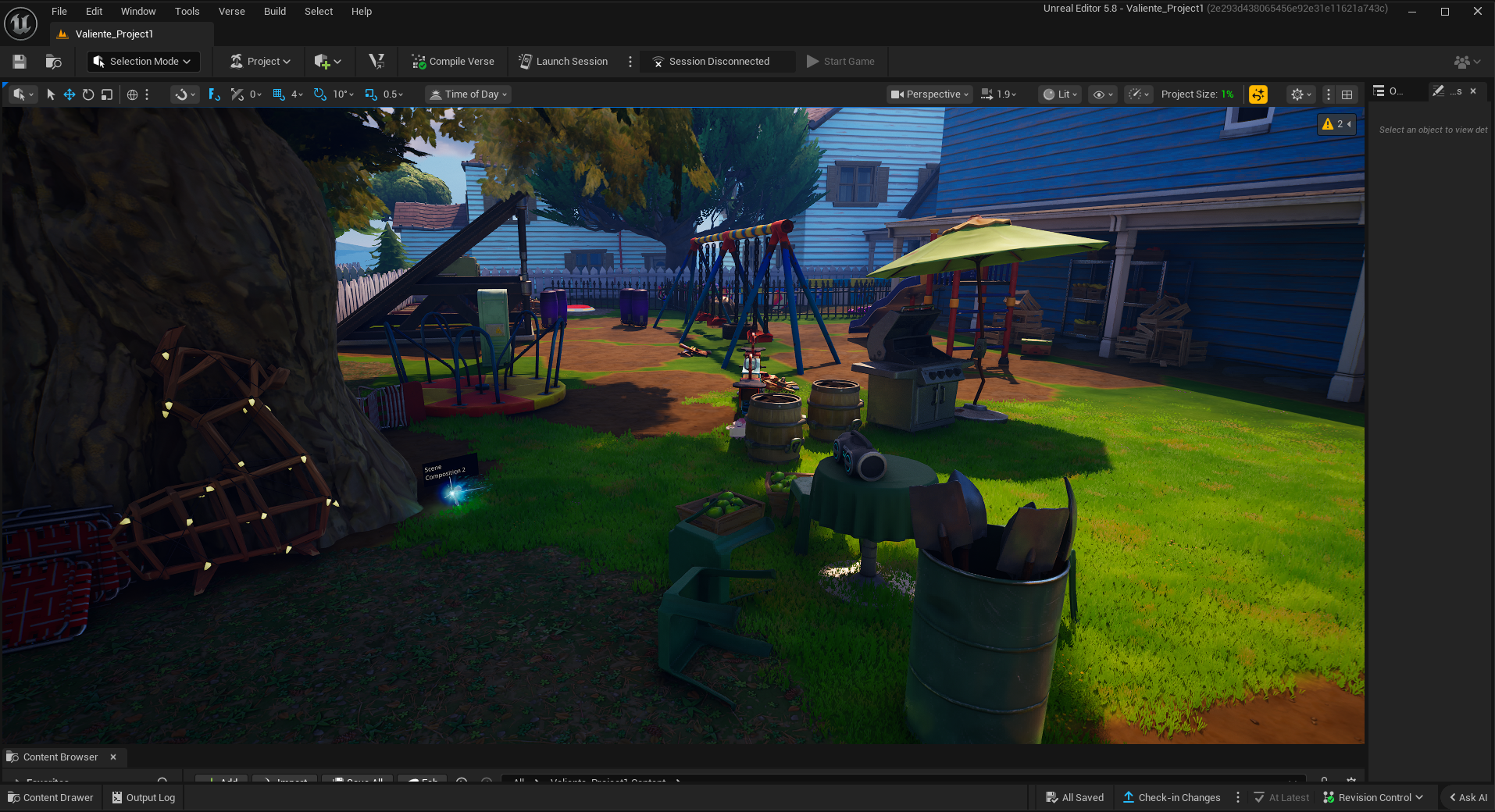
This was my first assignment in Unreal Engine for Fortnite, as well as my second narrative-driven level project.
Lessons Learned:
Unreal Engine for Fortnite basics: this project taught me the foundational tools for creating UEFN content, including brush tools, asset placement, and modification. spawners as well as some of the weird little tricks the engine has!
Technical Aspect Planning: This project taught me to plan levels with their most technical aspects in mind first. factoring for how much tech debt i will accrue is important for being on task and in alignment with deadlines.
Theme Park Ride Design: In the process of trying to make a vehicle-based narrative level, I had accidentally stumbled into a niche but powerful form of level design. Theme Park ride design. Theme park design is all about presenting a spectacle in a way that is easy to navigate, using various psychological tricks to get users to look where you want them to.
The Sketching Phase

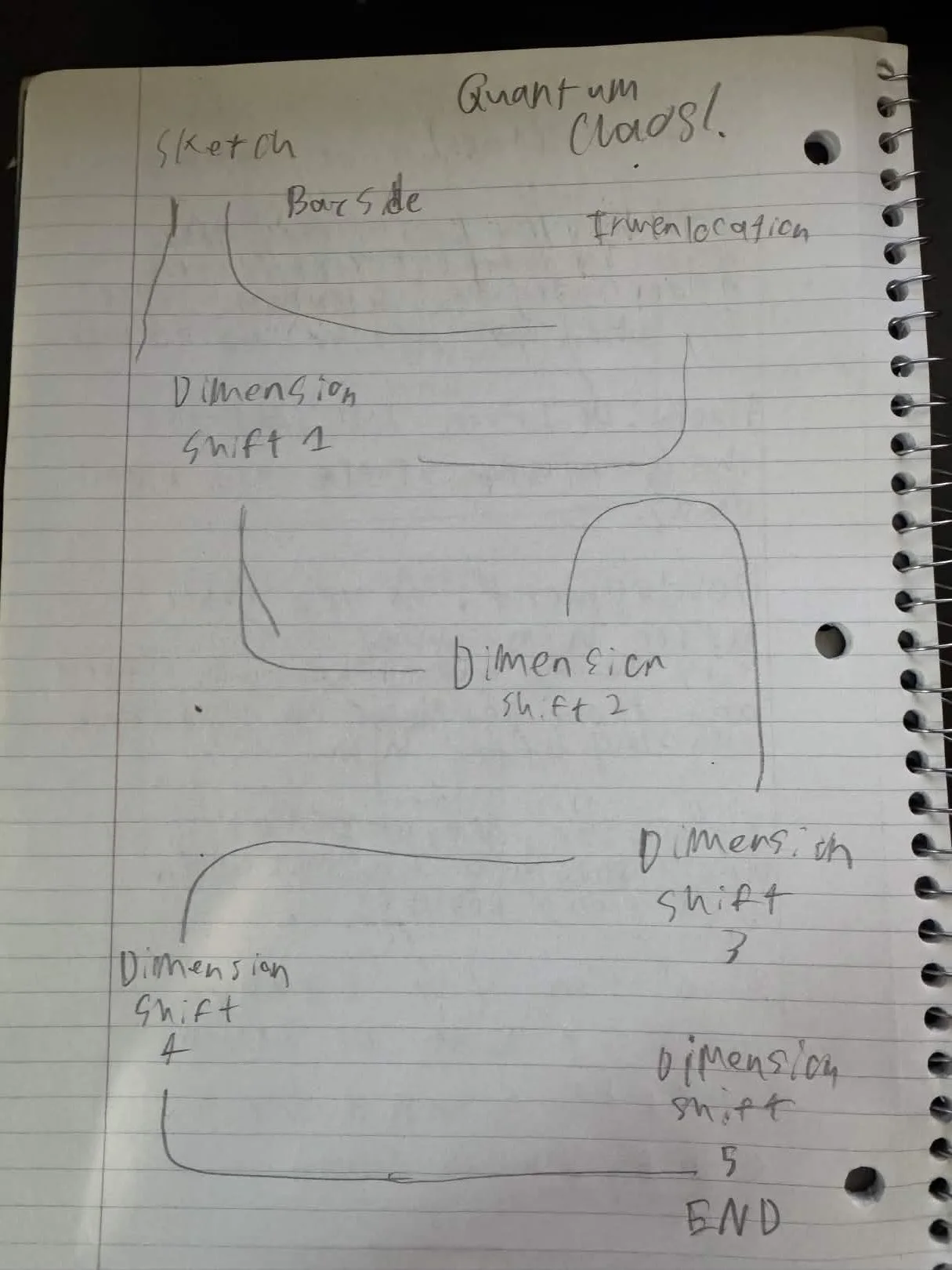
The First idea I had was for a level called quantum chaos. It would be a way to try out a variety of different assets with a narrative justification, with the idea being that dimensions are collapsing into each other, and you have to get to the person causing them with your vehicle
I ended up not going with this idea due to a lack of theme and a struggle to develop a vision for it.
Coming into this project I had the misconception that this would be a single project class, as such I was planning on creating racing content throughout the entire semester.
However, when I learned this was a 3-project class set entirely within UEFN, I was a little disappointed and began to shift gears. However, I soon remembered that Fortnite has vehicles. So, I decided…If I can’t make a racetrack as my main project for the semester, why not make one of my projects a racetrack?
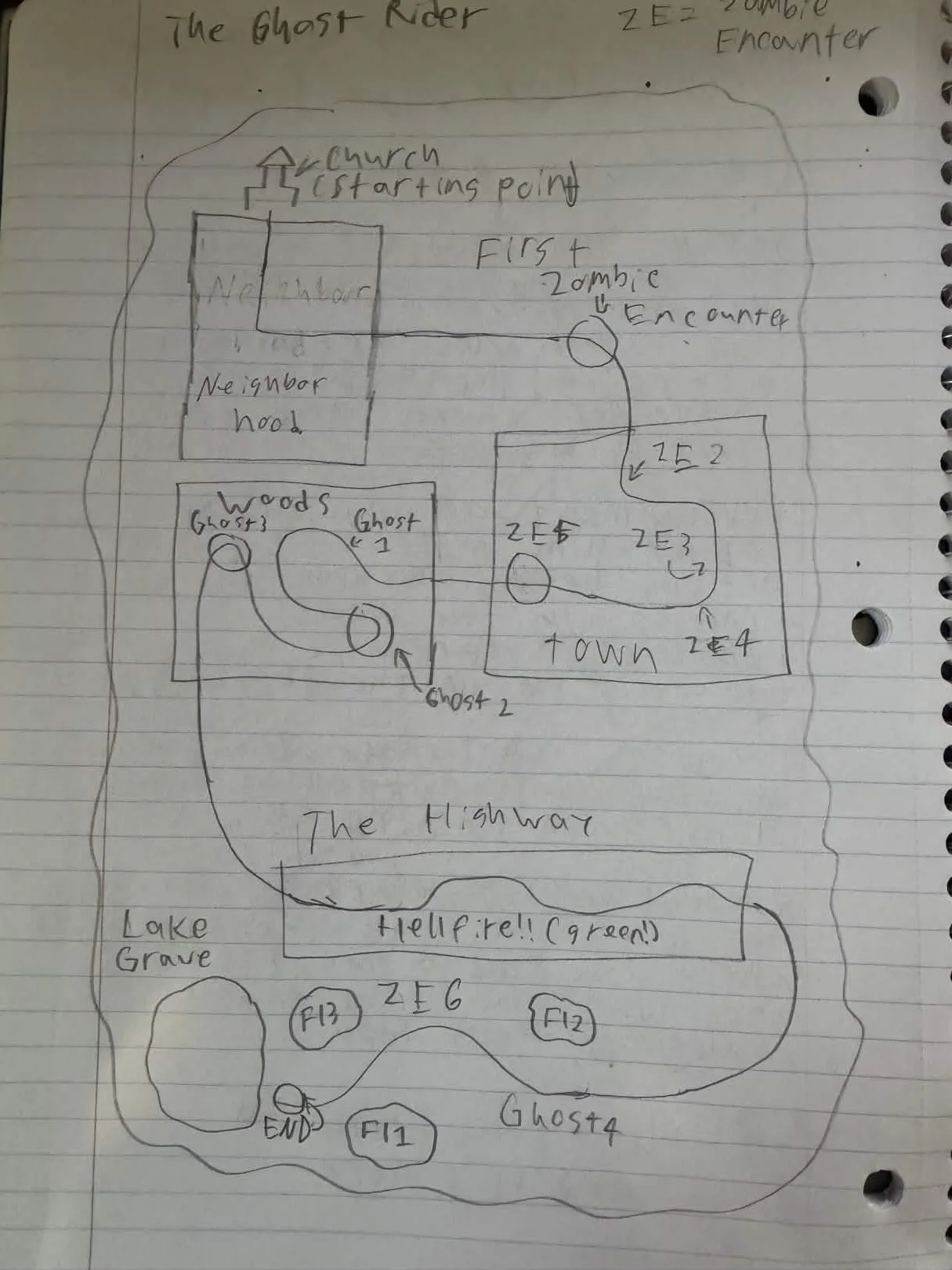
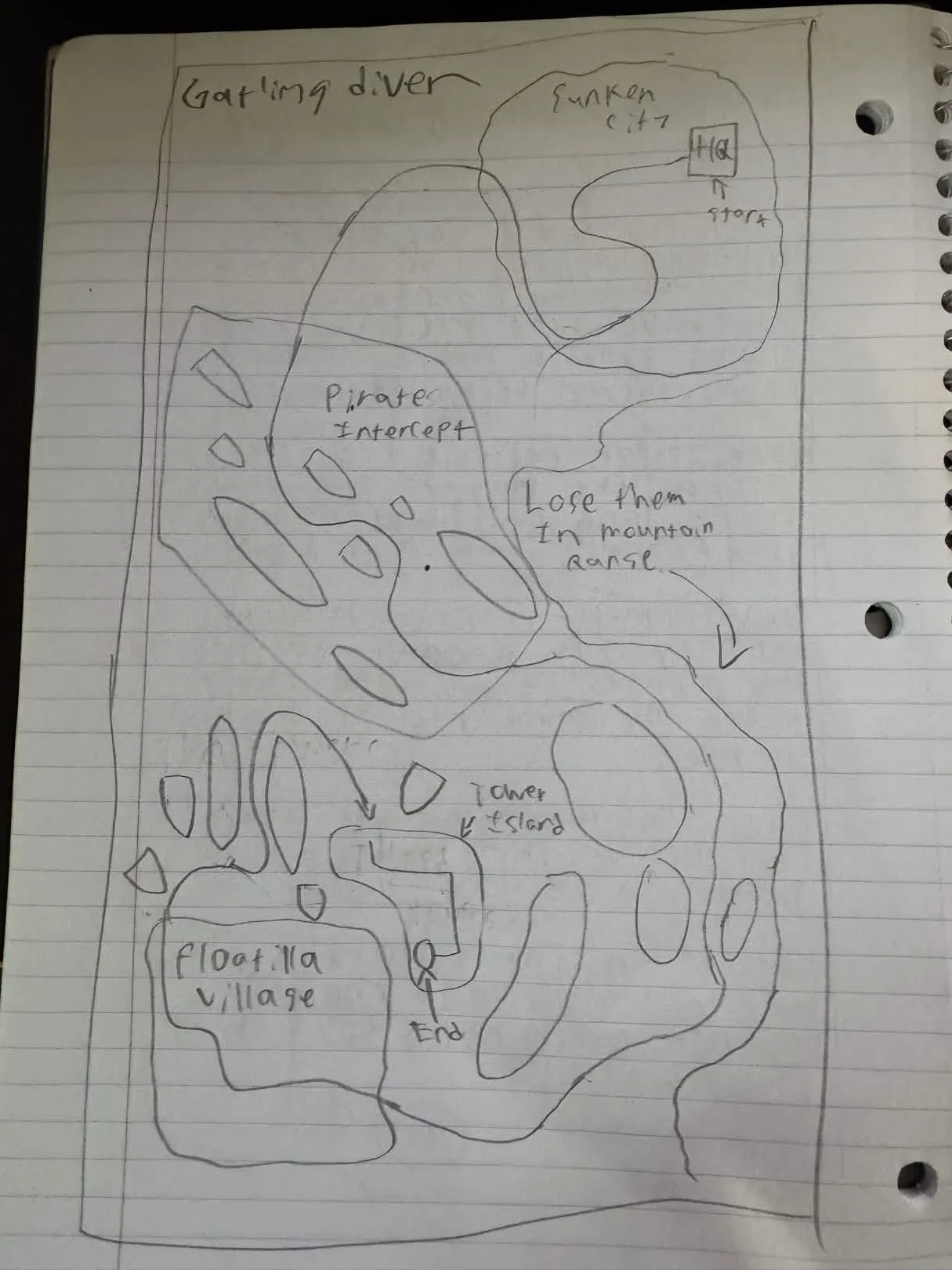
This idea was slightly different, labeled Gatling Diver, with the idea that this map focused on boats rather than cars. The premise being that you would know of an invading fleet of ships to your local town and must warn them about it before it’s too late.
This one was rejected because my professor preferred my final idea for the level, and because boats were a bit too out of scope for the class.
The Next idea was called Ghost Rider, which was inspired by the professor's own vehicle-based level. The narrative behind this one was that your brother (a ghost) was haunting the town in an attempt to solve his own murder. And using your driving skills your able to solve the murder.
This idea was not selected due to its sheer scale; it would require a town, a forest, and a highway built within 4 weeks!
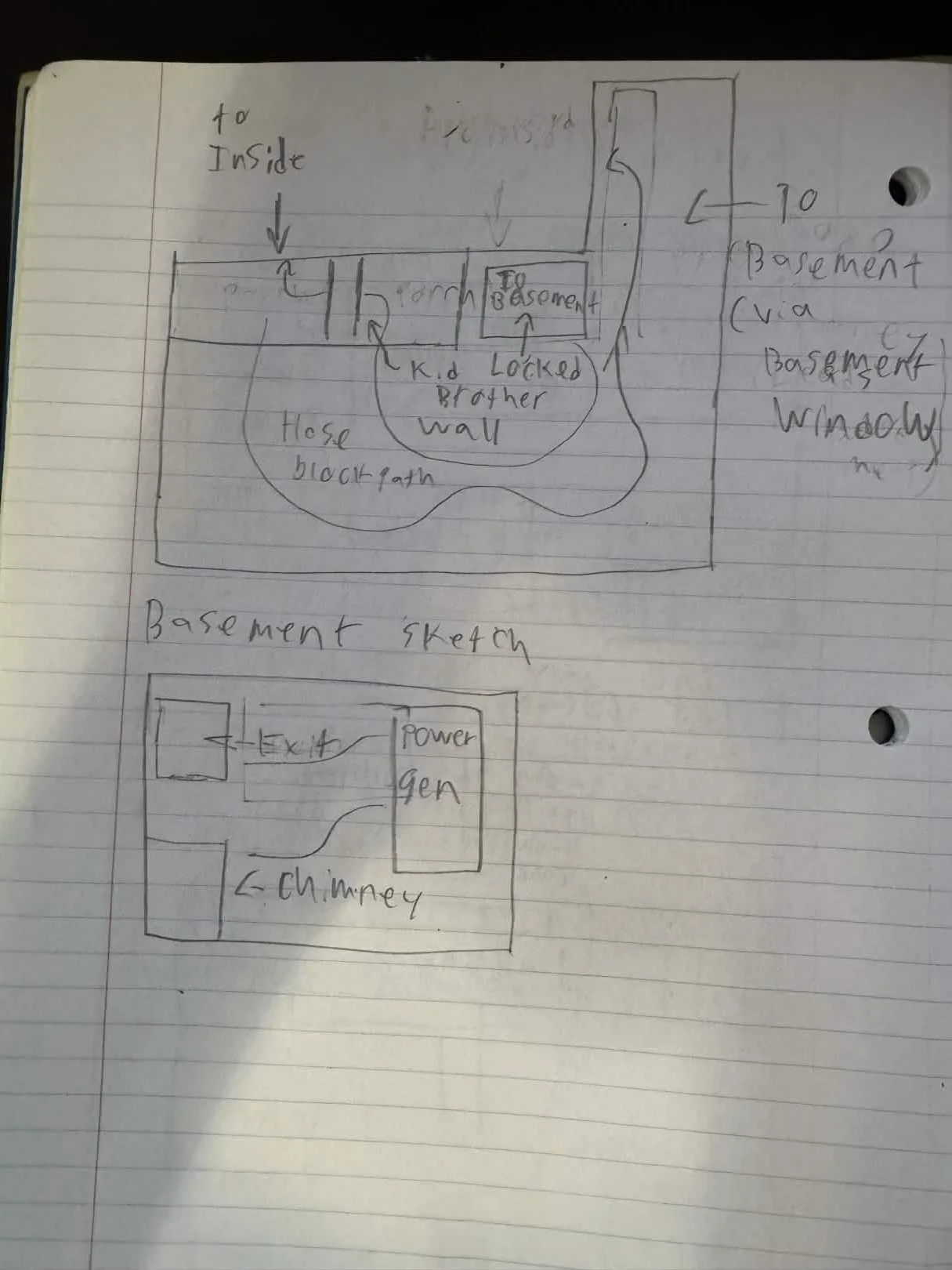
This 4th idea was the one that was accepted—the idea of being inspired by many racing games in my childhood. A racetrack took place in a giant-sized house. This sketch shows the top and bottom floors of the house and how the track would run.
This racing line is somewhat close to the final product. With the player instead coming out of the kitchen, and the basement being removed.
Building In Engine
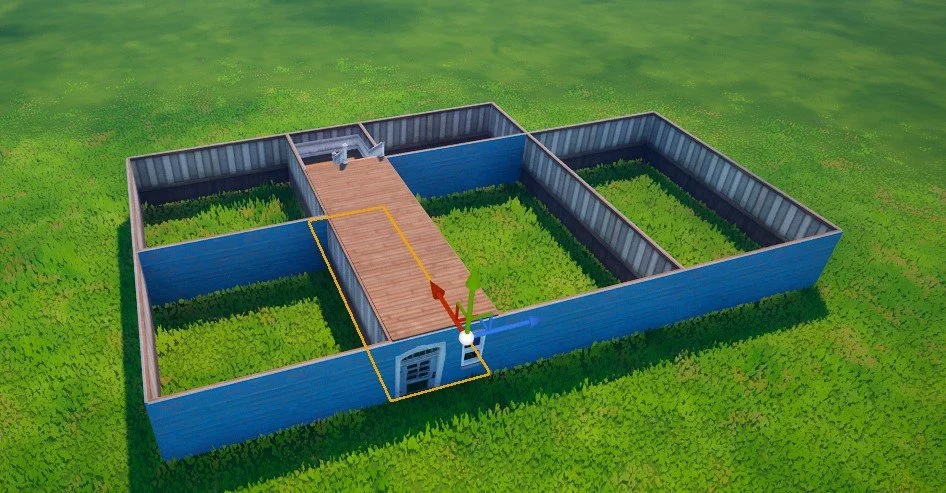
Due to software corruption, this is the only surviving image of my earliest house layout. I experimented with quite a few layouts at the start to keep in line with the sketch vision. I eventually decided to stray from it to fit technical limitations with the engine.
This was also when I first discovered that UEFN has a limited number of walls that share a texture, meaning I had to work very economically with my walls and ensure each room felt distinct while still maintaining the same exterior texture.
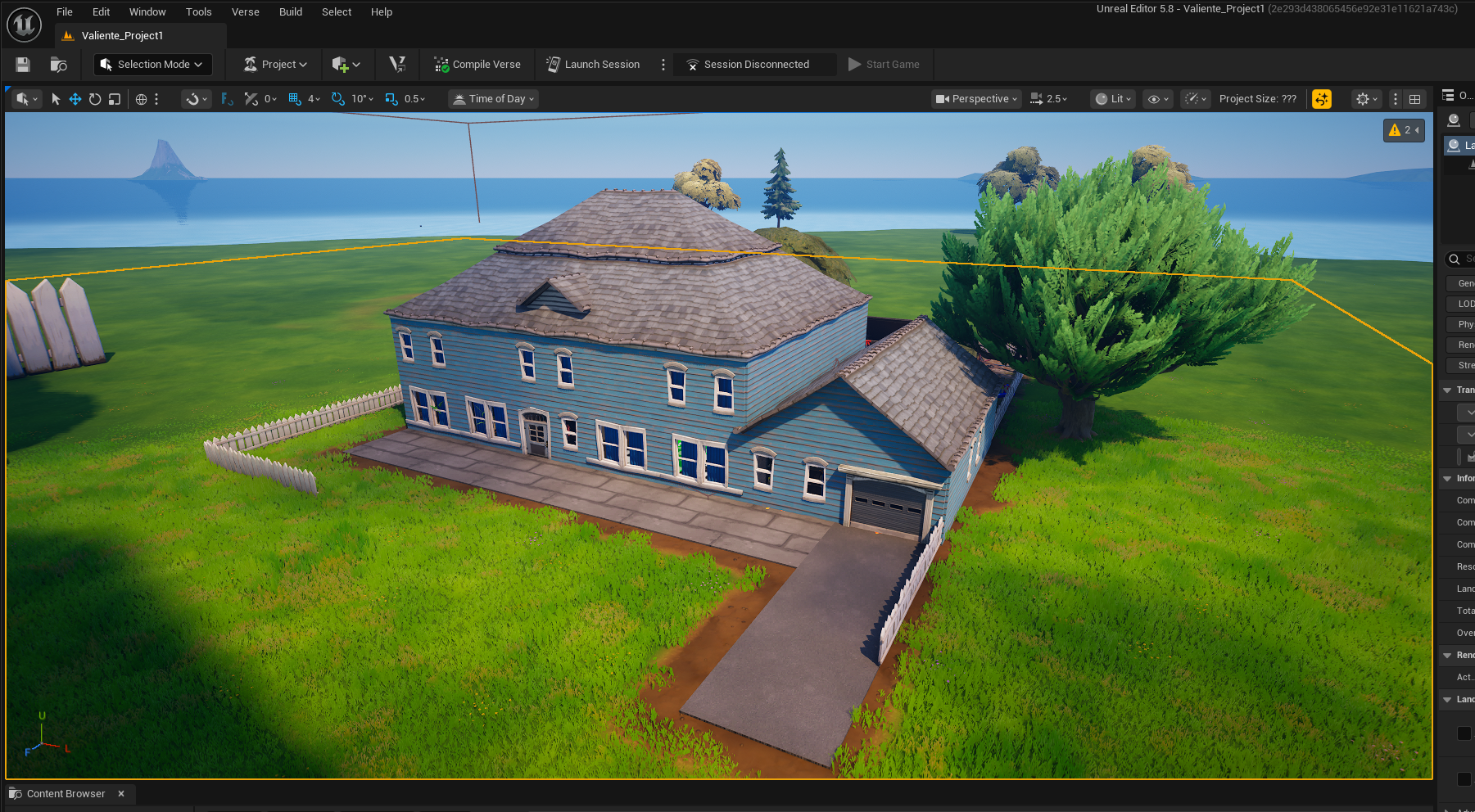
This is the finished house! I had designed it to look like the McMansions of the 70s and 80s, like those in films like Home Alone.
I intentionally had all the windows curtained to avoid spoiling the grand trick I had to use to “shrink” the player. You may be able to figure out what I did from this image.
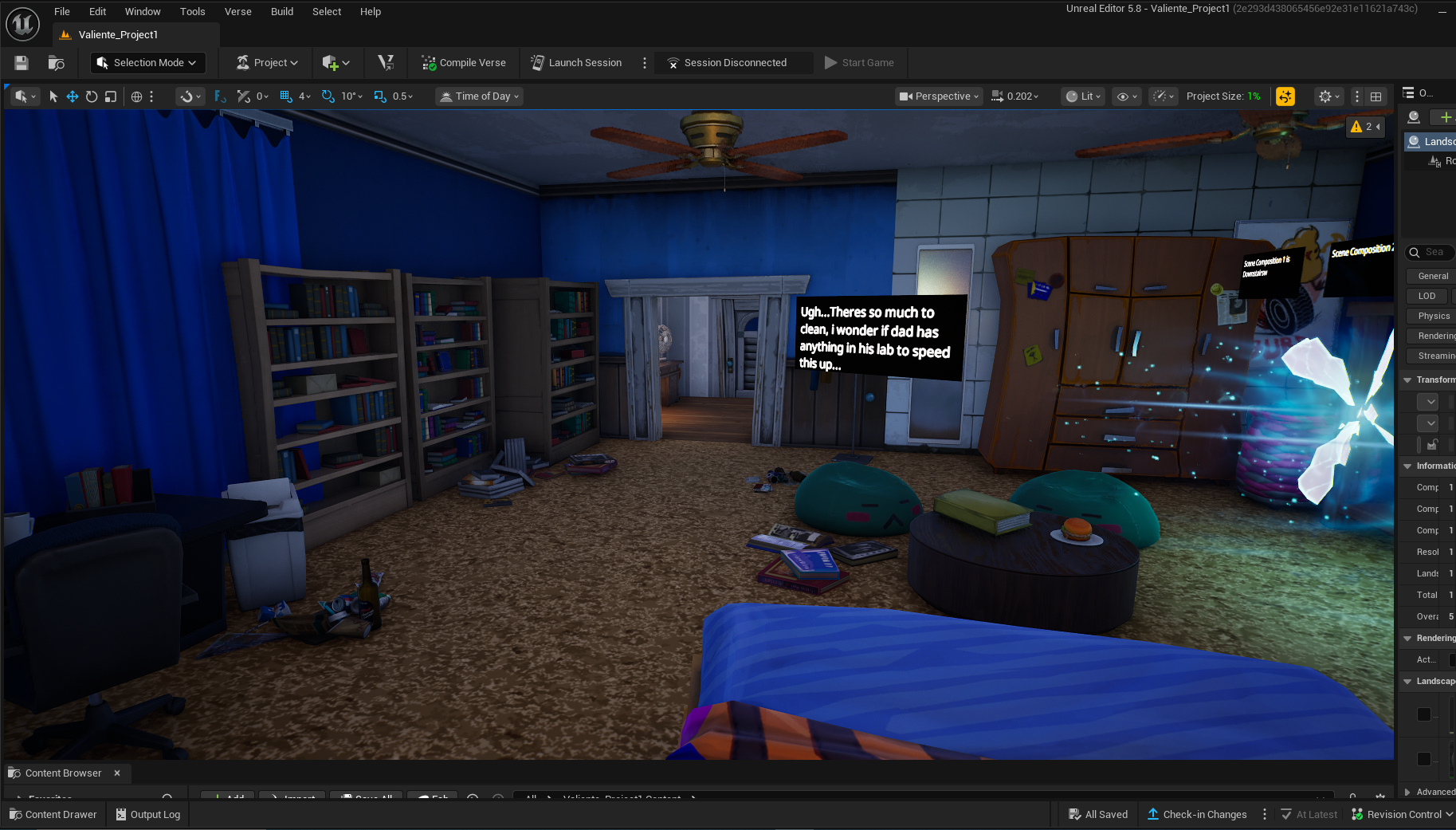
The story begins with the player in their room. The room was designed to be lived in by a child around 14-15 years old.
Every piece of furniture in this shot is designed to make your eyes crawl slowly towards the door.
This is, however, where you can see the first mistake in this project. The goal of this assignment was to use the environment to tell a story…and I included text. It was a problem I did not realize until it was too late in development to change it.
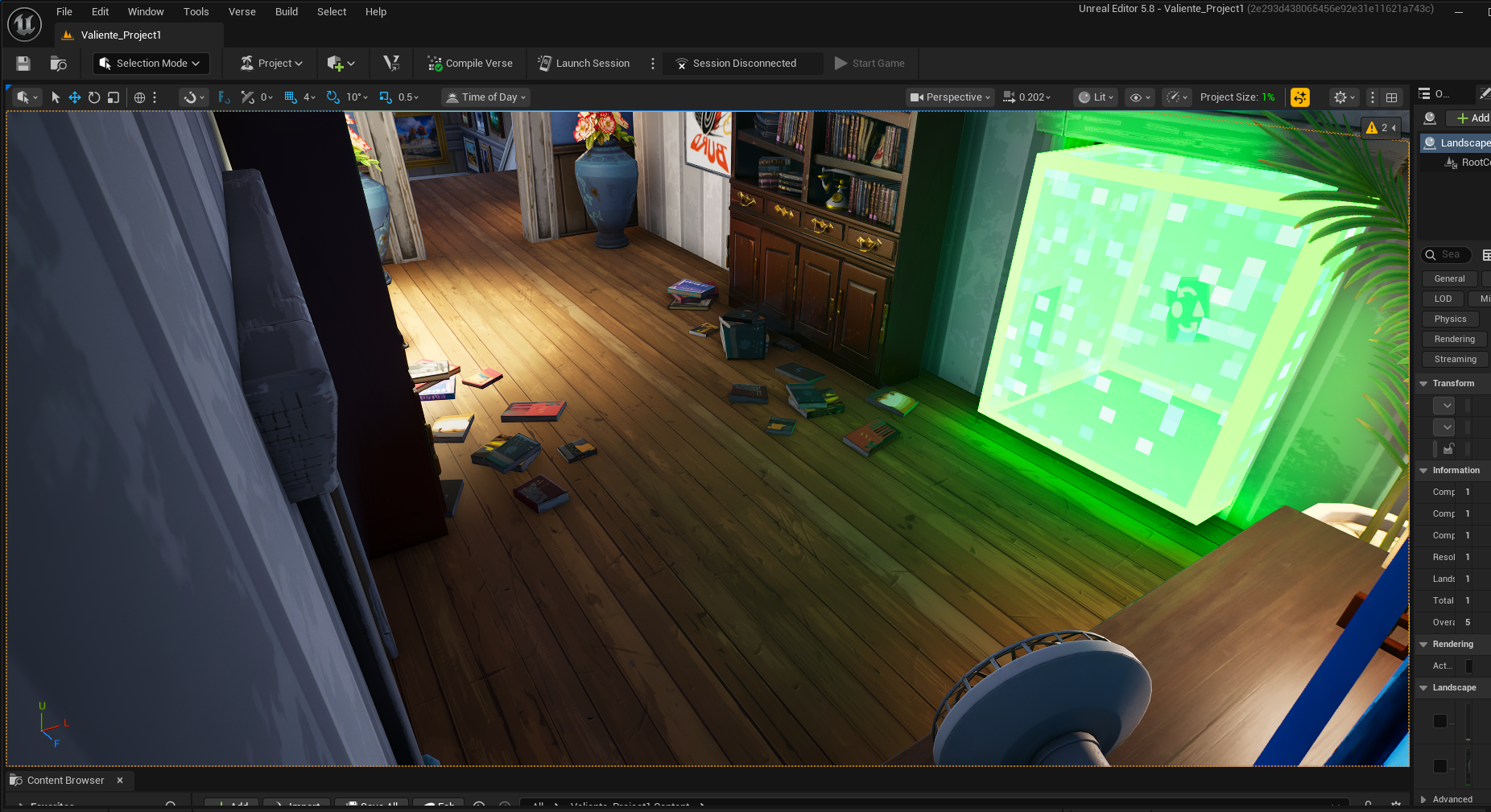
This room is the hallway to the various bedrooms. From here, the player can access the stairs leading down to the first floor. I intentionally scattered books on the floor to reinforce the idea of the house being messy, as implied in the first narrative block. It also leads the player’s eyes to the door.
This is also where I can show the more technical side of this project, using these trigger boxes (the bright green boxes which are invisible to the player), I can shuffle around pieces in the environment as well as make certain characters appear and disappear, both to maintain narrative synergy and keep down hardware cost.
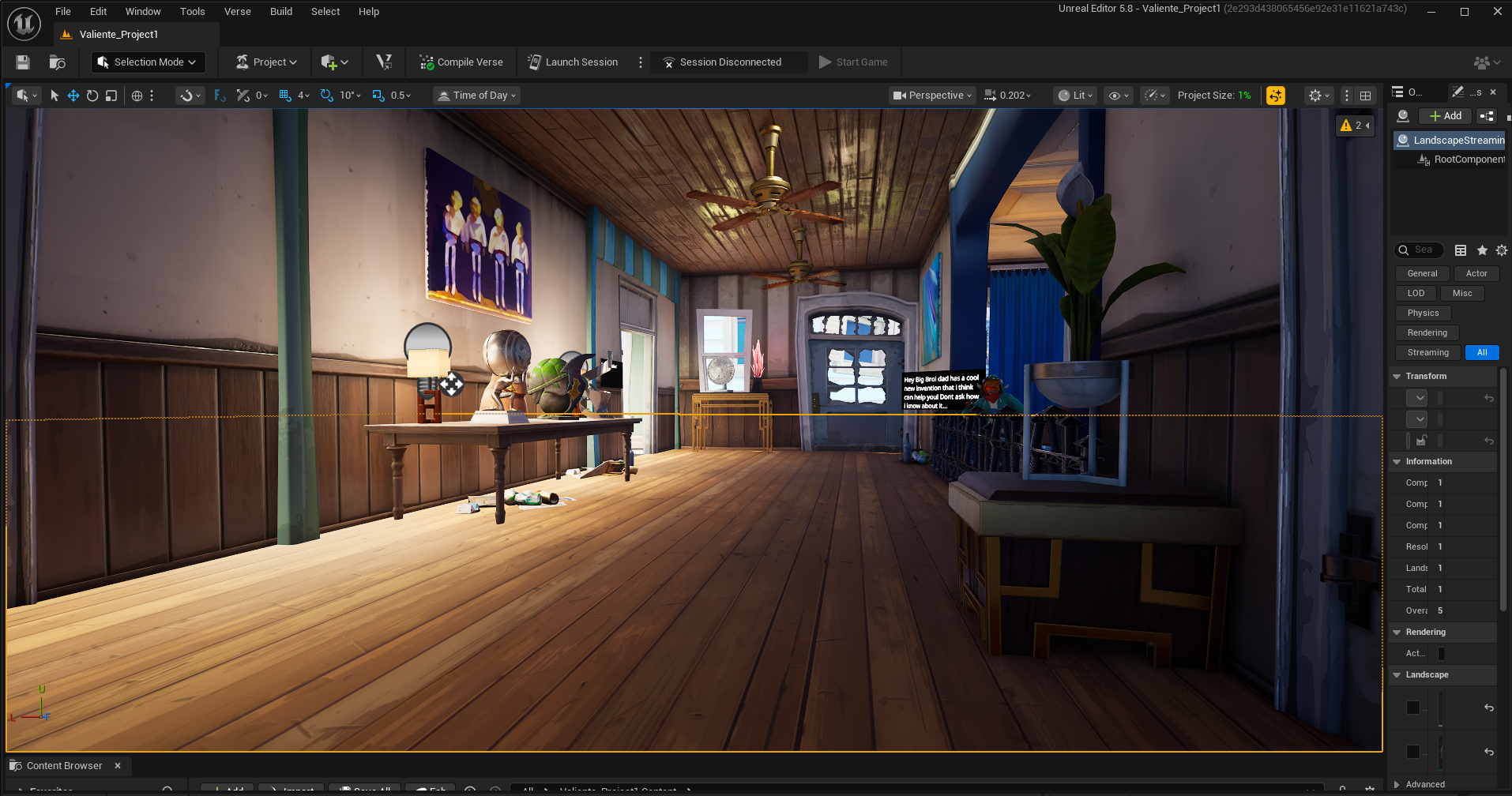
Upon going down the stairs, the player reaches the bottom-floor hallway, where your little brother tells you to check the lab. I intentionally used moving objects, like fans, to slowly guide the player’s gaze towards them, then angled them to direct the player’s gaze.
I also used light to slowly guide players to where I wanted them to go, using the bright lights coming out of the door as a quick way to get them there.
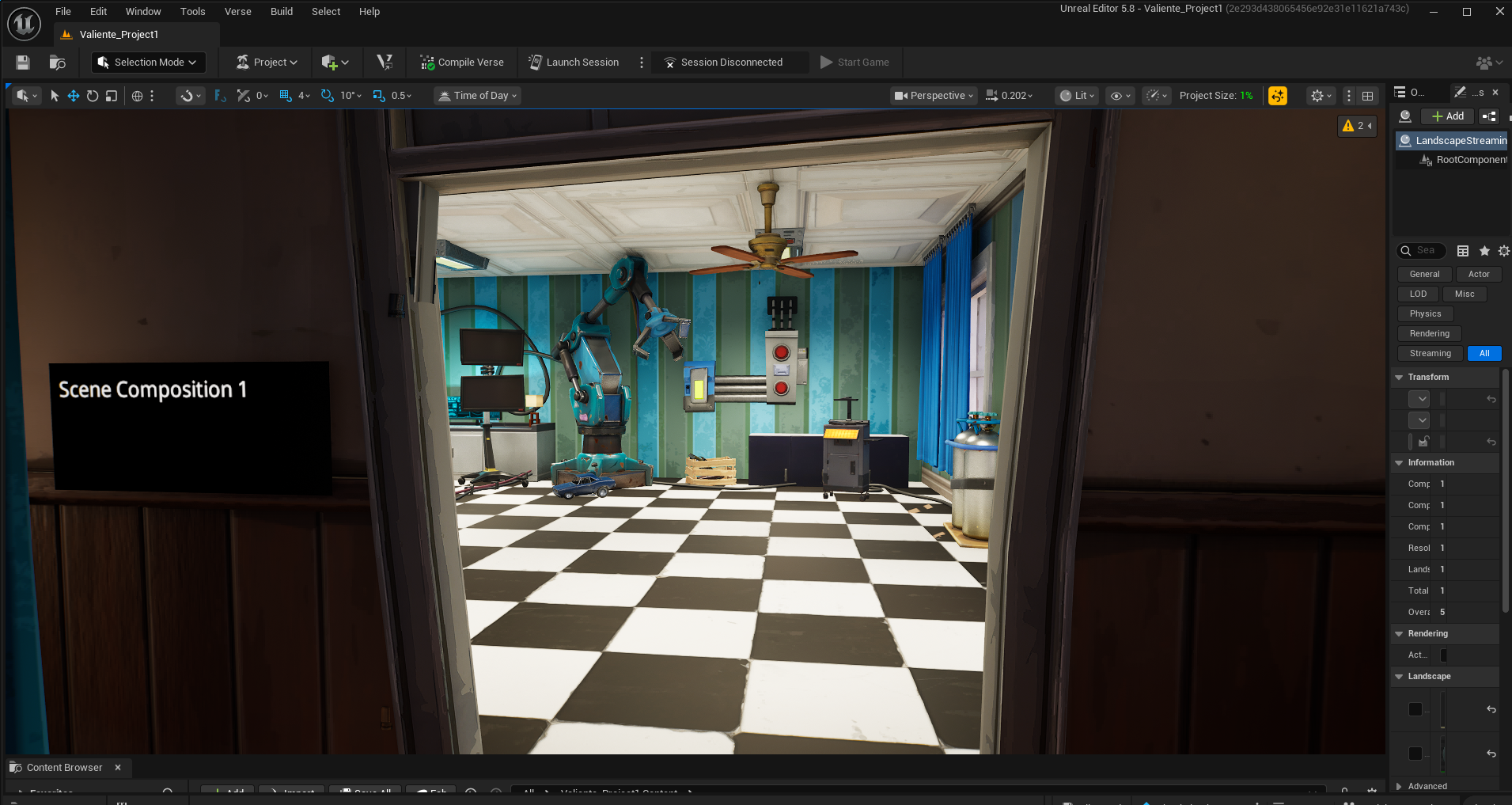
In the project, “scene composition 1” was assigned to show the use of foreground, background, and middle-ground elements to paint a picture. Using the door frame, made the various environmental pieces all lead into the centerpiece and the main interactable of the lab. The big yellow button.
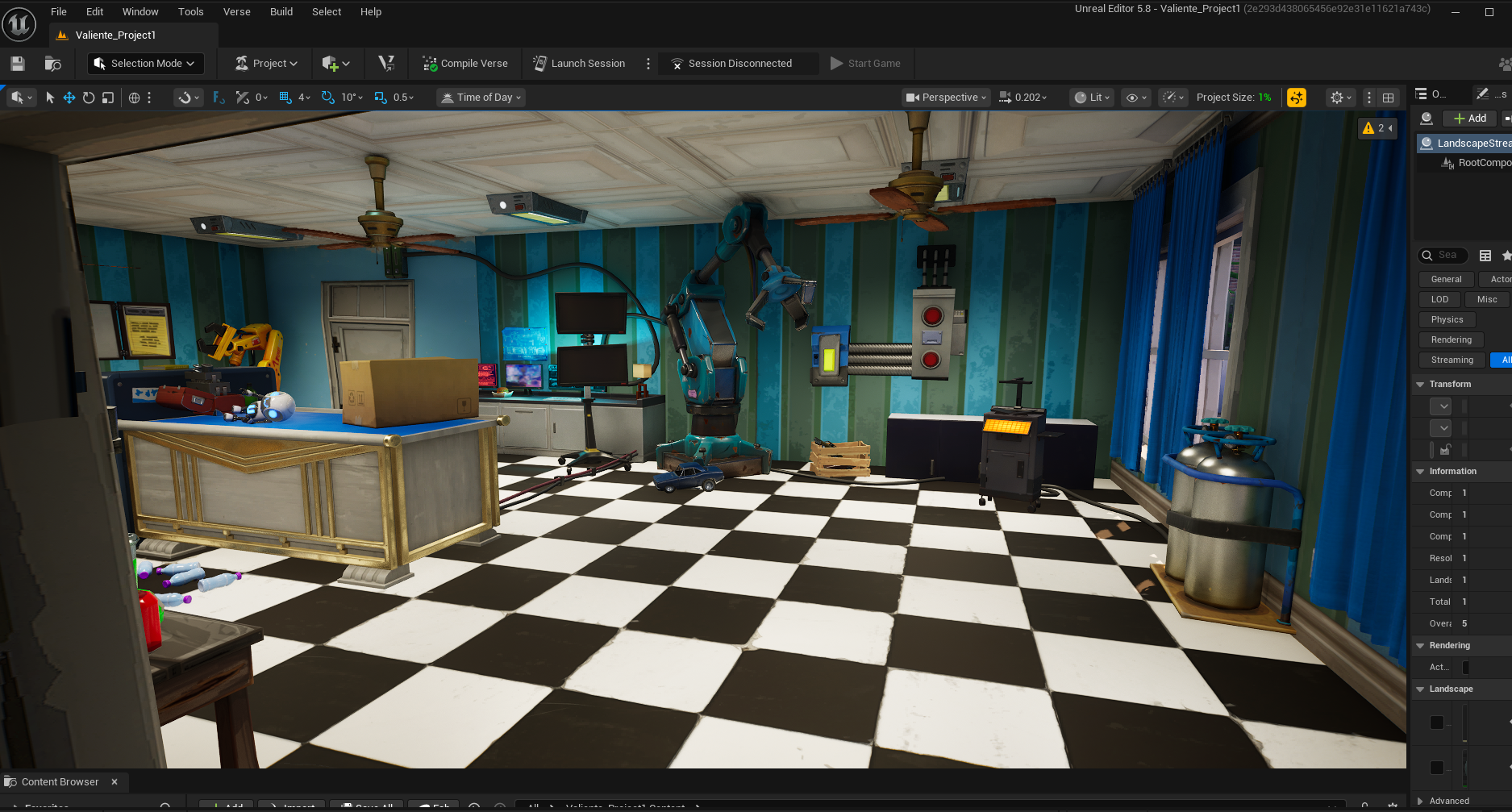
In case the player did not immediately want to touch the button, I added a few extra pieces to guide them naturally.
Since this is your father’s lab and the house is a mess, I decided to shuffle some of the furniture and objects in such a way as to point further
One of the objects is, in fact, meant to be an RC Car, as a way to also hint at the narrative that will unfold soon.
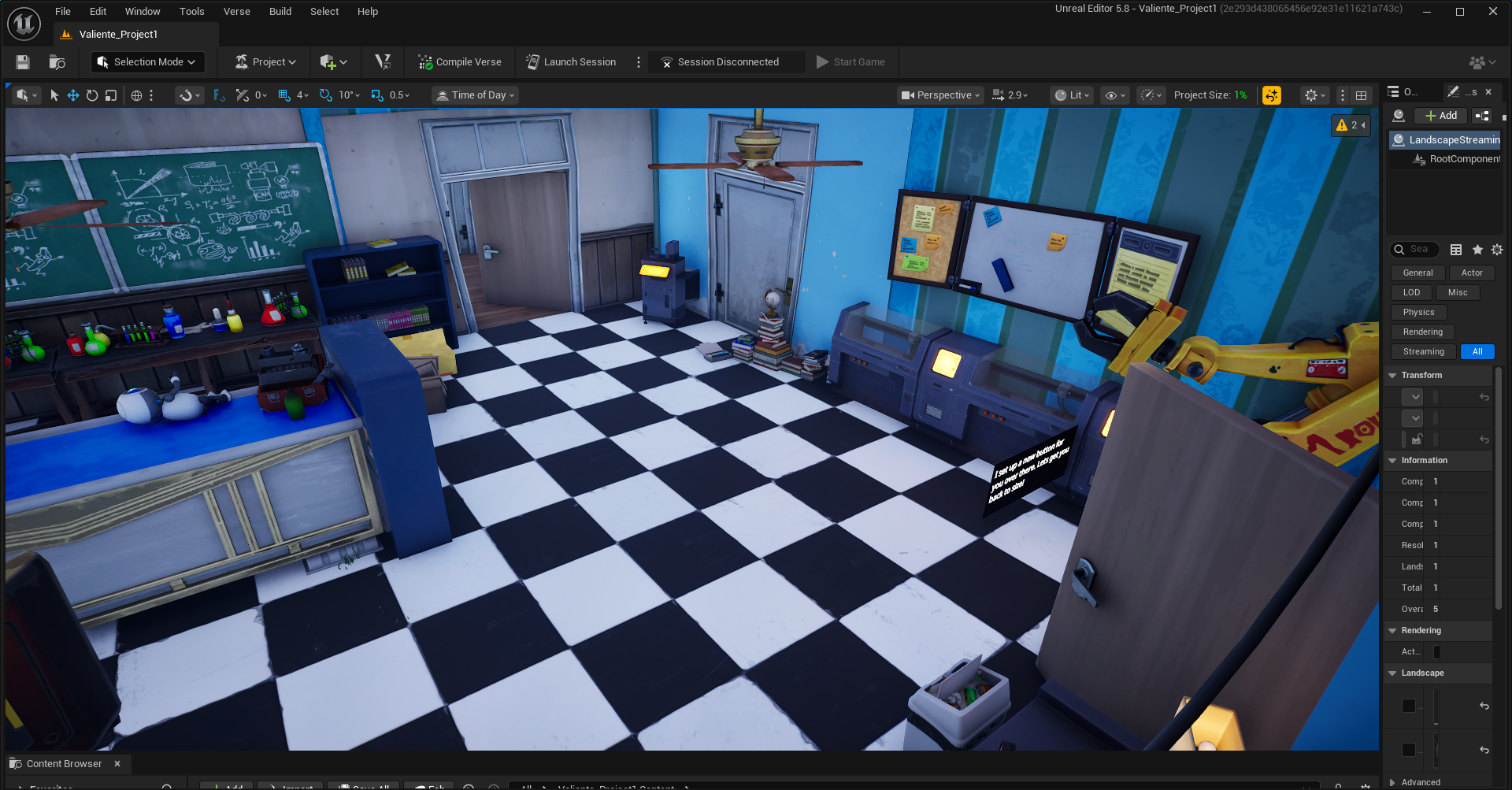
This is the other side of the lab. I intentionally kept this side relatively clean, since this is when the player first acquires their vehicle, so I wanted to give them a wide berth to get used to the controls.
The door on the right is shut at the start of the story. Using the animatopr tool, I programmed the door to open when the player enters a specific trigger box. I used this tool frequently to have objects move around the house while the player isn’t looking.
In case the player did not immediately want to touch the button, I added a few extra pieces to guide them naturally.
Since this is your father’s lab and the house is a mess, I decided to shuffle some of the furniture and objects in such a way as to point further
One of the objects is, in fact, meant to be an RC Car, as a way to also hint at the narrative that will unfold soon.
This is the other side of the lab. I intentionally kept this side relatively clean, since this is when the player first acquires their vehicle, so I wanted to give them some breathing room to get used to the controls.
The door on the right is shut at the start of the story. Using the animatopr tool, I programmed the door to open when the player enters a specific trigger box. I used this tool frequently to have objects move around the house while the player isn’t looking.
Shrunken in the house
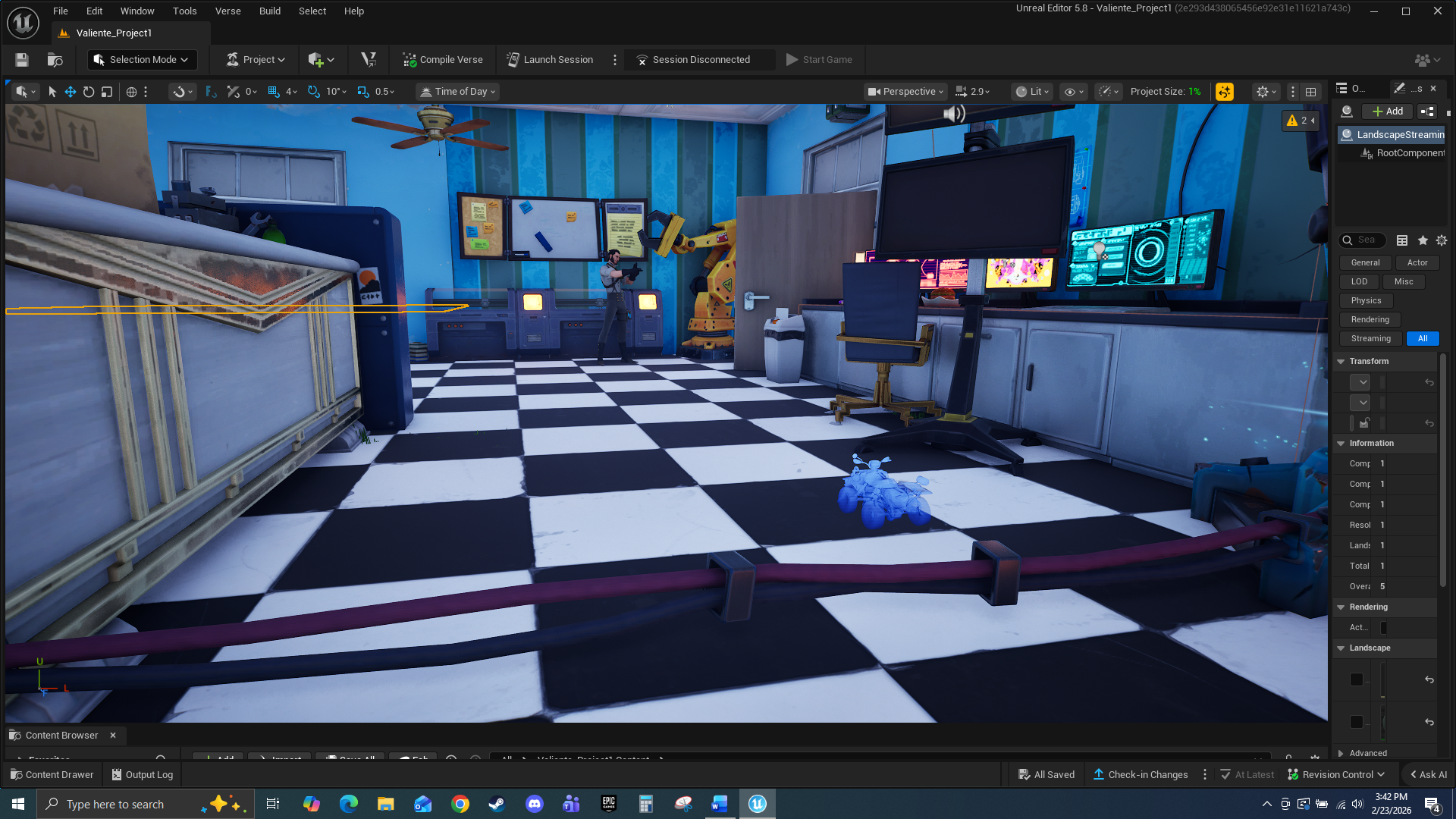
The player has been shrunken at this point in the story. When the player shrinks, I made it so the first thing they see is the ATV, the vehicle used in this level.
The large wire is intentionally placed to block the player when using the ATV, since it's tall enough that they can't cross it, but they can jump it when off the ATV.
I disguised this wire’s level-pacing purpose by attaching it to the shrink ray that’s near the button. That way, the player’s immersion isn’t broken.
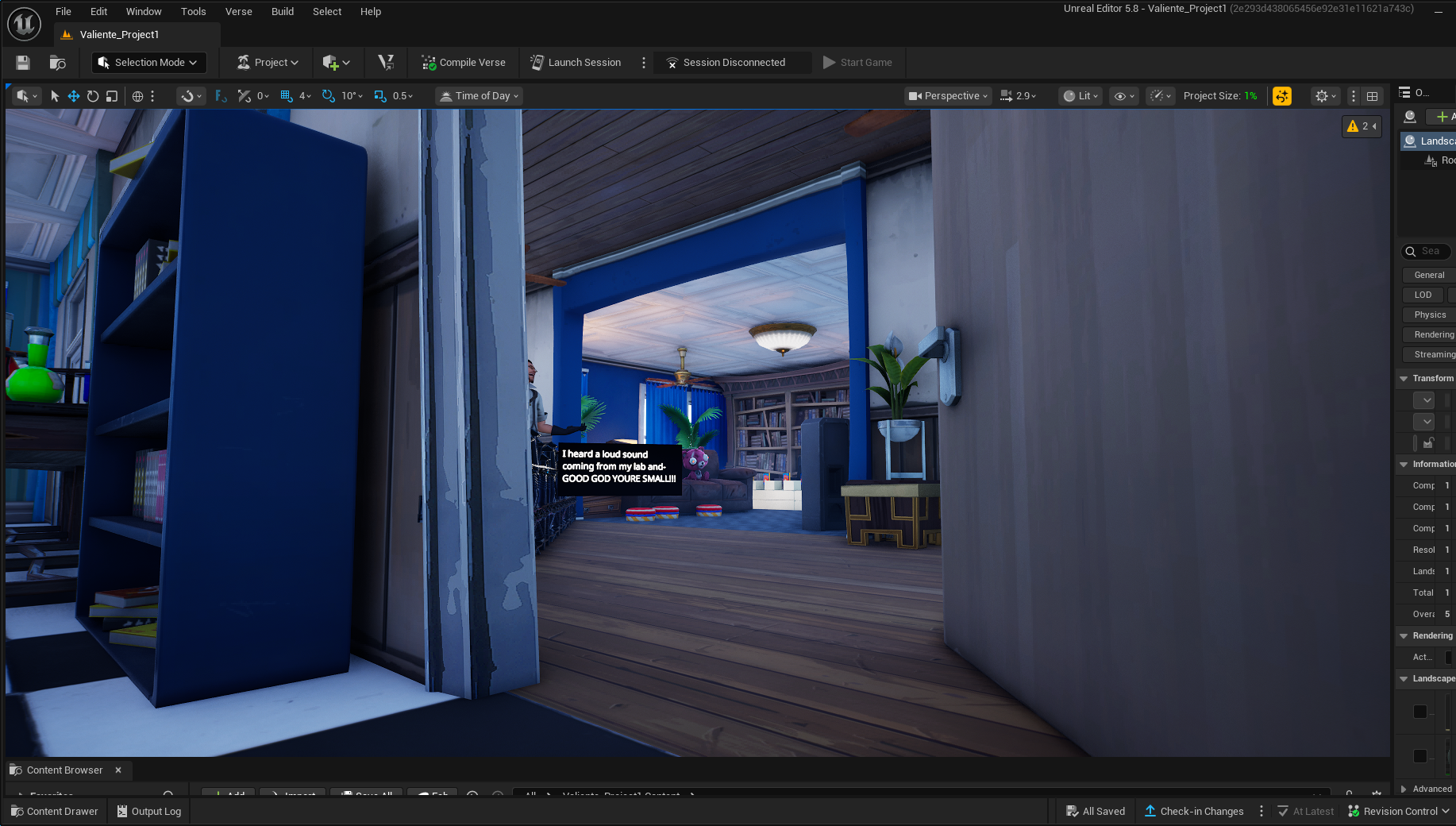
· Upon hopping onto the ATV, the player will notice that the door they passed by is now open, and they get to go through the hallway they were just in! I designed this to really sell the fact that the player is small now.
· Here is also where I have the father discover how small you are and help you on your quest. I placed the billboard directly ahead to ensure the player can read it fully on their way to the next destination.
· This is also where I show a bit more of the “moving things around” aspect of the level for narrative purposes. As your brother has now opened the baby gate that blocked him off, it also secretly forces the player down the path I want them to take.
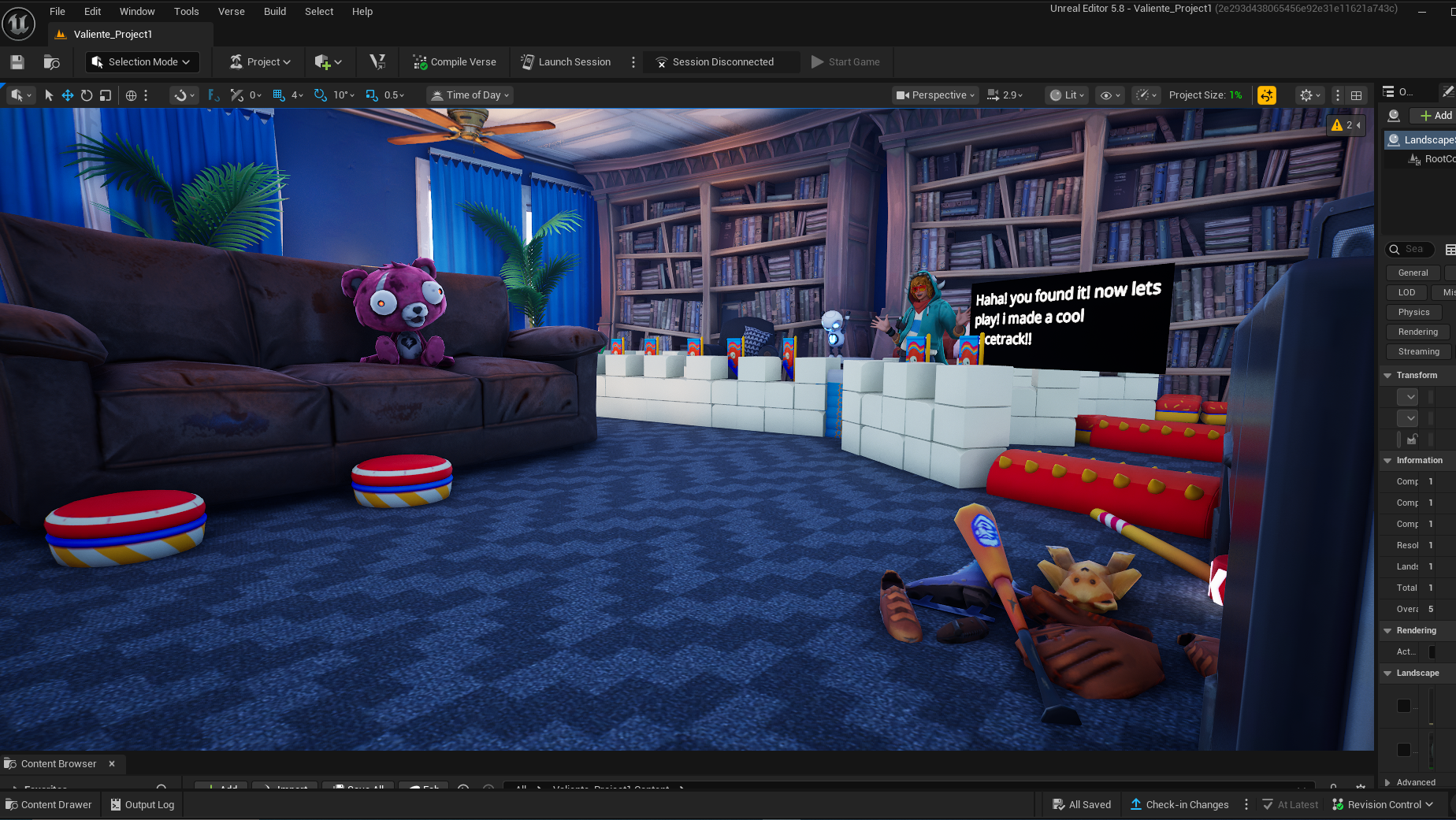
After crossing the hallway, the player enters the domain of your kid brother, the living room. I intentionally designed there to be a contrast between the regular parts of the house and the parts of the house your brother has taken over.
I did this by having all the segments the kid brother is in be much more artificial or “made up” in their layout. Whereas the parts not dominated by your brother follow much more conventional house lines and pathing.
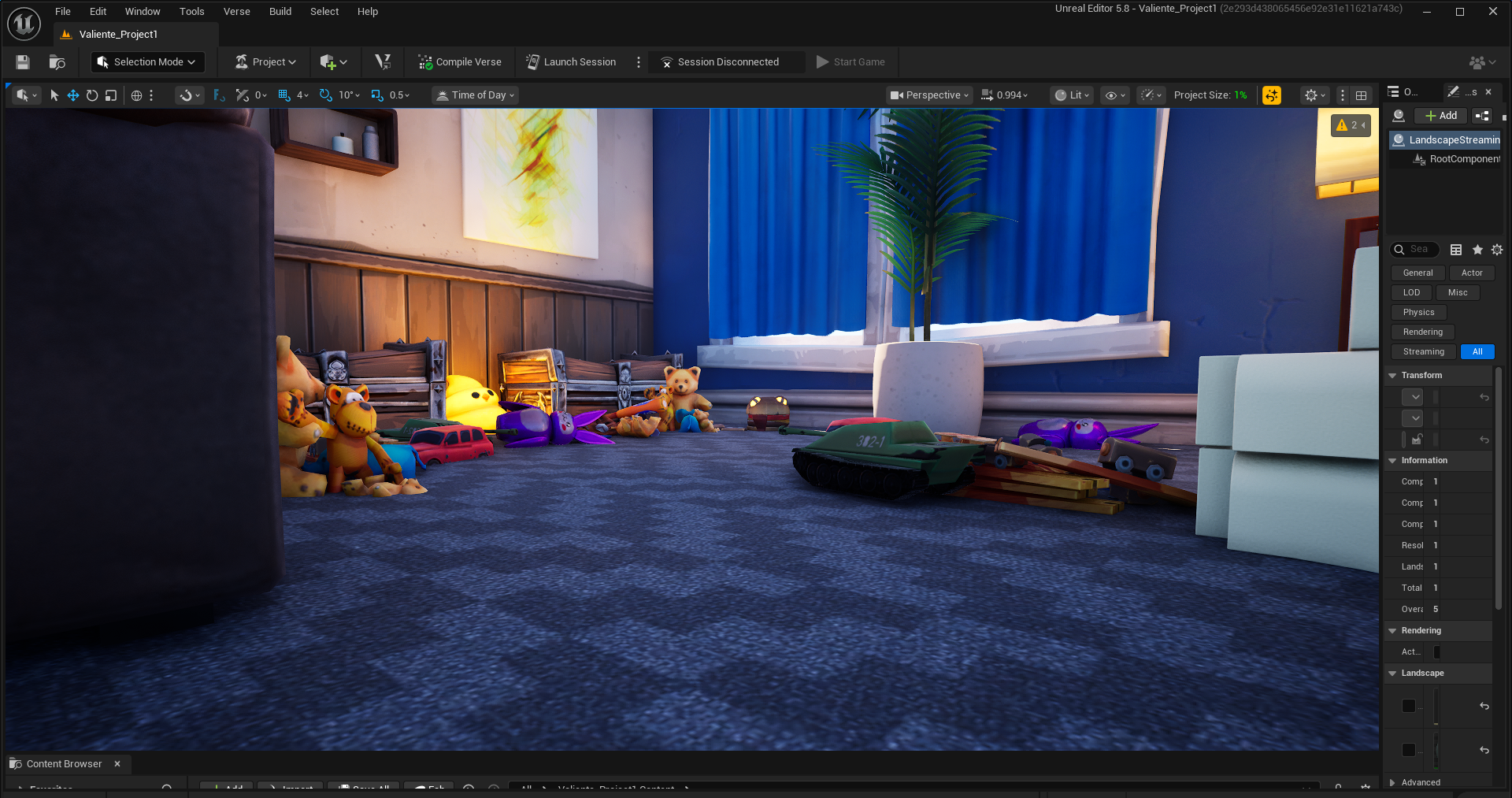
Upon hopping onto the ATV, the player will notice that the door they passed is now open, and they can go through the hallway they were just in! I designed this to really sell the fact that the player is small now.
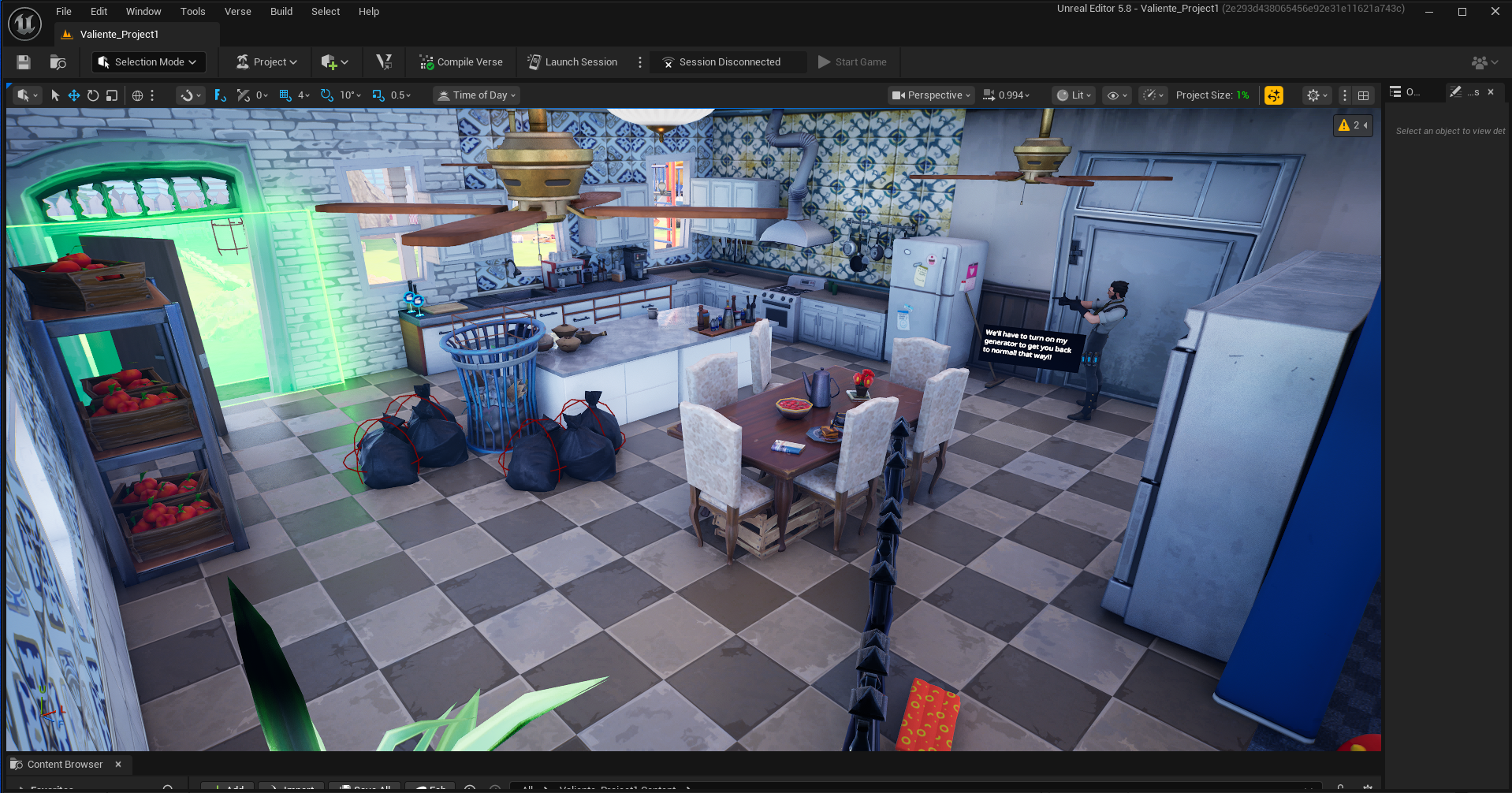
Here is also where I have the father discover how small you are and help you on your quest. I placed the billboard directly ahead to ensure the player can read it fully on their way to the next destination.
This is also where I show a bit more of the “moving things around” aspect of the level for narrative purposes. As your brother has now opened the baby gate that blocked him off, it also secretly forces the player down the path I want them to take.
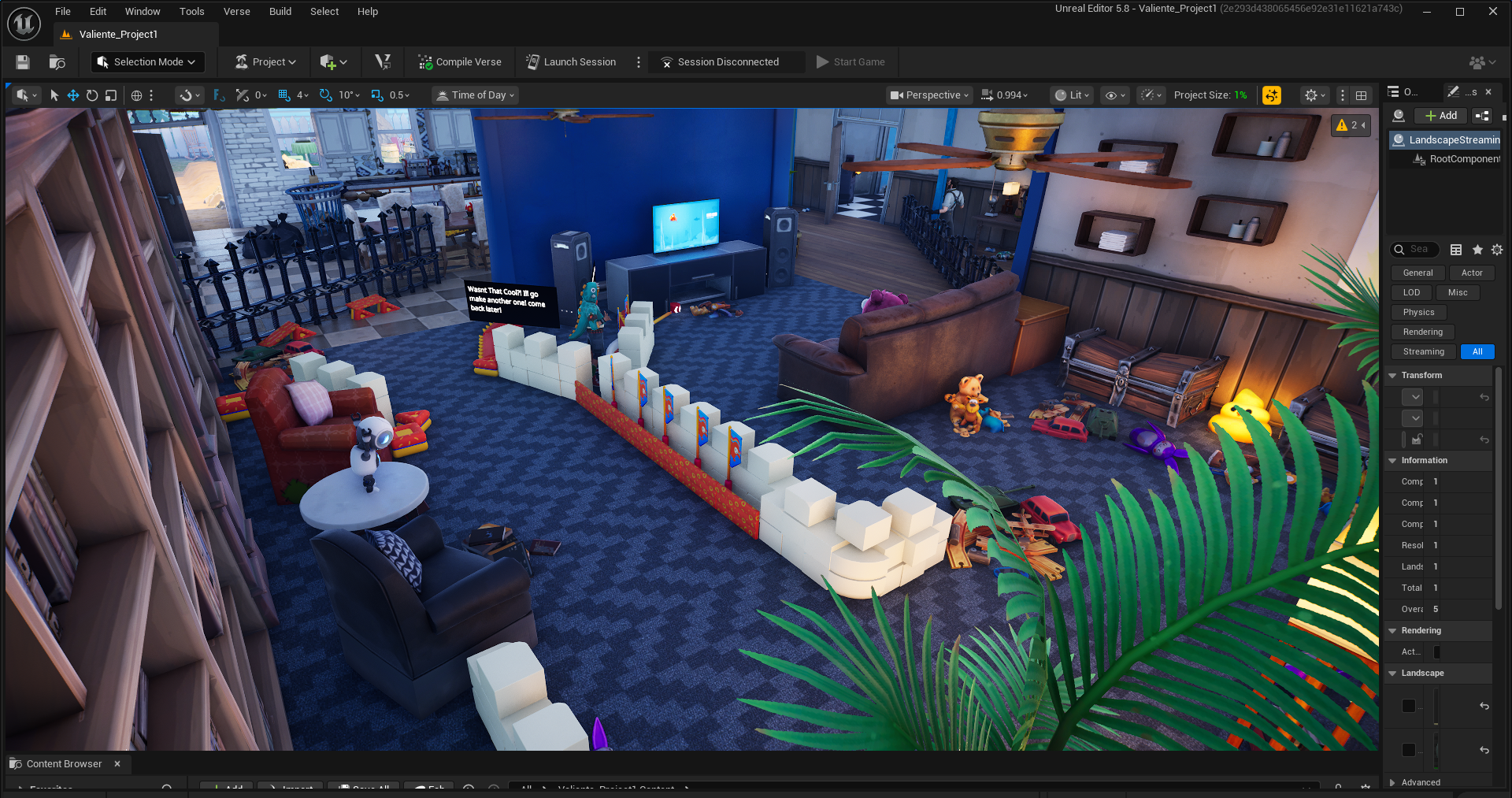
Here is an overhead shot of the living room area showing the full layout. To sell this race-track vibe, I intentionally designed this portion to feel more like an arcade racing game, especially with the tight turns.
It's around this time that I selected the ATV for the vehicle of choice, as other vehicles proved too large or too slow for this segment.
I was able to use the animator tool to also hide the billboards and the kid brother when I needed them to appear, for example, the kid brother rotates when the player isn’t looking to continue the narrative
Here is an overhead shot of the living room area showing the full layout. To sell this race-track vibe, I intentionally designed this portion to feel more like an arcade racing game, especially with the tight turns.
It's around this time that I selected the ATV for the vehicle of choice, as other vehicles proved too large or too slow for this segment.
I was able to use the animator tool also to hide the billboards and the kid brother when I needed them to appear, for example, the kid brother rotates when the player isn’t looking to continue the narrative
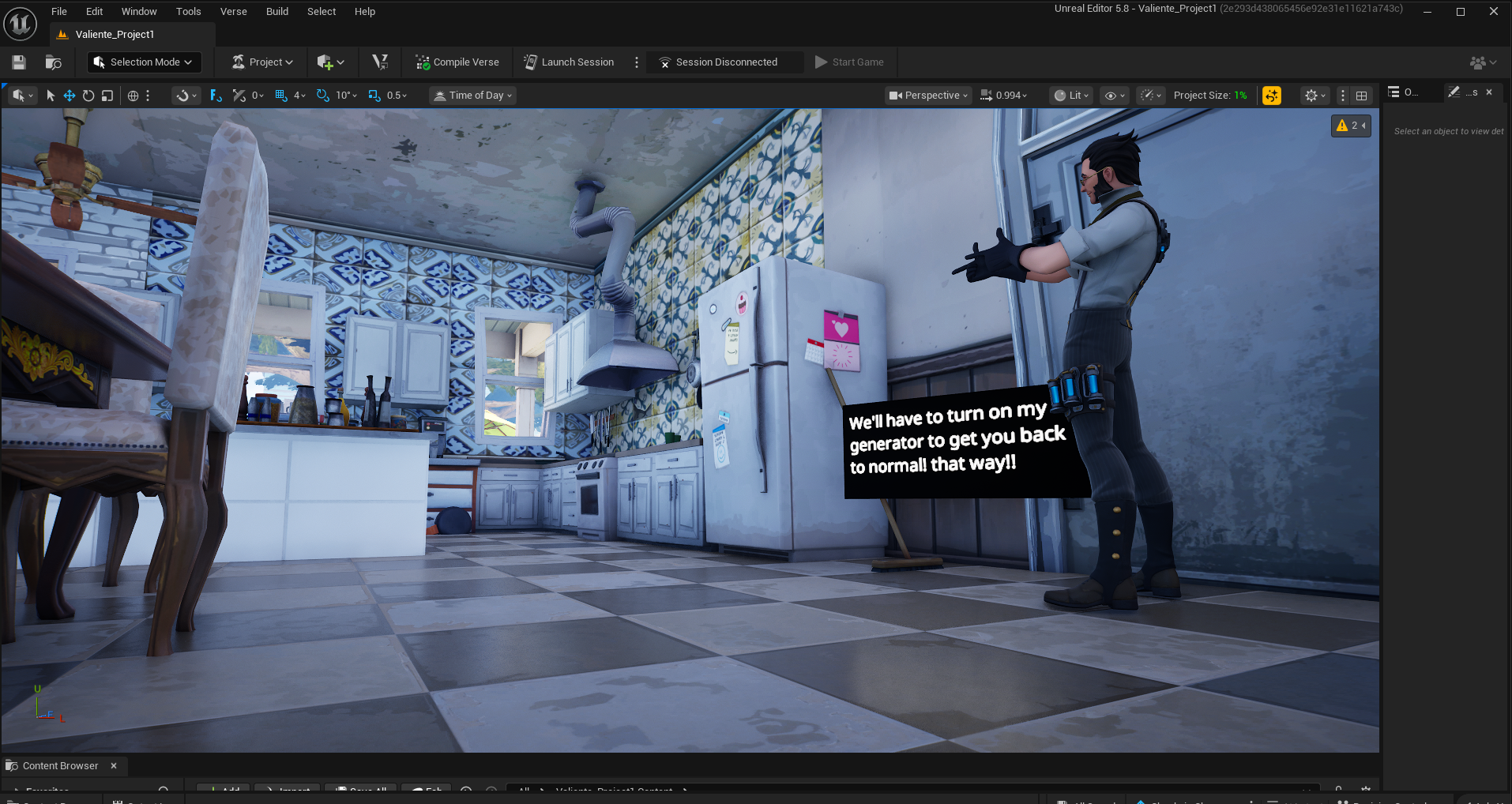
Here is a shot from the player’s level. This is the second mistake I made regarding the narrative. I have placed too many billboards in the level, leaving the player with no real way to infer the narrative from the environment.
I think if I were to remake this and keep the narrative, I would’ve swapped to audio samples so the player doesn’t have to pause to read. Or I would have outright reshaped the layout to let the player understand the family through the environment.
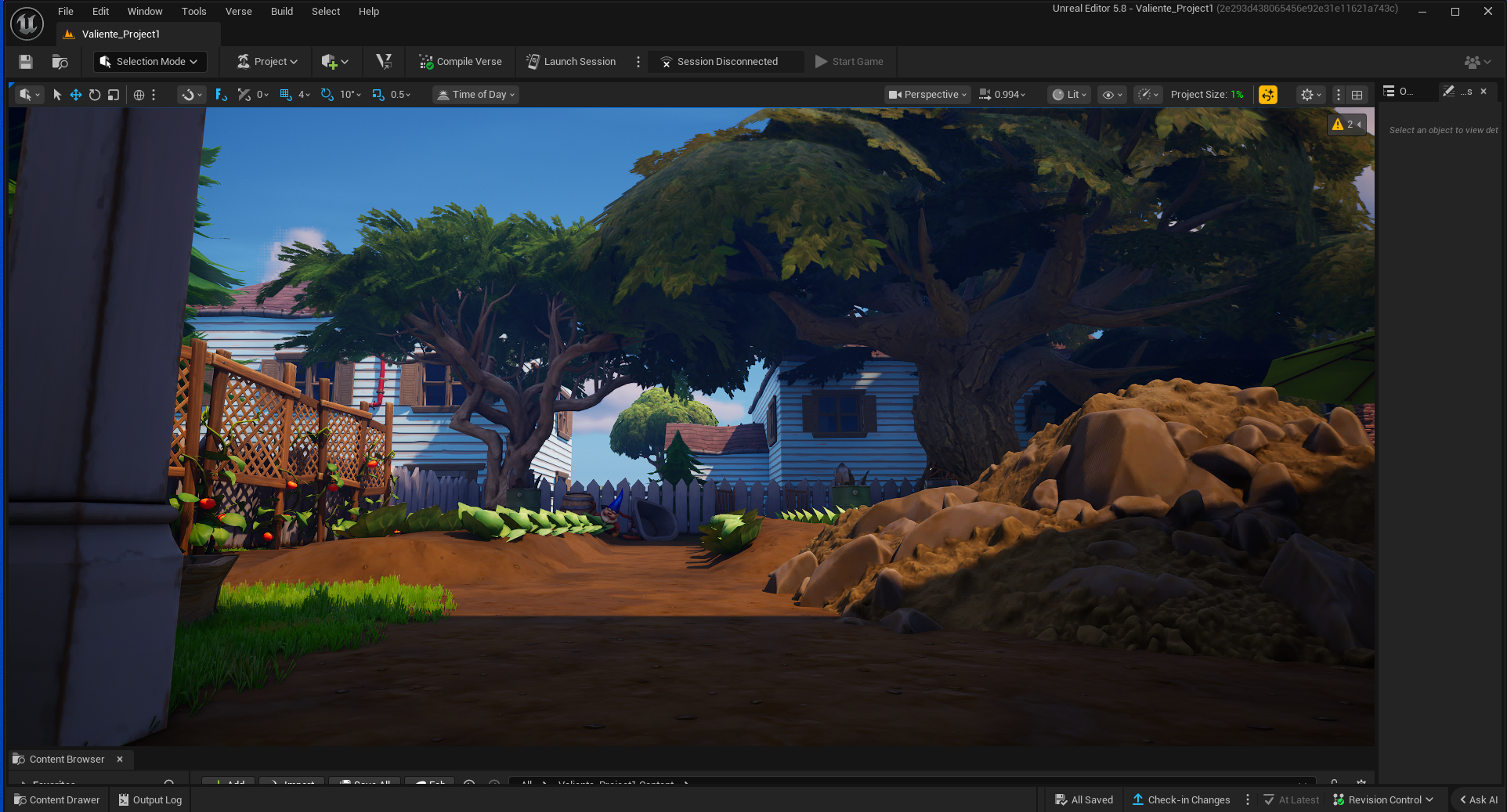
Upon exiting the kitchen, the player will then enter the backyard. Here is where I think one of my best moments on this level appears—the Cabbage Patch.
The player can feel both speed and smallness as they blitz through the cabbages. I even placed a wheelbarrow at the end of the straight to subtly tell the player to go right.
Shrunken in the garden
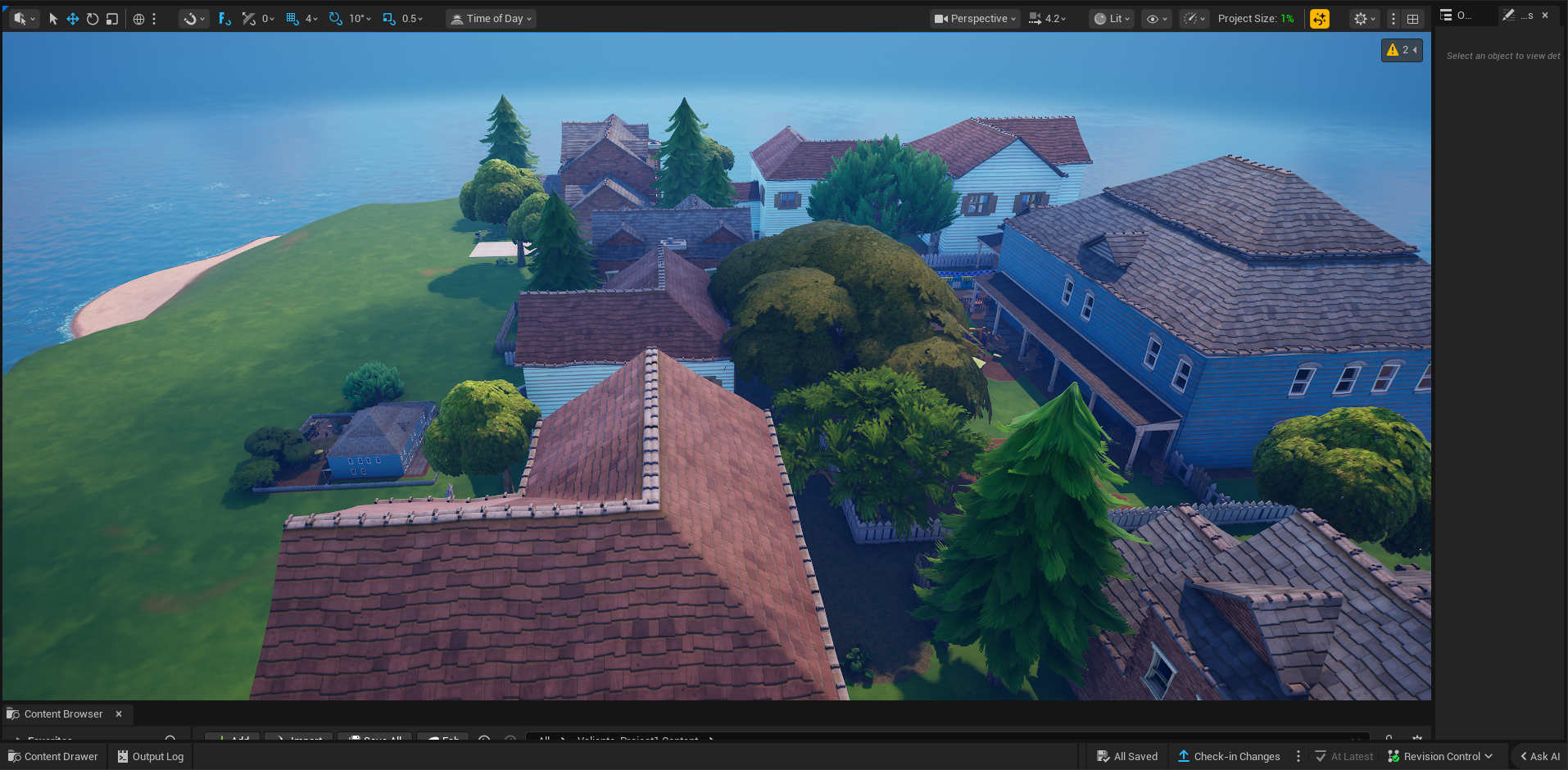
Here is a shot revealing how I performed the shrinking trick. UEFN doesn’t allow the player to be shrunken down in any way. So instead of making everything smaller, I made everything bigger! Including the house then player goes through!
The way I did this was by designing the entire house in its regular size, down to the details. And then I copied and scaled up the house by 8x.
Here is a shot revealing how I performed the shrinking trick. UEFN doesn’t allow the player to be shrunken down in any way. So instead of making everything smaller, I made everything bigger! Including the house then player goes through!
The way I did this was by designing the entire house in its regular size, down to the details. And then I copied and scaled up the house by 8x.
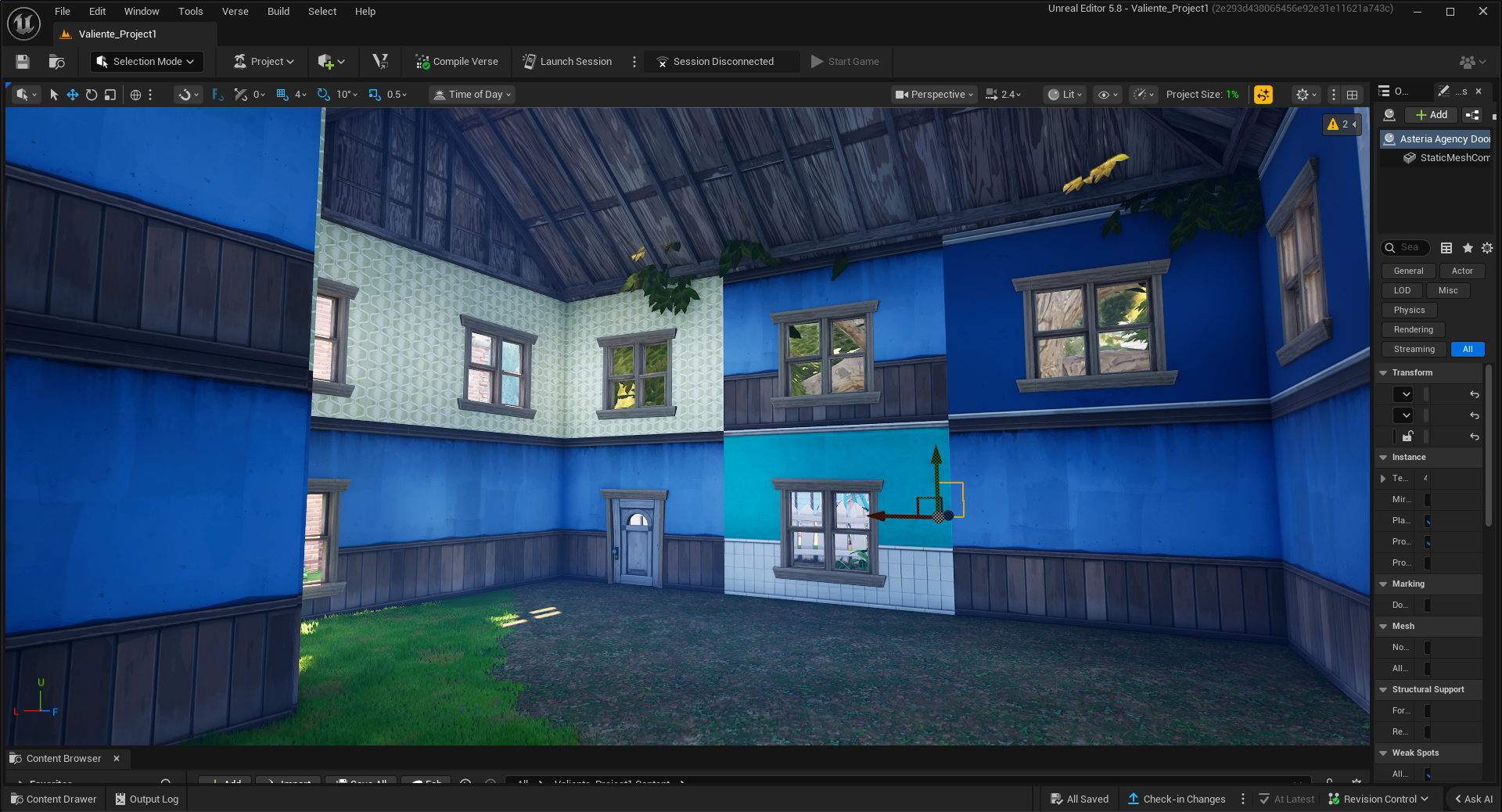
As you saw in the previous shot, I also scaled up several houses to sell the illusion in the garden section. Scaling so many houses would make the game unplayable as the engine chugs to render and load everything.
To counteract this. I hollowed every single house, removing all its furniture and rooms; the player won't see them, so I get to have large houses at much lower rendering cost!
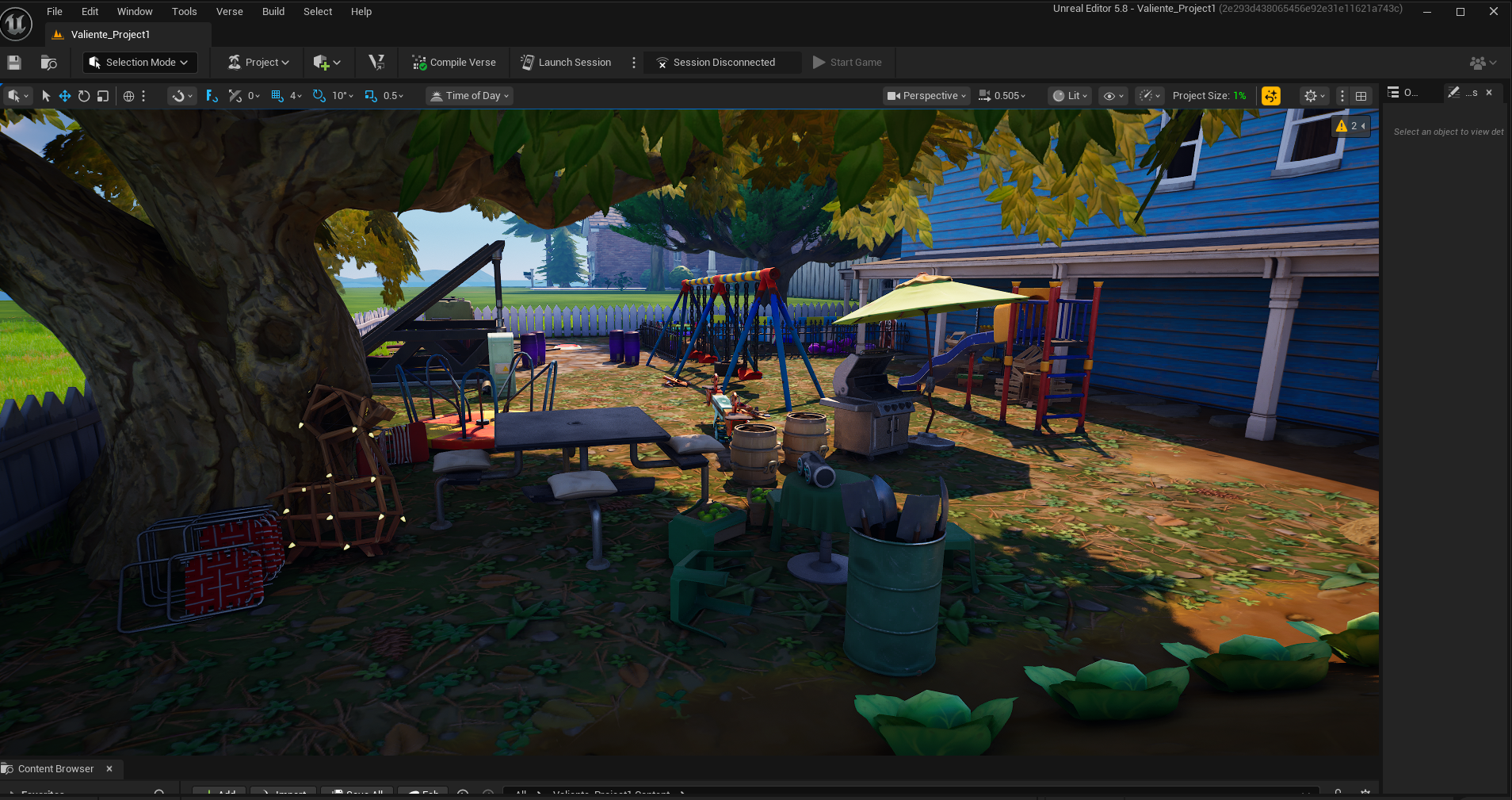
Here is the original small-scale garden. It has a few key differences from the enlarged version since this garden is never used in the final path.
For example. Originally, I had the idea of having the player go under a table to bookend the first section of the garden and lead into the next section. However, the tables’ collision prevents this, so it had to be removed
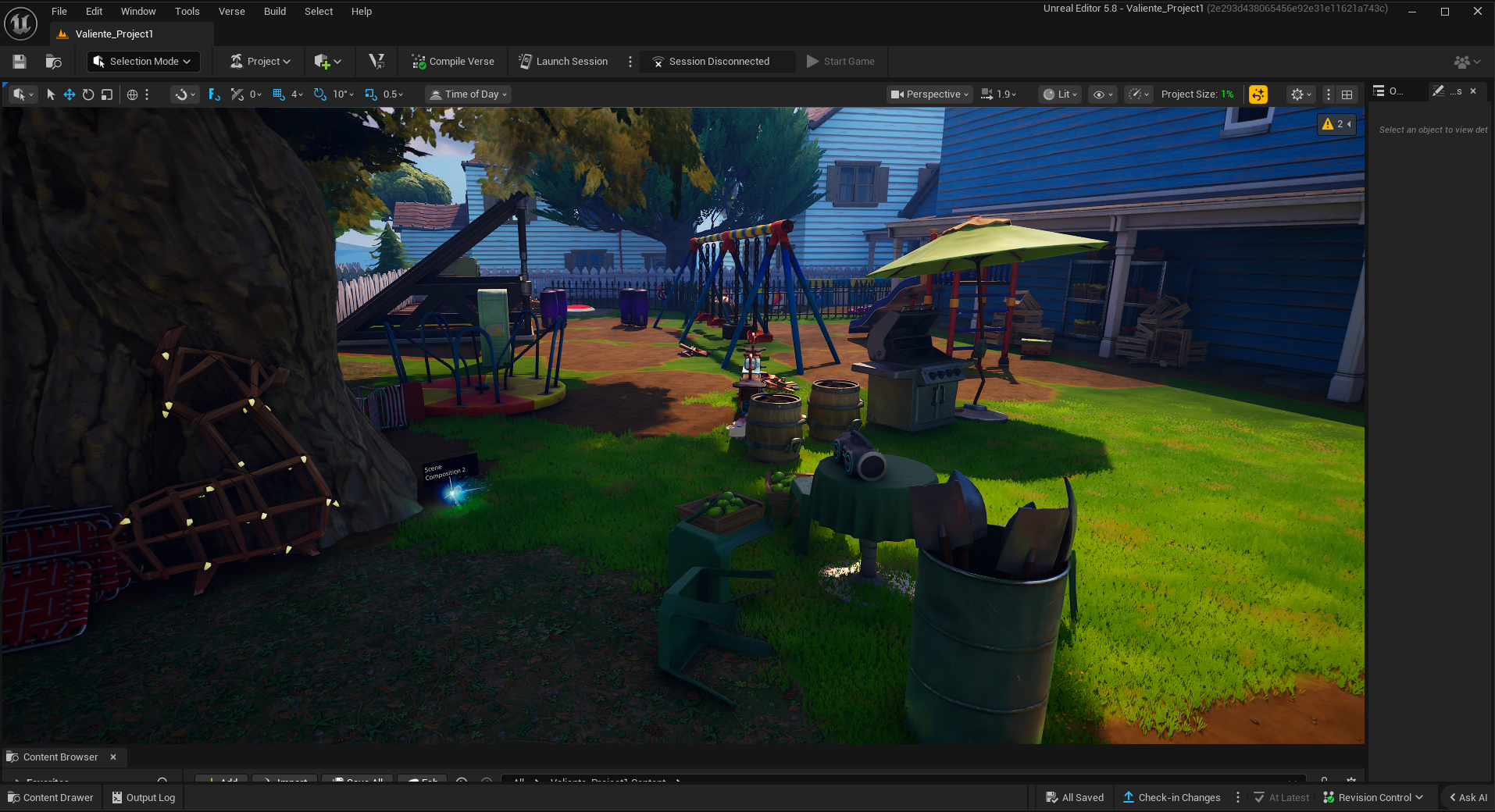
Here is the large-scale garden the player passes through right after turning left from the wheelbarrow. Once again, I used light to point the player towards where they needed to go. I also used more naturalistic concepts, such as toppled over furniture, to block and guide the player where I want them to go.
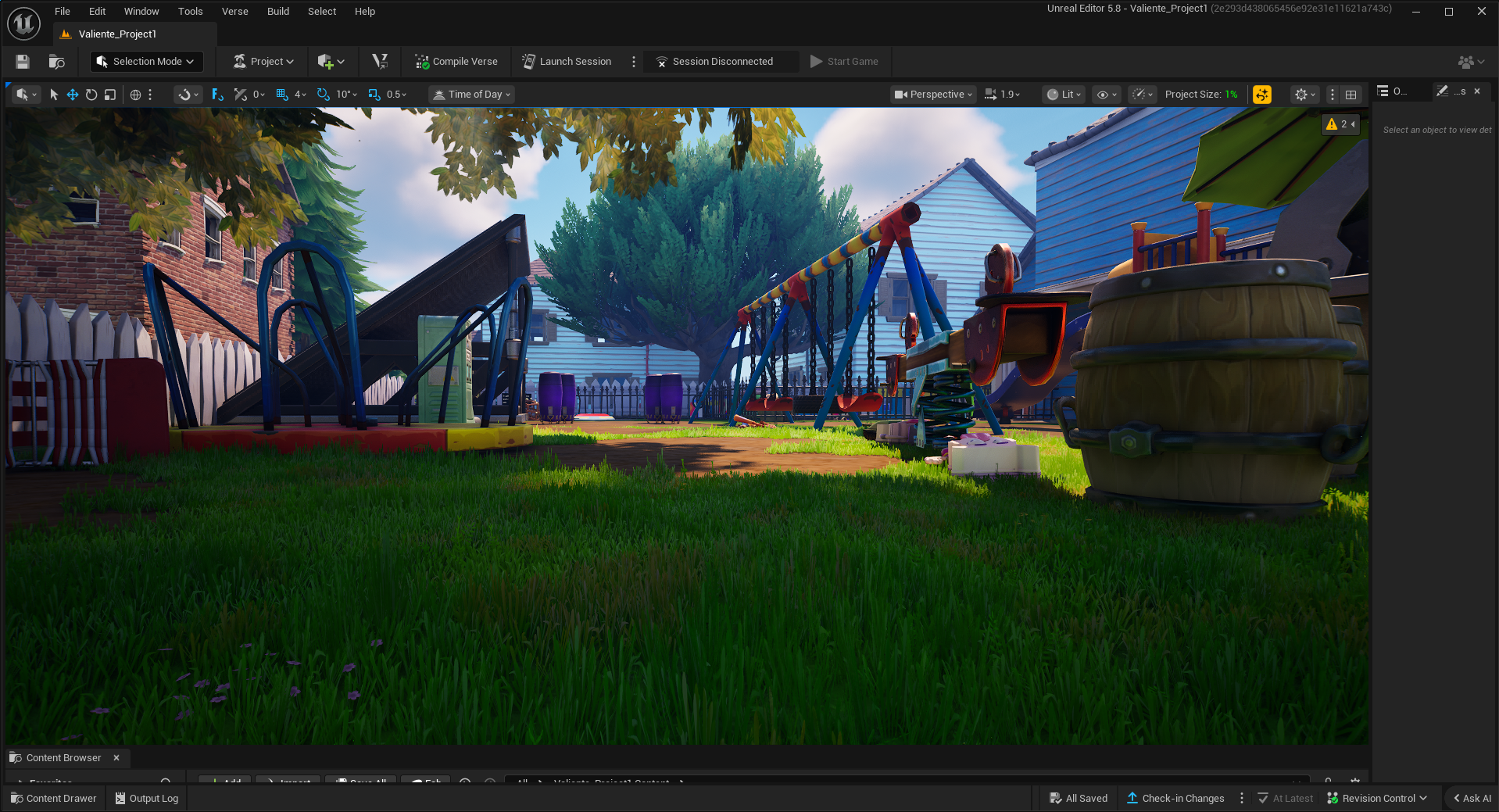
As seen in the previous shot. I also changed the ground textures from the small garden, as I found that the small garden texture would muddle the path needed to go.
As such, I used the basic grass rather than leafage, leaving patches of dirt where the kid brother character would likely be constantly moving, hinting at the next destination. This tactic uses the same logic as hiking trails do to guide travelers.
I intentionally used the various playground pieces to form a straightaway for the player to pass through. This is meant to be a much more scenic section as the player marvels at the size of all these common things.
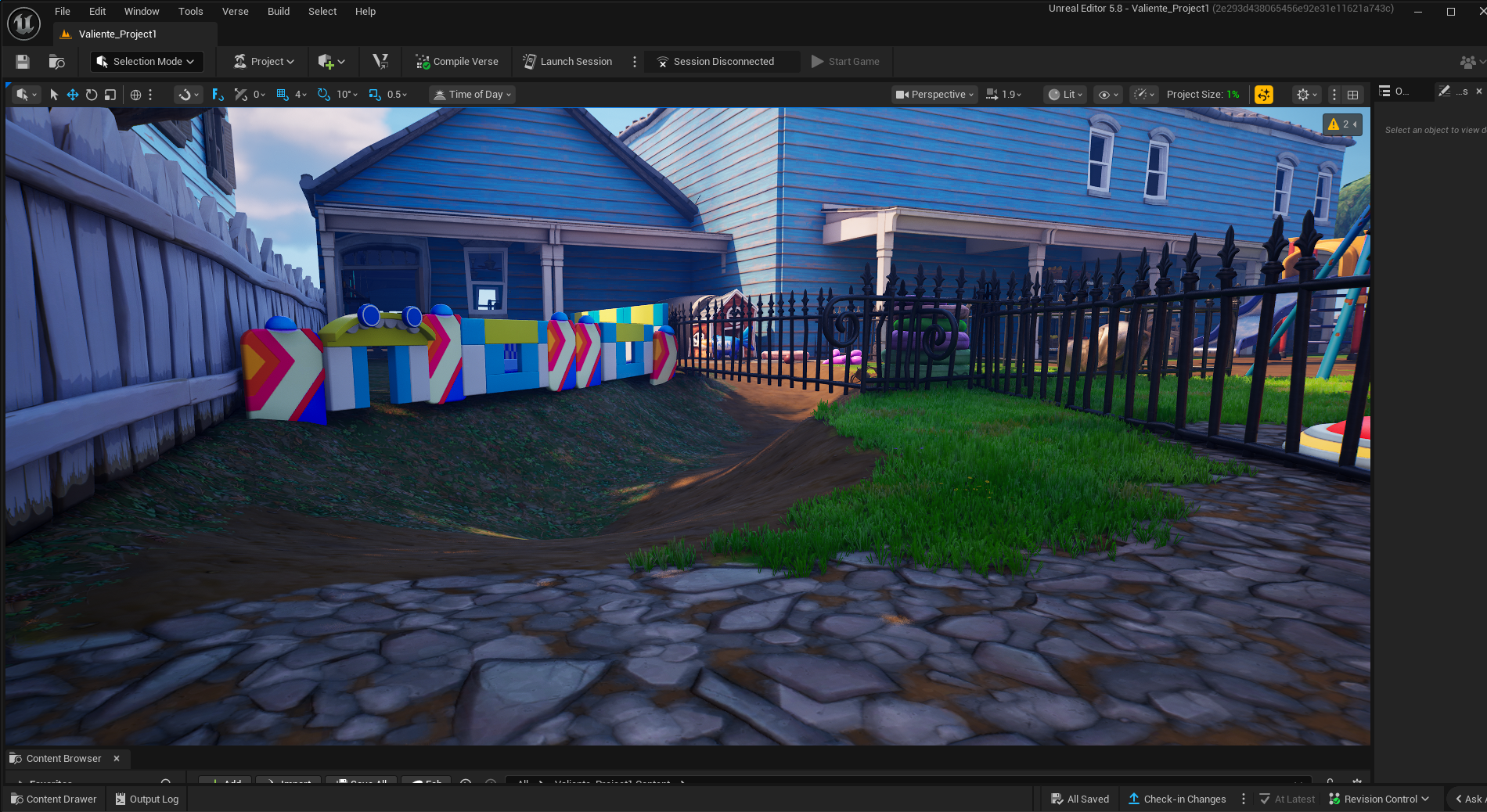
After the player passes through the generator to power the shrink ray. The player then goes to the final garden section, the dog section. Throughout this level, the ground has been mostly flat. As such, I introduced this divot to break away from the monotony of travel. I was even able to justify it narratively as this divot leads directly into the dog kennel!
The Final Leg
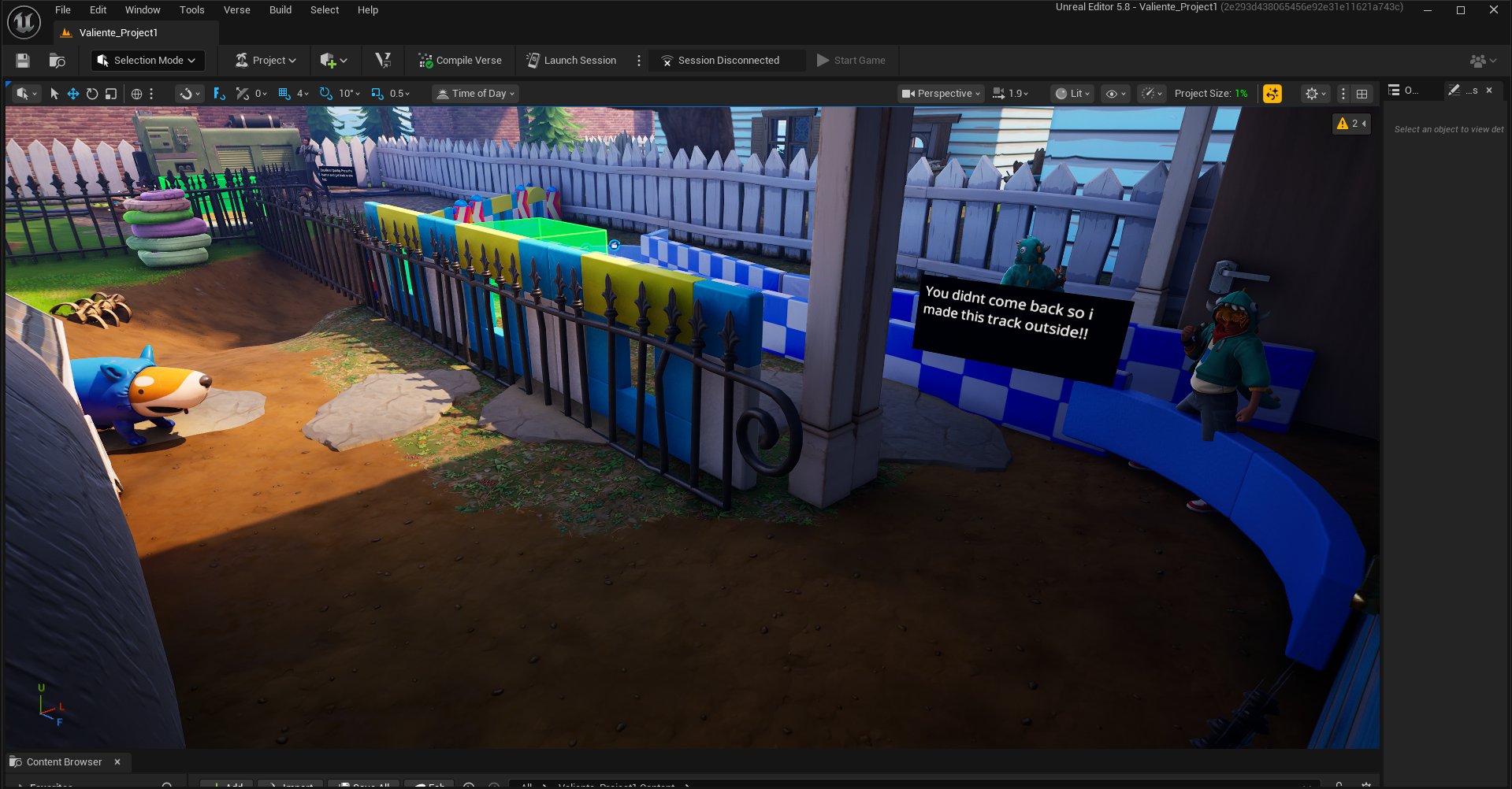
The final garden section is a second racetrack piece, designed by your kid brother and intended as his follow-up to his last track. This is the weakest segment of the whole level, with the sharp turn requiring slowing down and doing an awkward turn, which ruins the pacing.
There is also the matter of the text boxes being too close to turn, which results in the player having to stop and read them further, killing the flow.
If I were to redo this project, I would try to make it a bit more interesting by adding an expanded element, like a figure 8, and have your brother pointed by the dog, making it easier to see the text.
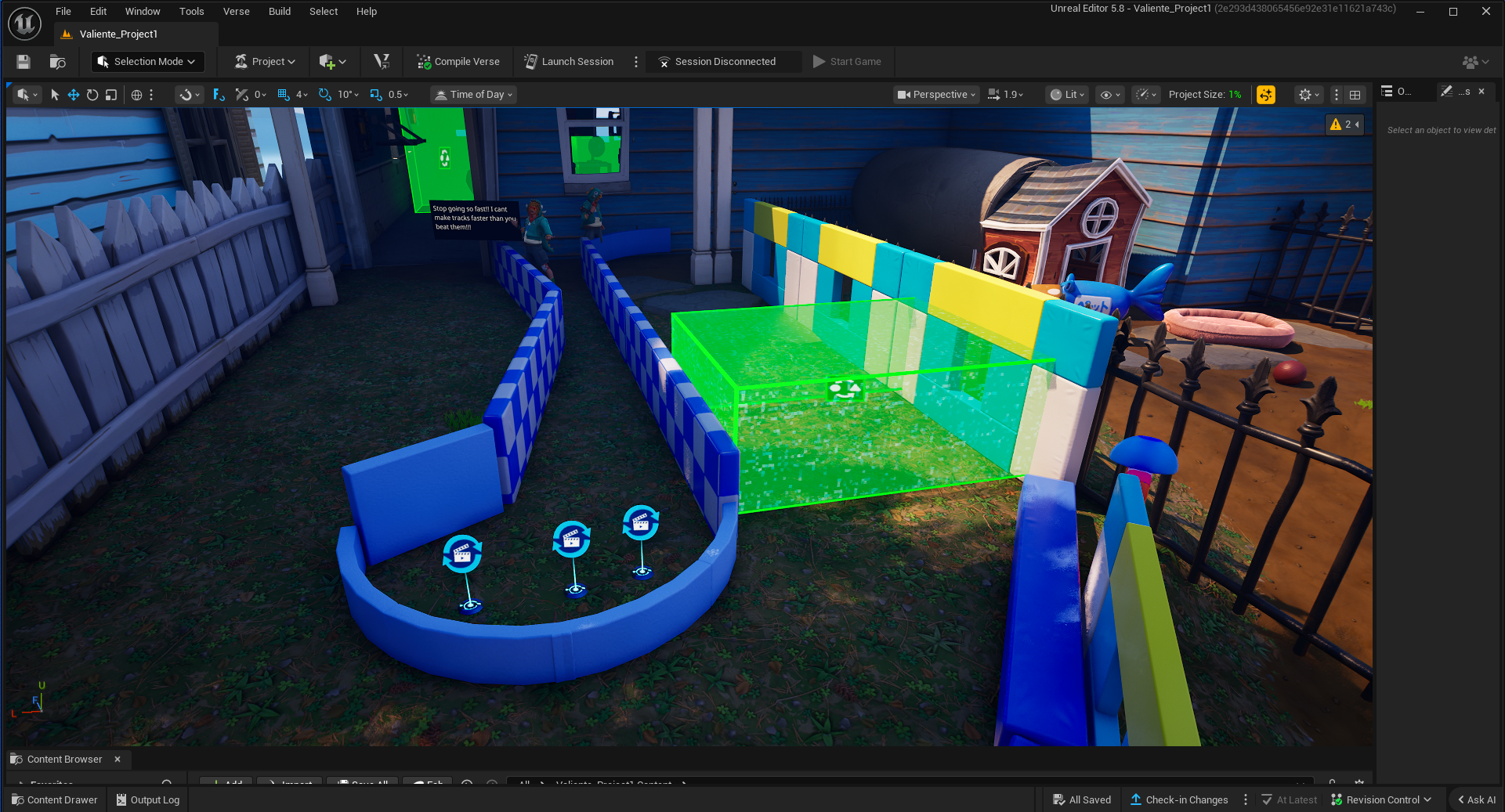
This is the hairpin turn your kid brother has you doing to get into the garage. As you can see from this shot, there are two copies of him at the end. But by using the trigger box, I can have one appear, and the other disappear through animation tools, which you see at the end of the curb.
Learning these tools at the start was tricky, since they proved quite finicky to use and worked inconsistently if you did the process wrong, resulting in the product suffering.
I also hadn’t learned about the radio tool by the time this project was due, meaning this whole experience was without music, a massive mistake in my opinion.
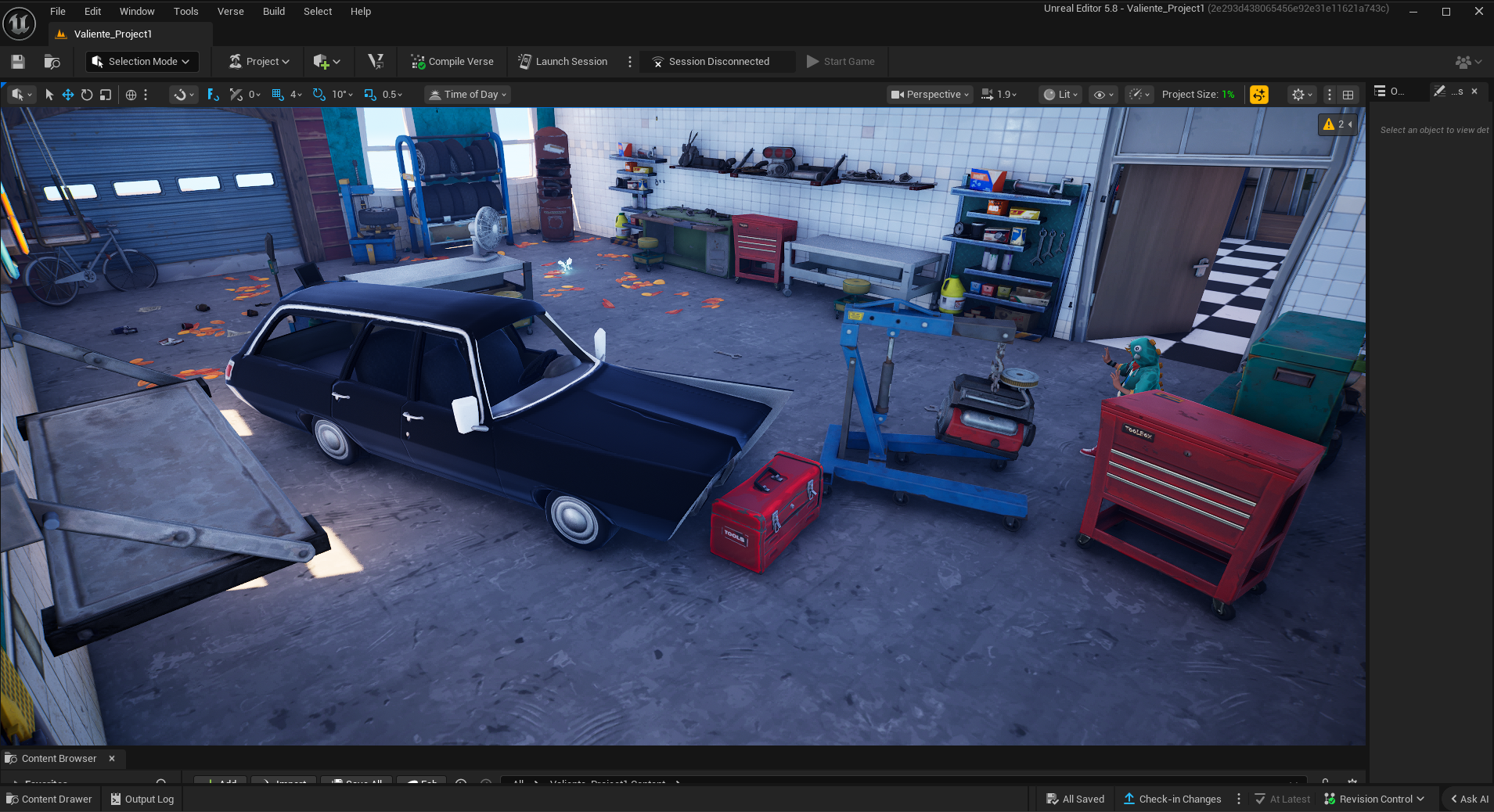
Here is a full view of the garage. I actually quite liked working on this section because I could play with space and work with a lot of different assets to paint a cohesive picture. The assets seen here come from 7 different sets of assets!
I intentionally placed the car at an angle to create a choke point for the player to go through, which would later expand into the final segment. It serves as a nice way to cap off the garden section and provide a natural feel to the garage.
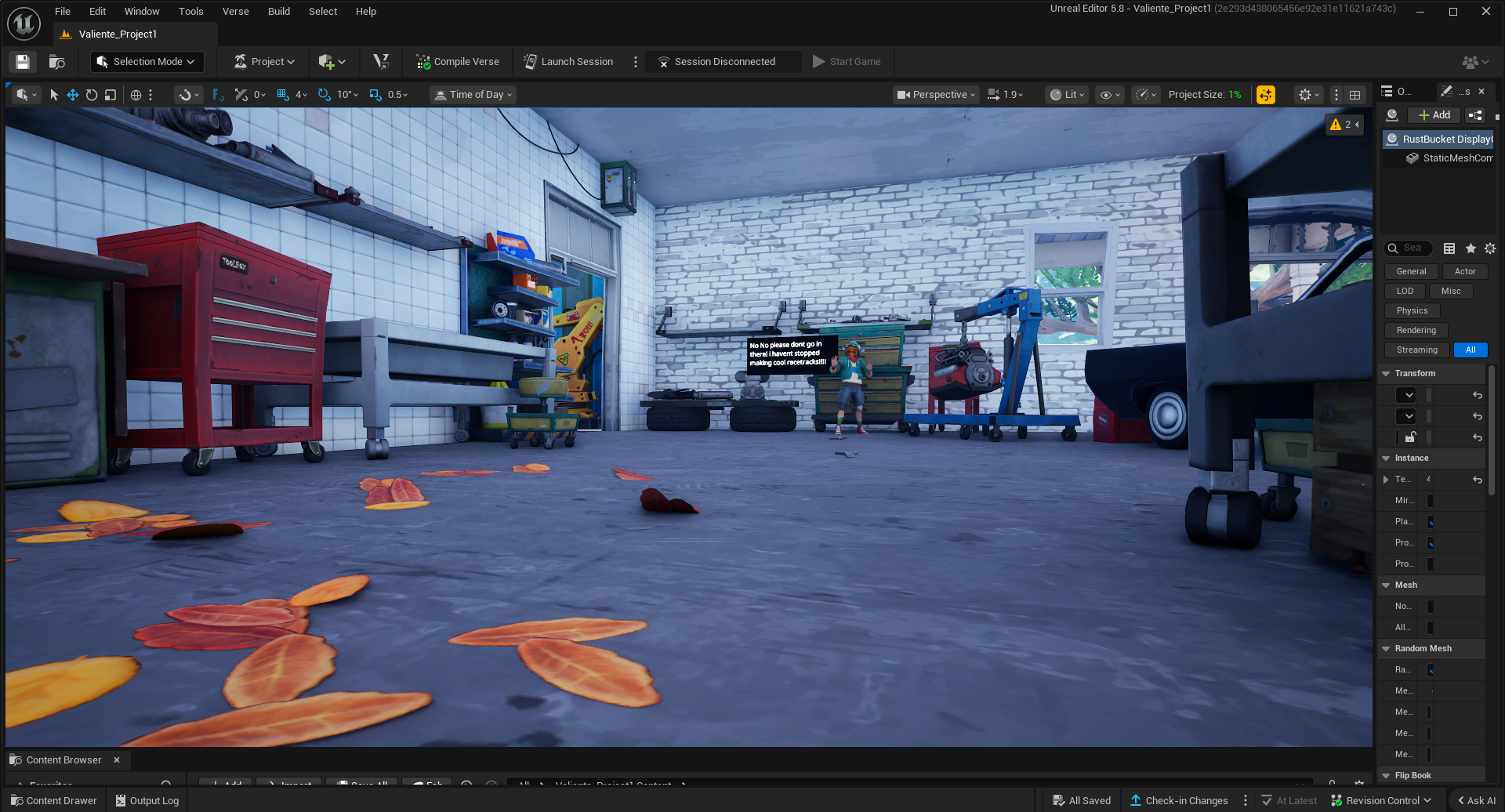
This final segment was the final composition shot for the project. In this segment, your brother pleads that you don’t leave because he’s not done building cool racetracks for you. The idea was that all of the various pieces, as well as the leaves, would guide you to the door at the end
In hindsight, I think this section ended up quite boring, and I could’ve elaborated on the narrative here by having the kid's brother caught with an unfinished track. Adding elevation and ramps to spice up the ending.
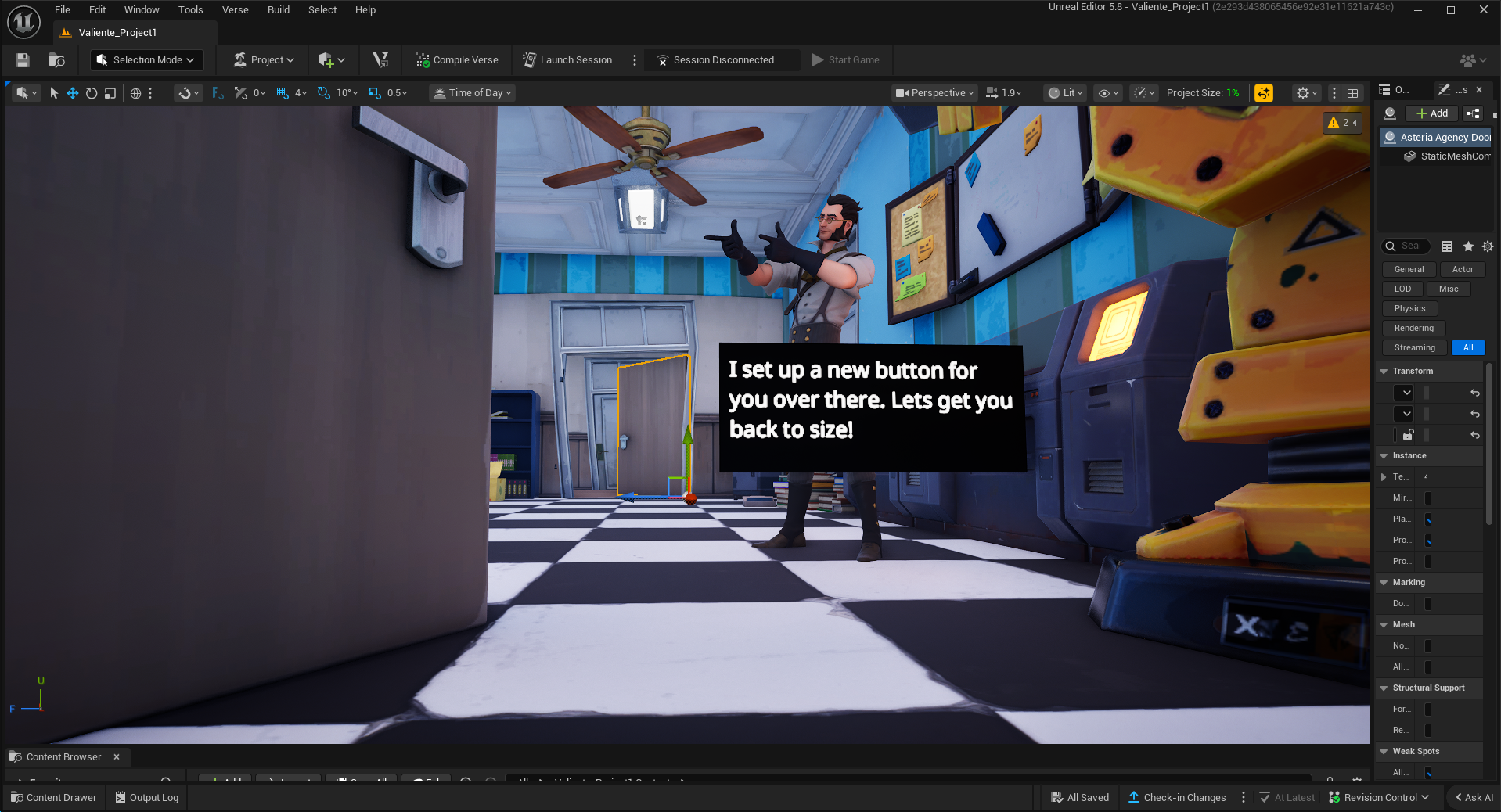
It was near the end of the level here that I was also running out of time to work on this project, so I had to cut some corners, for example. The final area returns to the lab, due to errors in the animation system, nothing really stops the player from just going around the track again, ruining the immersion.
As such, I had the father NPC use the pointing pose to direct the player quite literally to the destination, which is quite sloppy. In future UEFN projects, I learned to be much more subtle and plan out these types of segments.
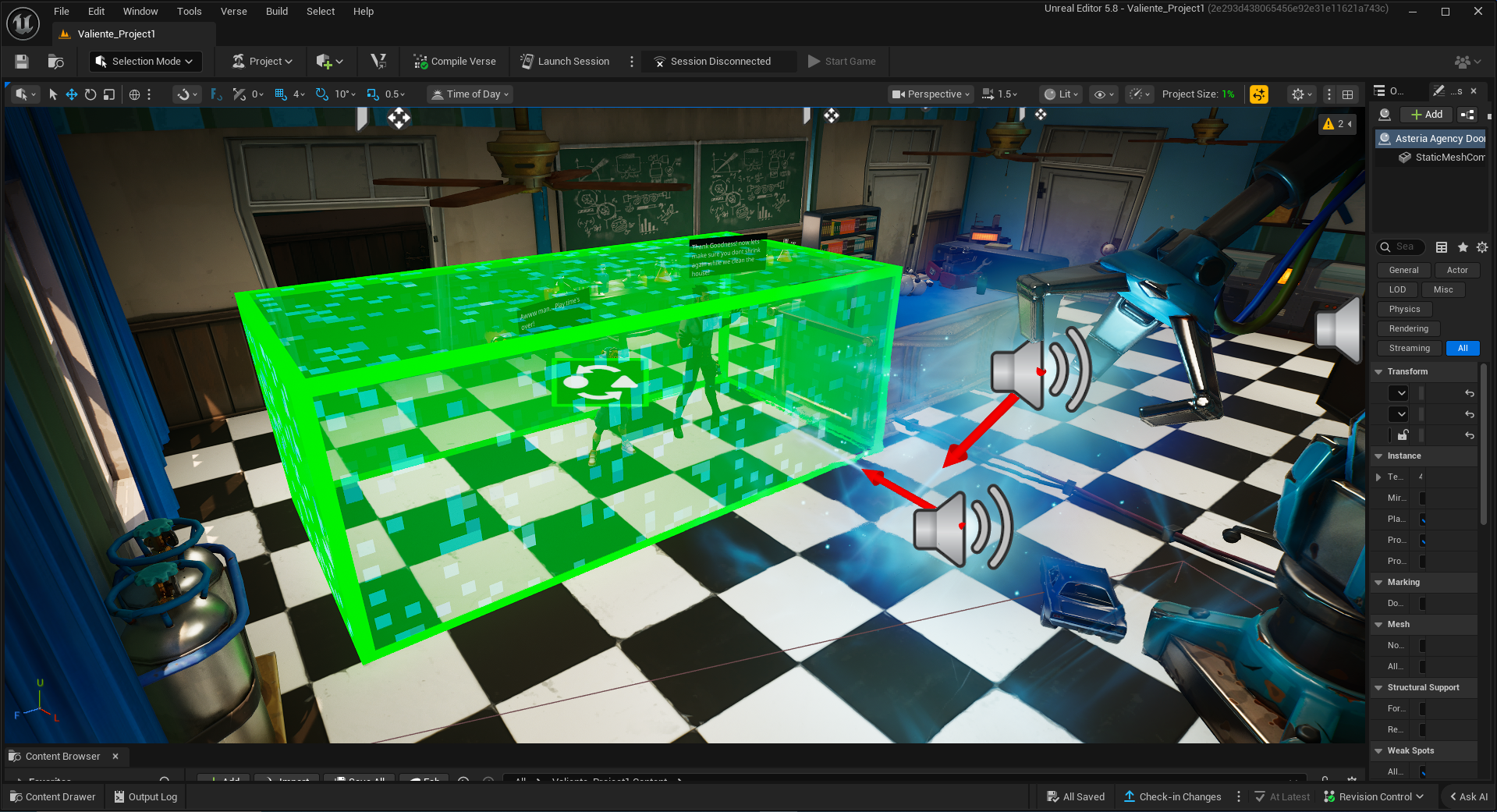
· This is a higher view of the final thing the player sees before ending the level, which is your father, overjoyed that you’re back to normal, and your kid brother, sad that he can’t have fun anymore. They’re hidden away in the large trigger box, which makes them appear.
Due to strange quirks in the UEFN system, billboard objects are unaffected by animation triggers; as such, I had to be very careful about how to place them. The final text boxes are placed so they are invisible when the player enters the room—hiding them in plain sight until they are needed.