
Village on the Rocks
Summary: A Multiplayer shooter level for Unreal Engine for Fortnite. A map based around the idea of fighting in a small village that’s built on top of the roofs of a bunch of buildings after a flooded world
Role: Level Designer
Project: Classwork
Team: Solo Work
Development Time: Late November 2025 – December 2025
Made Using: Unreal Engine For Fortnite
This was my third Unreal Engine assignment for Fortnite, with a specific focus on multiplayer level design. Using all the lessons learned from my previous two levels, I created a small, dense level with lots of routes to take. I was able to create a unique Top-floor bottom floor philosophy that took advantage of player psychology and the games’s mechanics to create a highly engaging experience.
Lesson Learned:
Multiplayer Shooter Design: Multiplayer shooter design is a dramatically different beast from PVE shooter design. It requires intricate knowledge of the game’s mechanics, weapons, and movement tools to make a good level!
Balancing weapon flow with player psychology: It is highly important to get into the player's mindset when designing these levels, including anticipating where their instincts will take them and what their game sense will and won’t notice. By using this, you can leverage the flow of weapons to the player to maximize engagement and force encounters where there normally wouldn’t be.
Taking advantage of already established mechanics: When coming into an already established project, it is crucial to understand the mechanics of the project you're going to on a deep level. This helps influence the design process in a way that allows for true greatness in level design.
Shooter Encounter Design: A good encounter in a shooter game requires keen awareness of two key things. Firepower, how much gun power does the enemy have. And body count, how many enemies there are in one place for the enemy to deal with. Pair this with levels that take advantage of the enemies in the area and the strengths and weaknesses of their weapons, and you’ll have a really engaging level!
Sketching Ideas
When first tasked with this assignment, I once again began sketching, using the lessons learned in class about good multiplayer shooter levels, working with lots of interconnecting circles. Here is the sketch for a reject level concept title, Rune Caverns
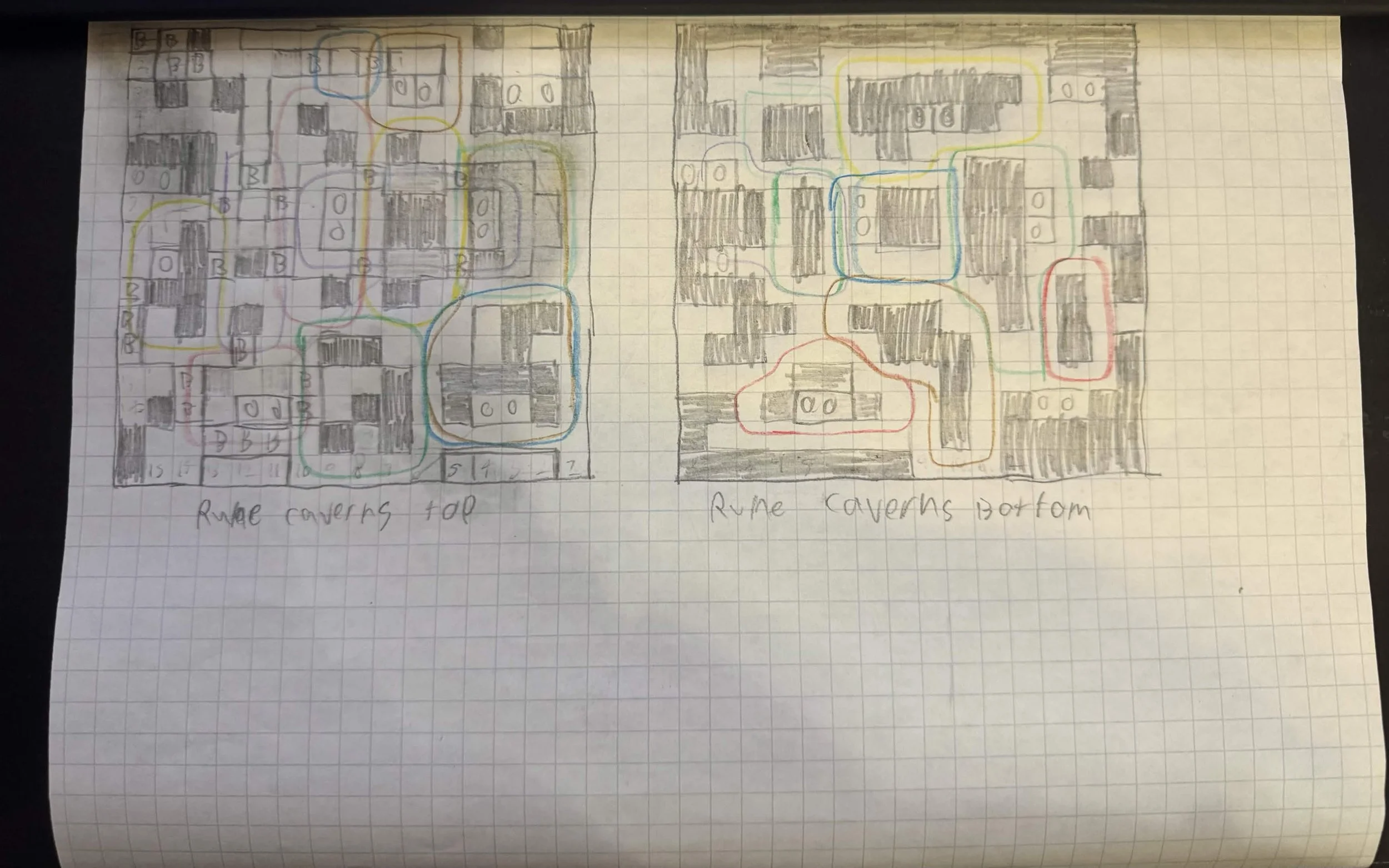
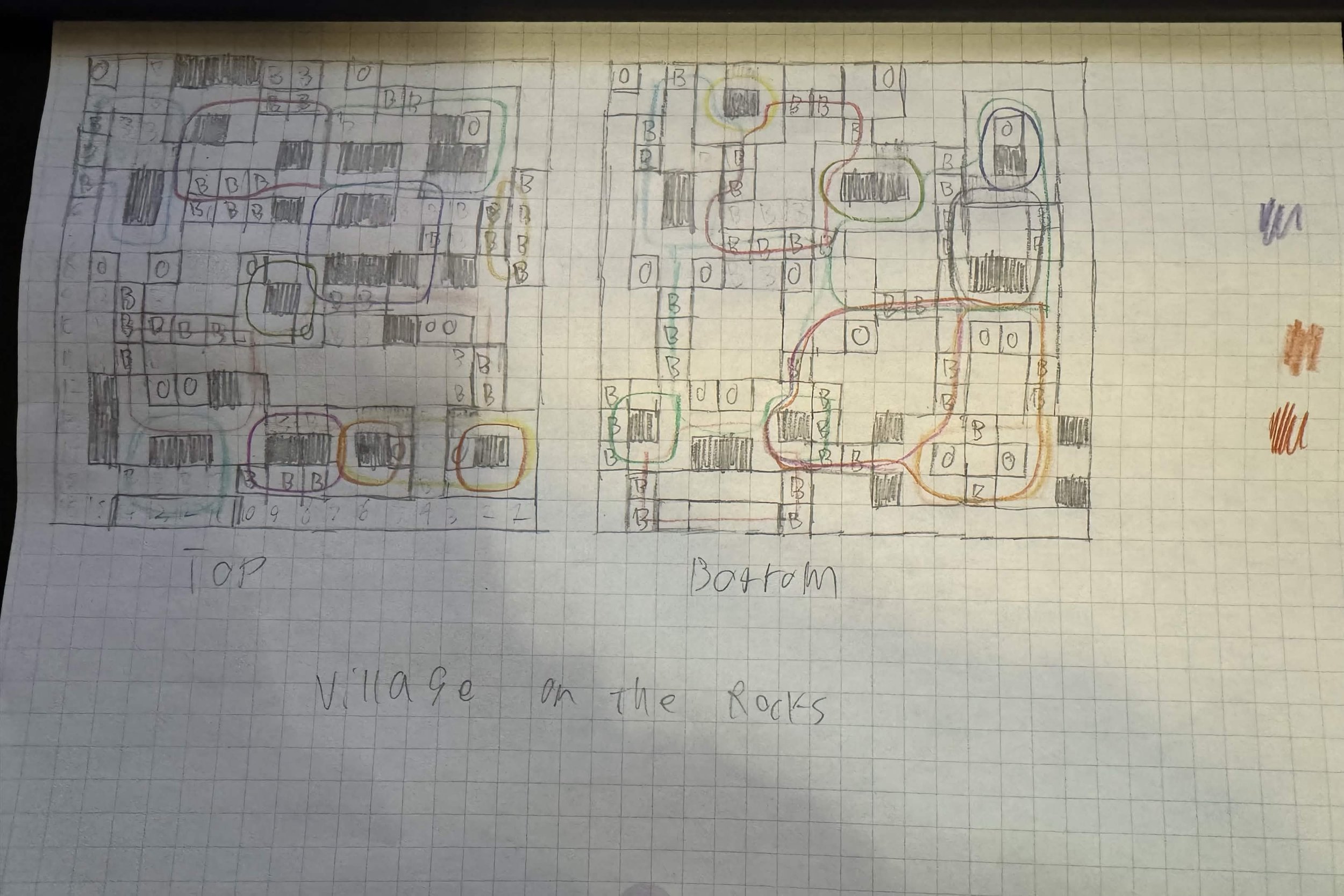
This was the first sketch concept for the level. The idea being that there are a bunch of separate buildings connected via bridges.
However, upon looking at the size of this level, I quickly realized that I was falling into the trap of poor scaling once again, and began to resize it appropriately
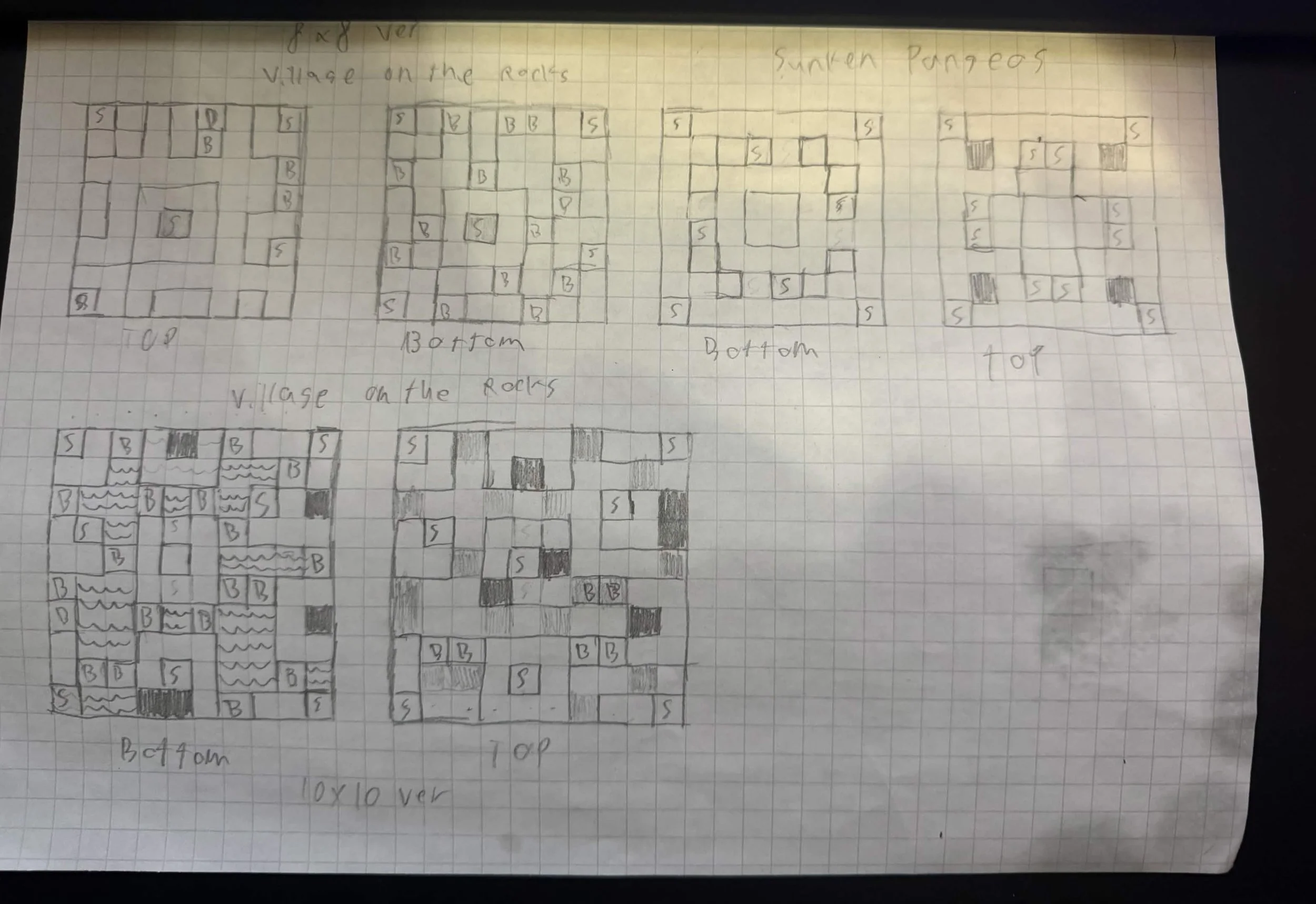
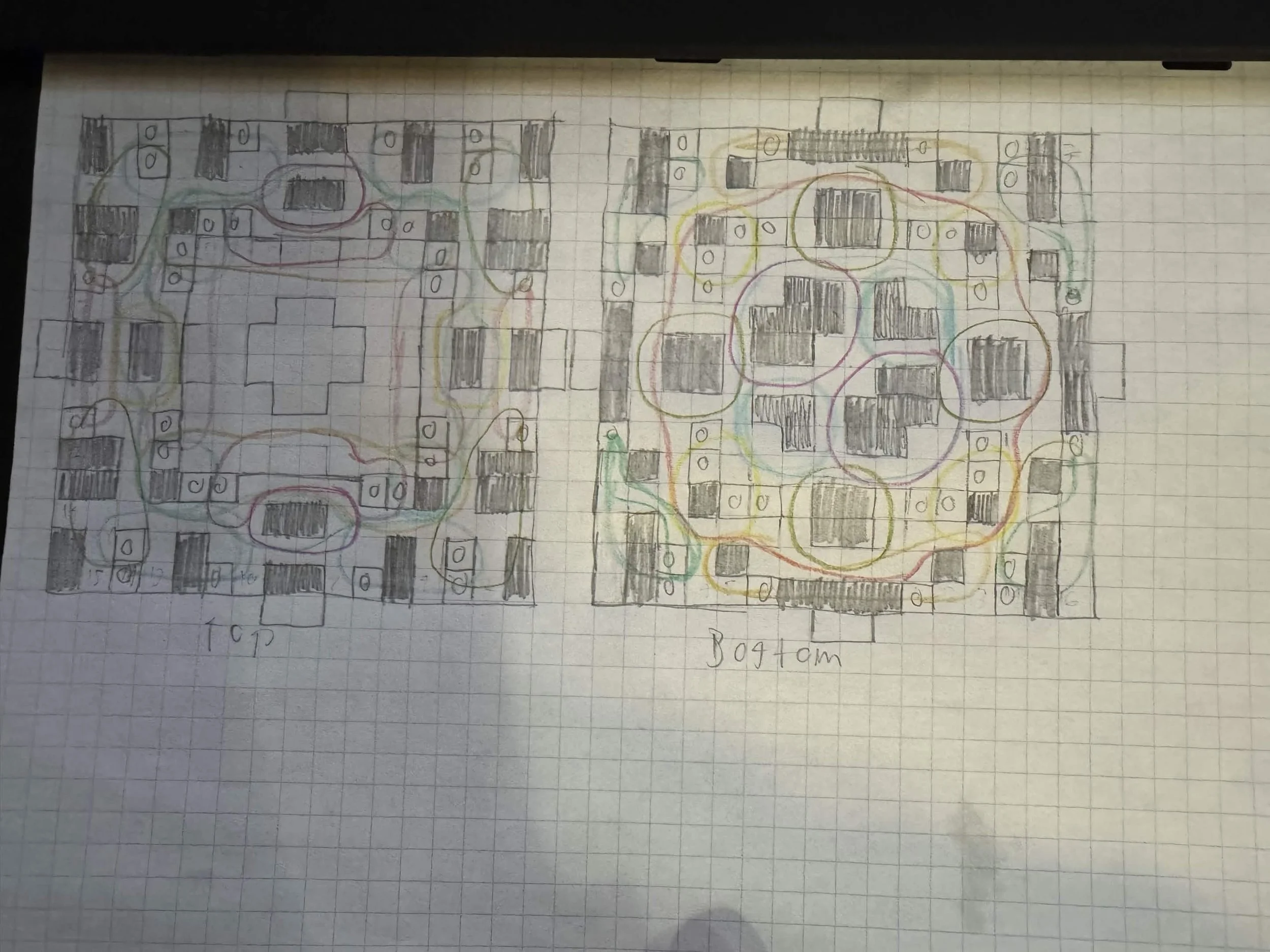
I spent a solid day redesigning the sketch concept to ensure it was just right, even experimenting with sizes like 8x8 and 16x16. After sketching for a while, I realized that 8x8 was best for this level and for the intended player count, 4 players.
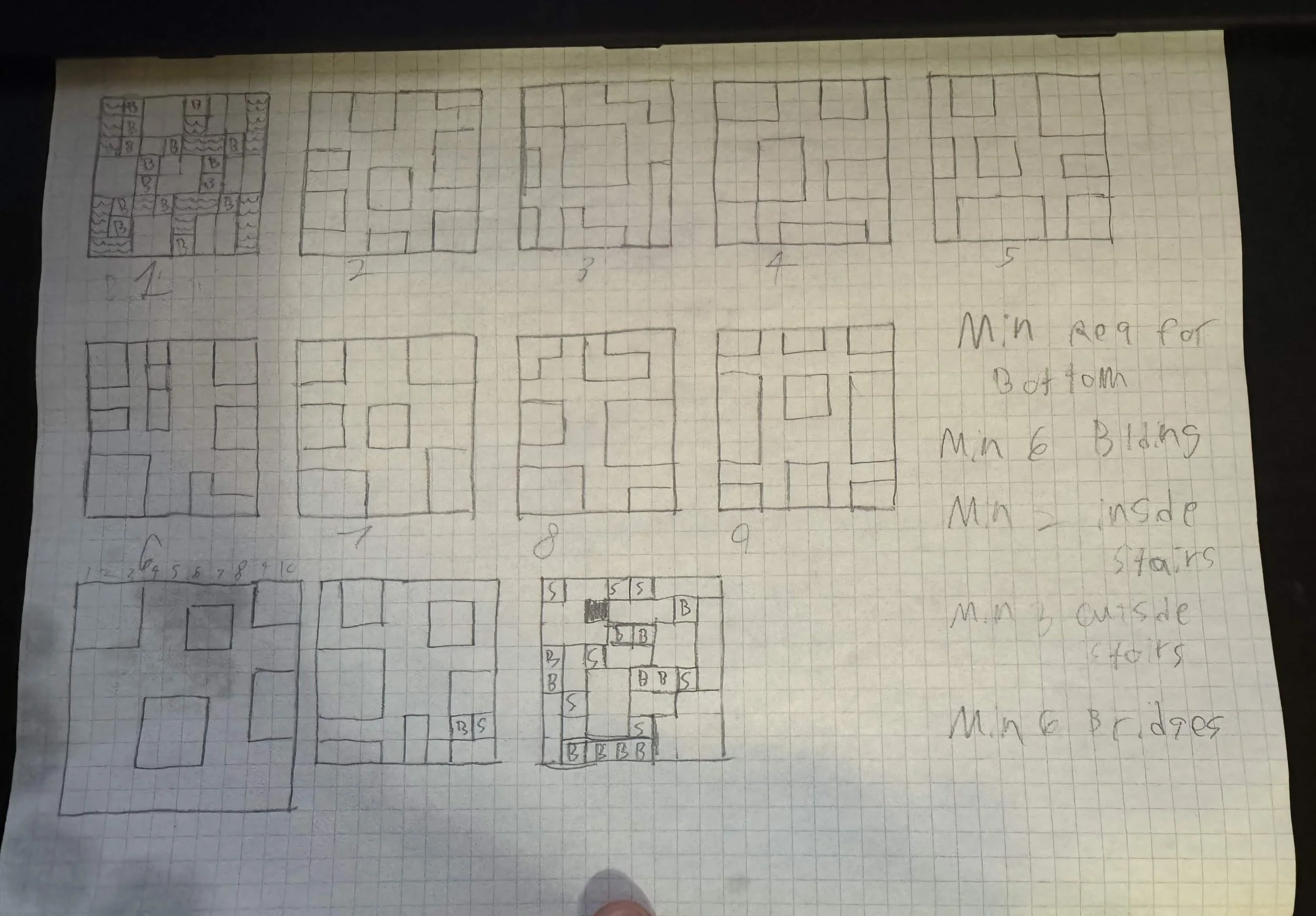
After deciding that 8x8 would be the size of my level, I began creating a wide variety of iterations with a few basic requirements: 6 buildings, 6 bridges, and various other elements, all designed to ensure maximum connectivity.
After some time with this, I eventually decided to practice it in the engine.
Here is the sketch of another level based around an underwater palace.
One of the main concepts I focused on for this multiplayer level is having players always moving between two floors, with the weapons and ammo for those weapons on opposite floors. With each level being built with the intended weapons in mind. You’ll see what I mean later in the level.
Constructing the level:
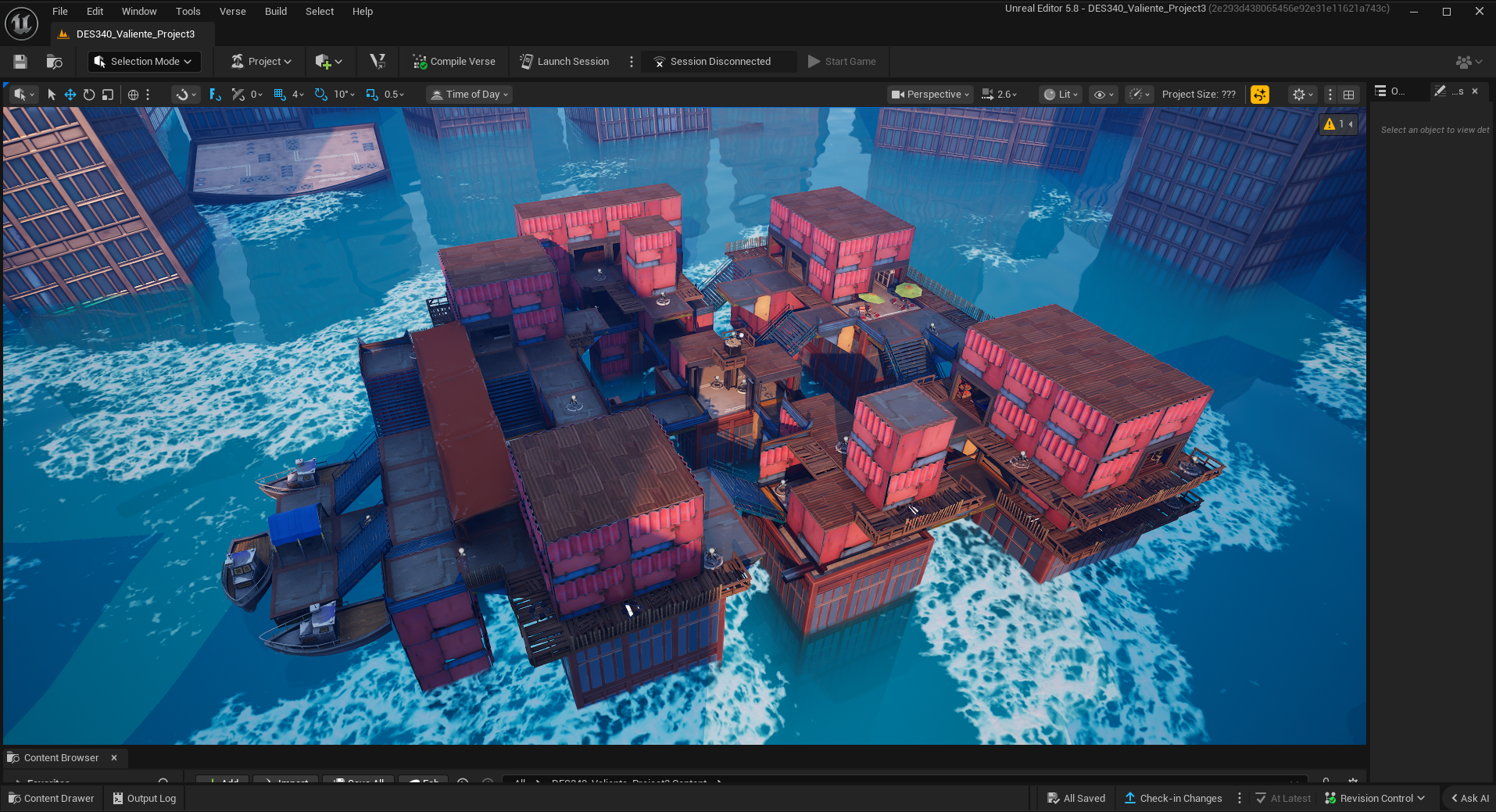
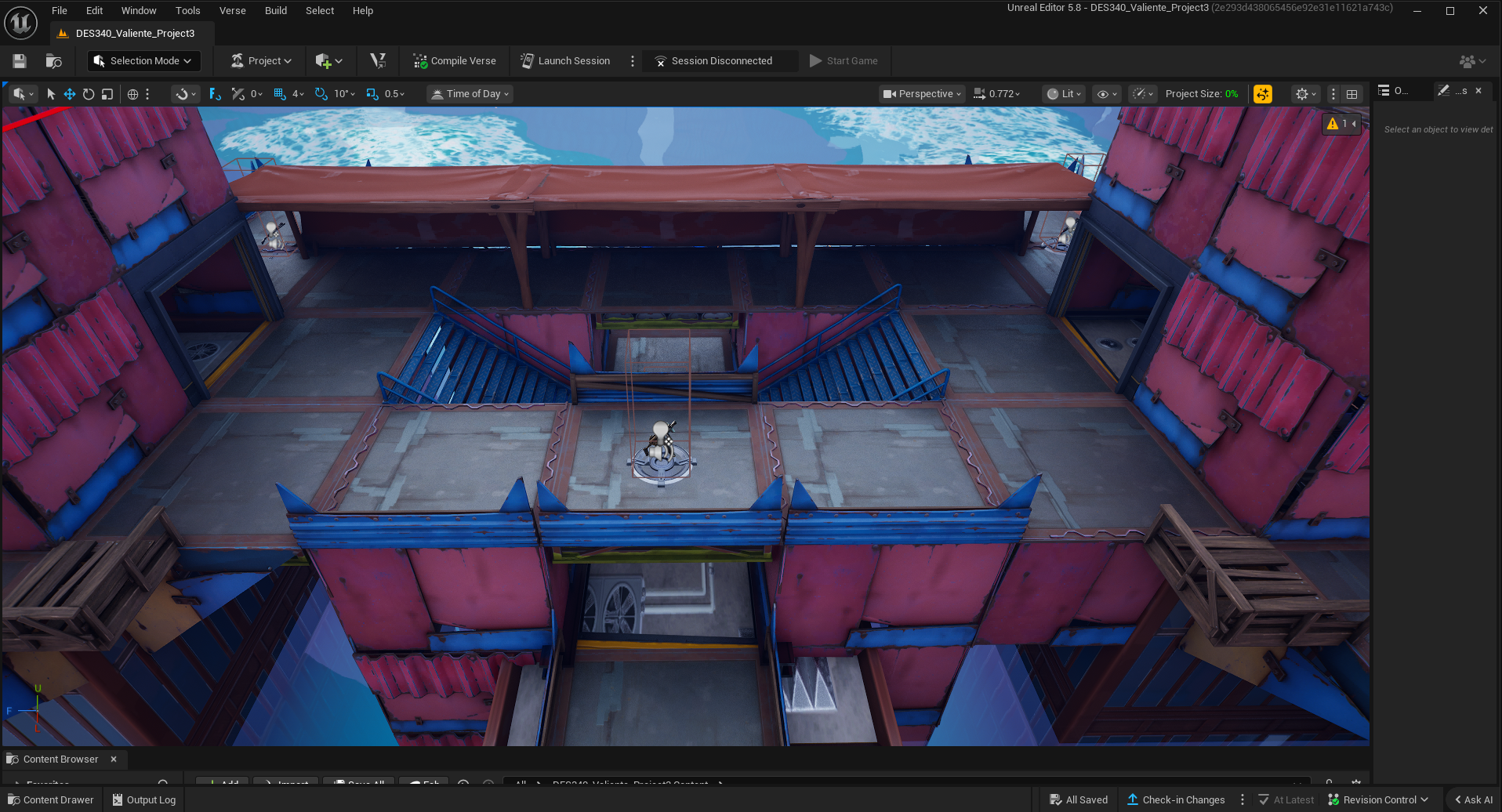
This is an overhead view of the level. The level constantly flows between the top and bottom floors, using elements like color theory and lighting to help the player find where to go.
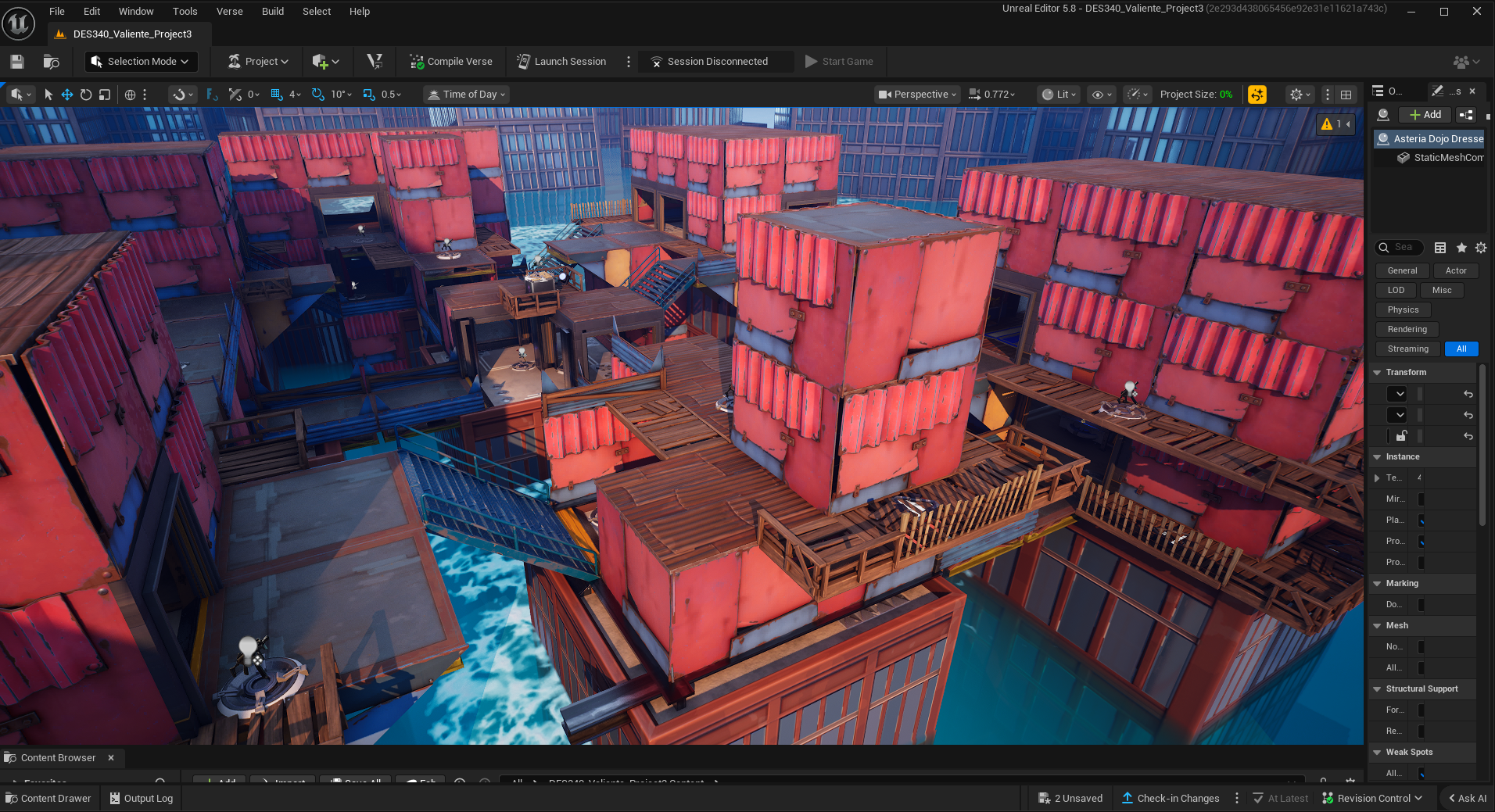
Since this level was built around the time of Fortnite Chapter 6: Season 4, the player had access to a large amount of parkour-like skills, which I tried to take full advantage of in the level.
I did this by having the level feature “bridges” that the player can use to cross from one end to the other, using various parkour skills.
The only skill I could not use well was the clambering tools, which proved too strong for the intended design vision. As such, they were disabled.
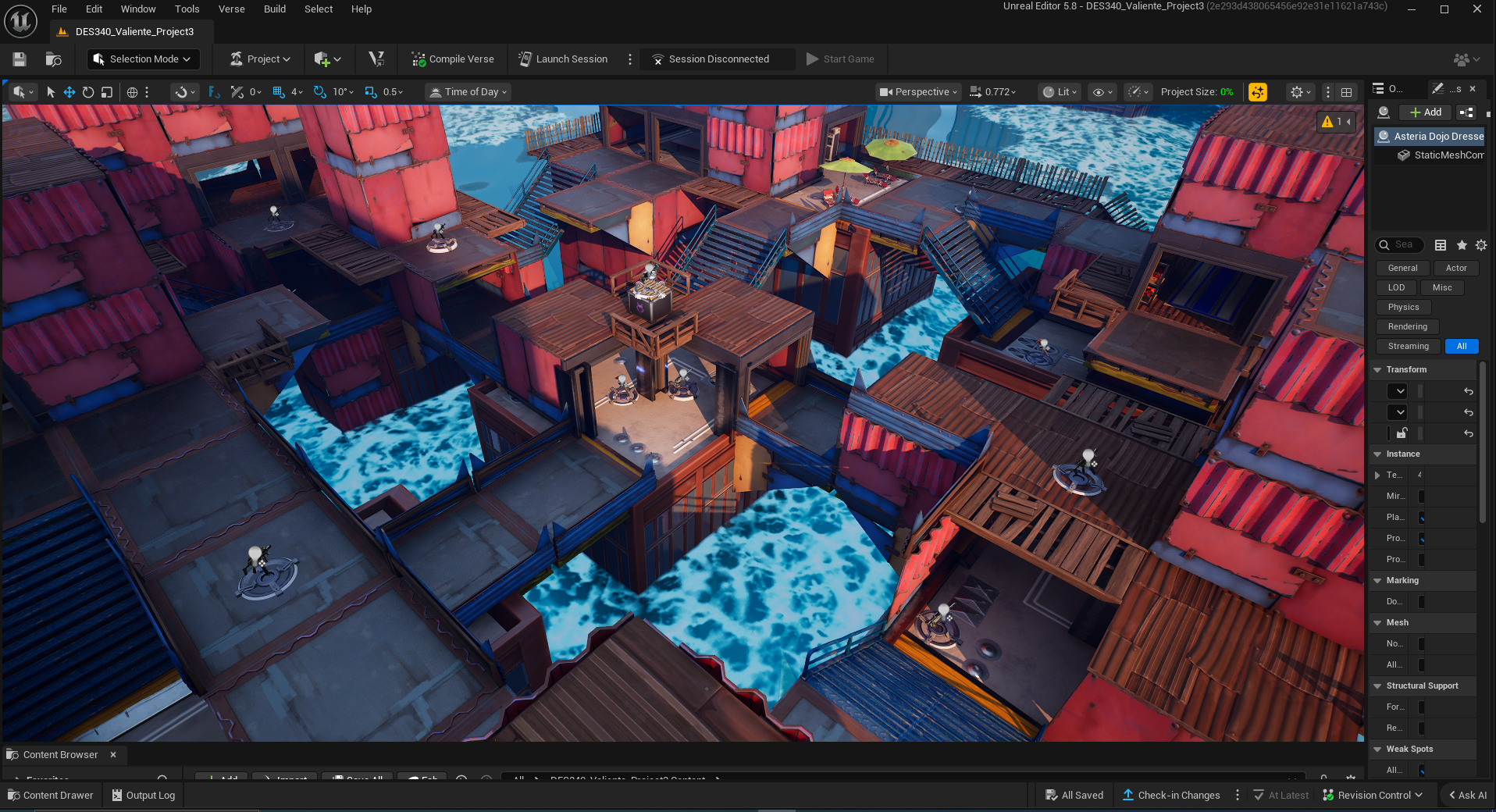
As mentioned before, the idea of the level is that the player must bob and weave through the top and bottom floors to access all the weapons in the level.
As such, I designed the top floor to be low cover and relatively open, making it good for long-range weapons like sniper rifles and assault rifles.
The bottom floor is the opposite, cramped and full of places to flank from, making it perfect for shorter-range weapons like submachine guns and Shotguns.
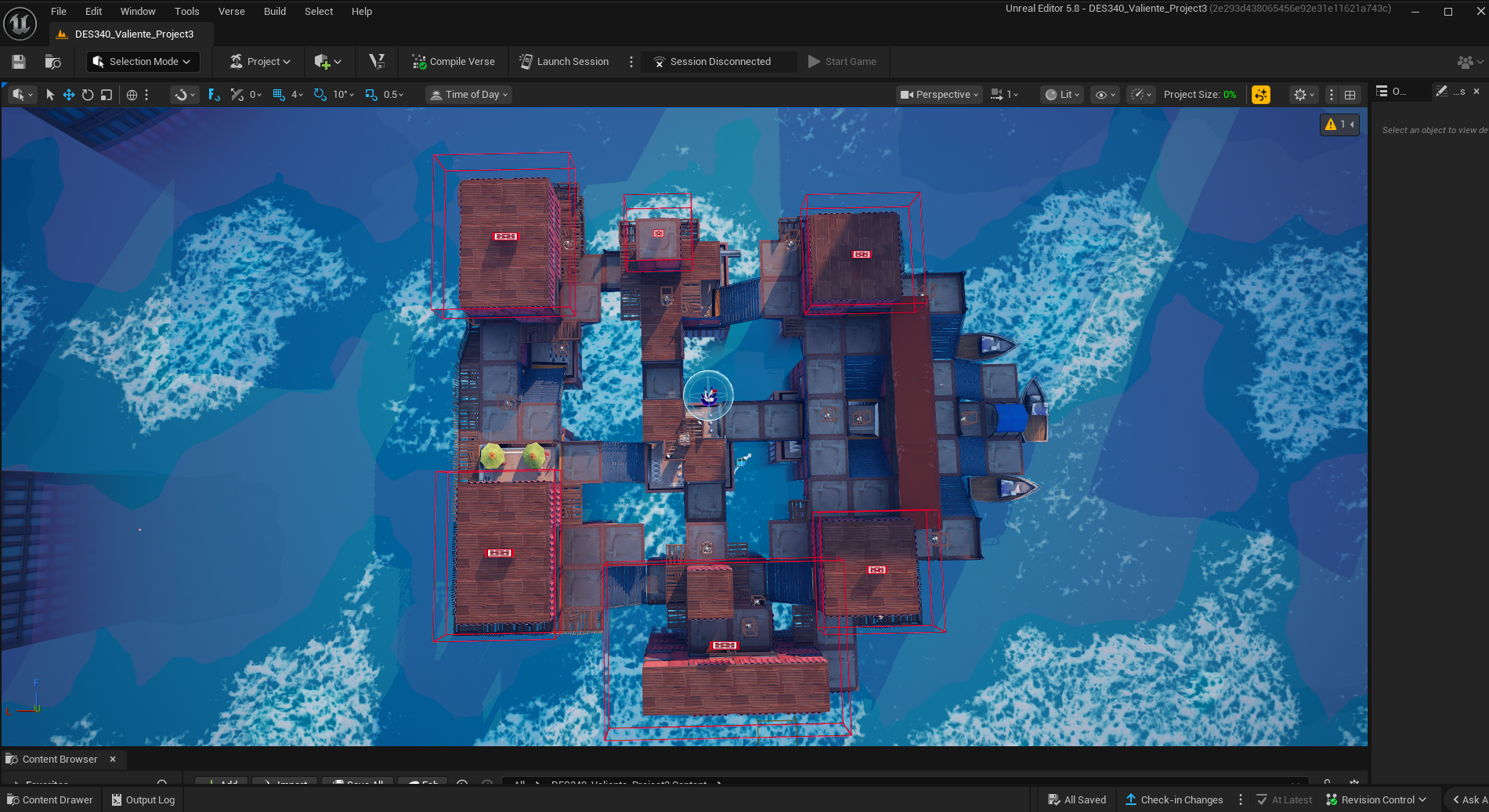
Here is a top-down view of the level. I intentionally tried to make the level almost symmetrical to provide a more balanced gameplay experience, ensuring it's fair regardless of the space players start.
I actively kept track of the level size to ensure it did not exceed the 8x8 grid, literally creating an 8x8 flat square to stay in line with my specifications.
The Storage Room
This was the first room designed on the level, the storage room. It also perfectly shows two of the design principles I laid out for this level. Players will always have ready access to a weapon from near their spawn to provide a fair and balanced gameplay experience. And that all buildings had at least 2 to 3 openings to them to aid with the flow of people on the level
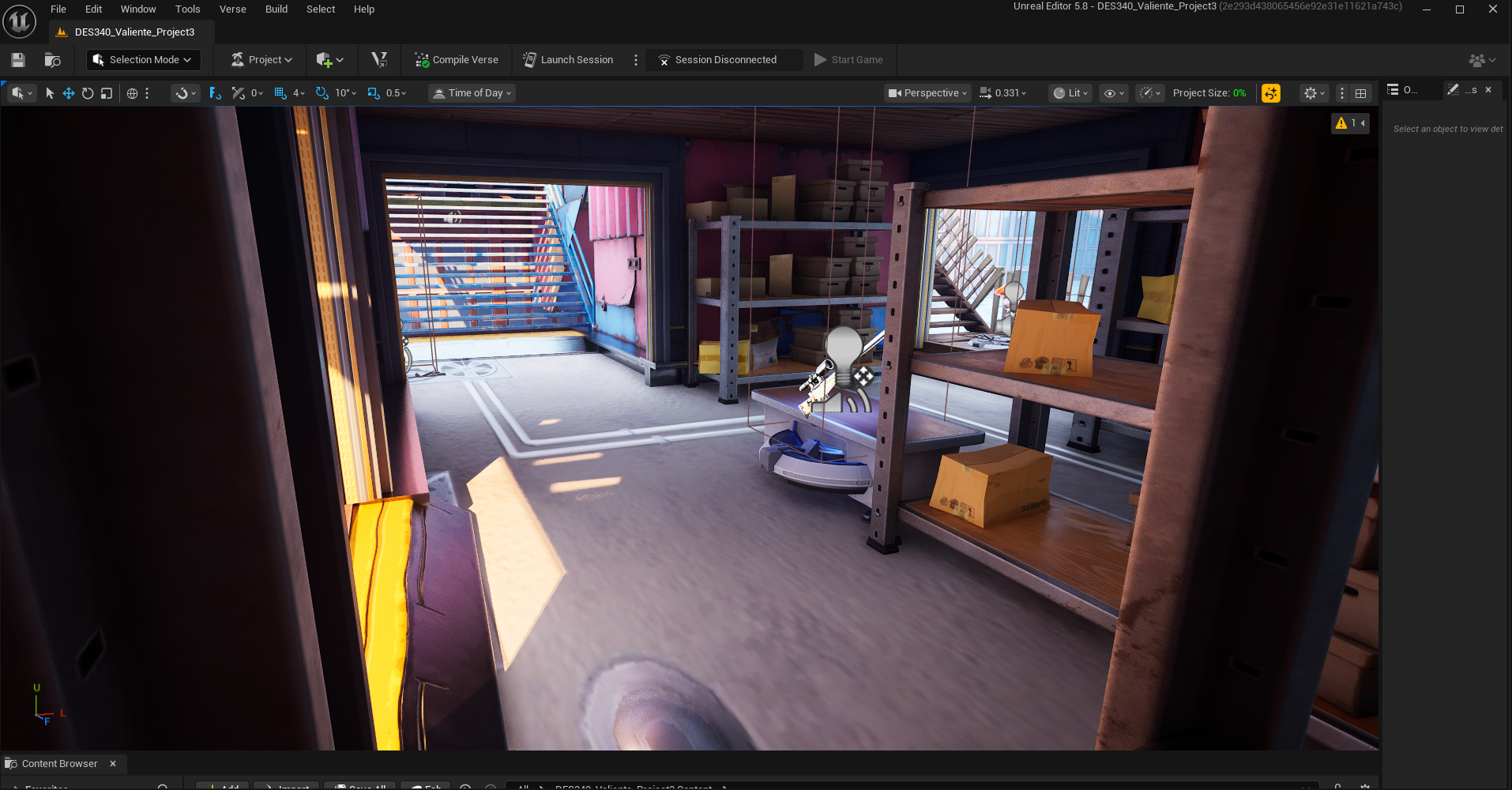
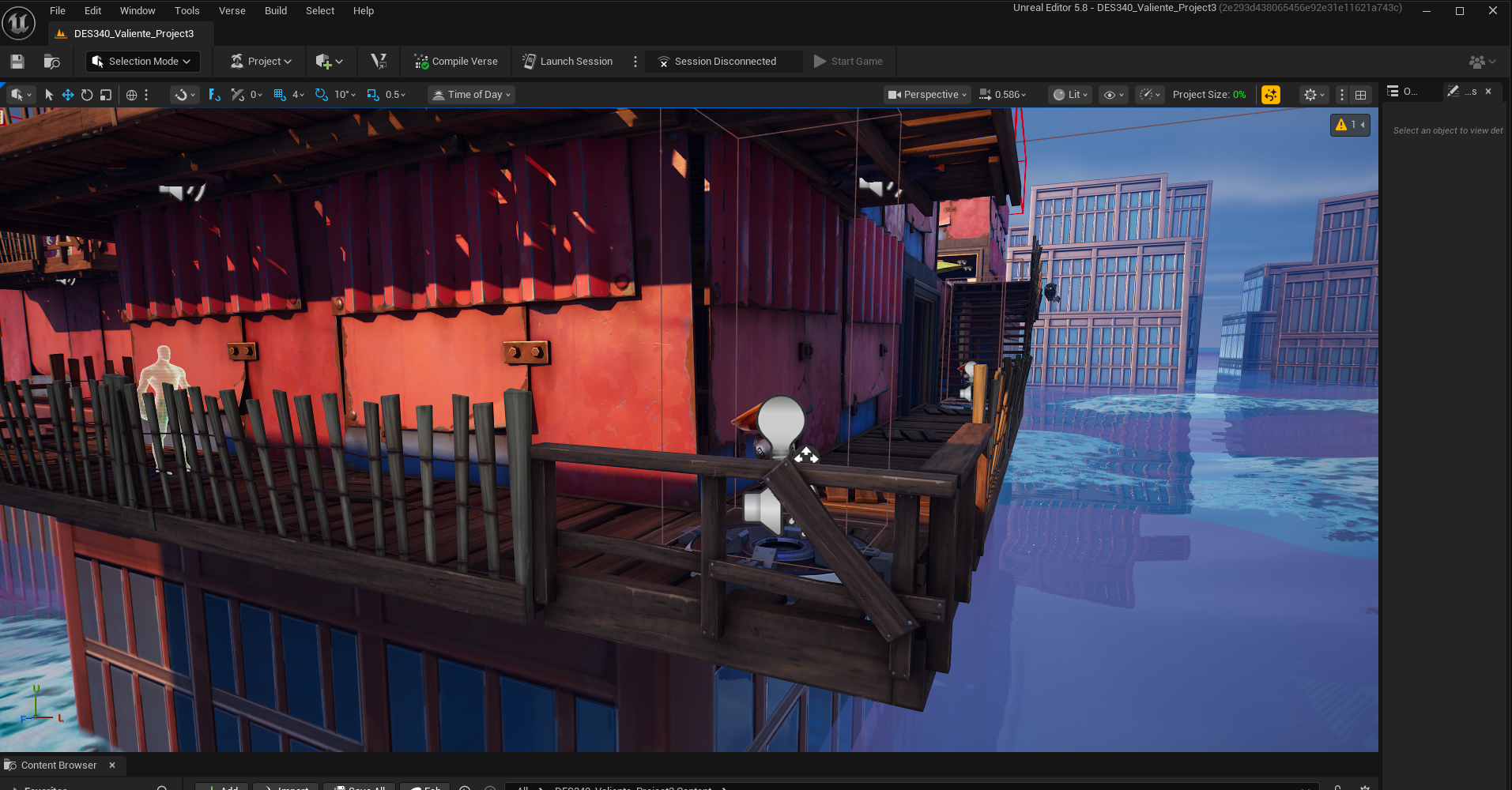
Seen here are the corridors just outside the storage room. These corridors are spread throughout the level and run perpendicular to the main path that the player can take.
These corridors are meant to be used for flanking from the outside of the building, allowing players multiple ways to access a room and increasing playable strategies.
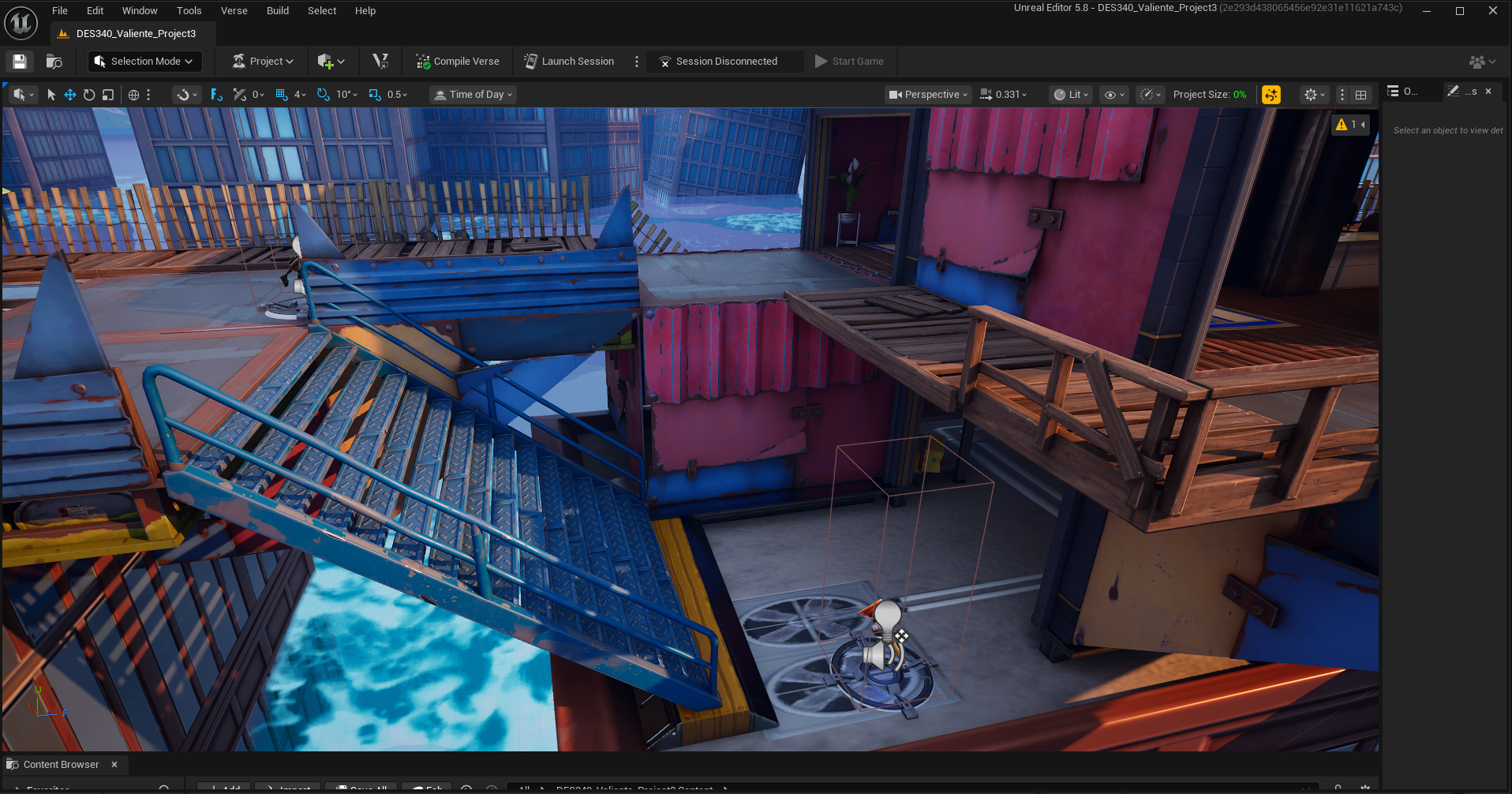
This is just outside the storage room. Another design principle is that I wanted all major areas of the level to be covered in a single major run through, with the various sub-areas branching out from this main circle.
This stair is a perfect example of this, connecting the top and bottom floors and serving as a crucial link between two major buildings: the storage room and the war room.
The War Room
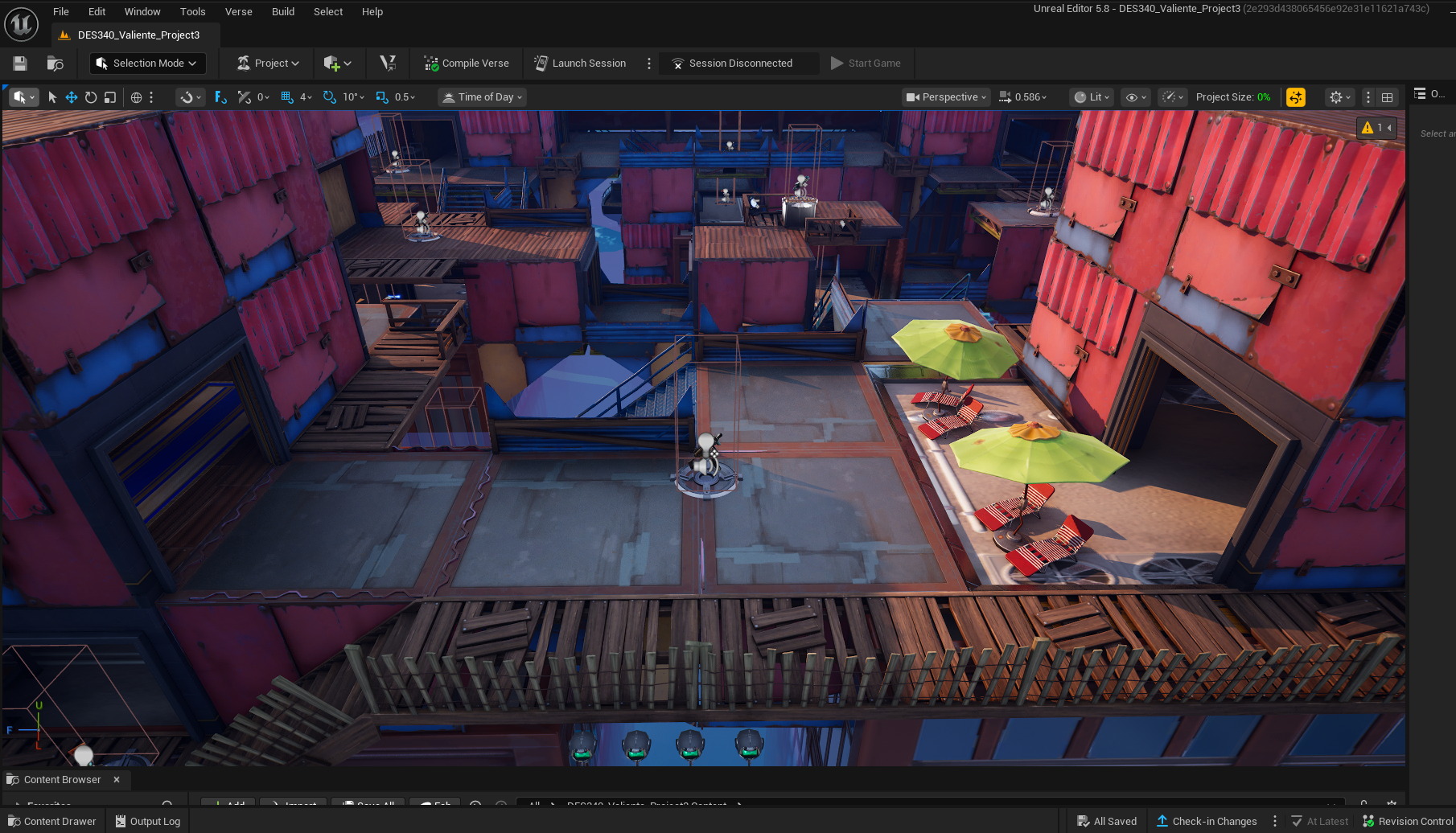
This is the area between the kitchen and the war room. Designed to be a gathering patio of sorts. This area was intentionally designed to be open, allowing long-range gunplay between the top and bottom floors, creating a unique firefight experience that separates the two.
This was the first sketch concept for the level. The idea being that there are a bunch of separate buildings connected via bridges.
However, upon looking at the size of this level, I quickly realized that I was falling into the trap of poor scaling once again, and began to resize it appropriately
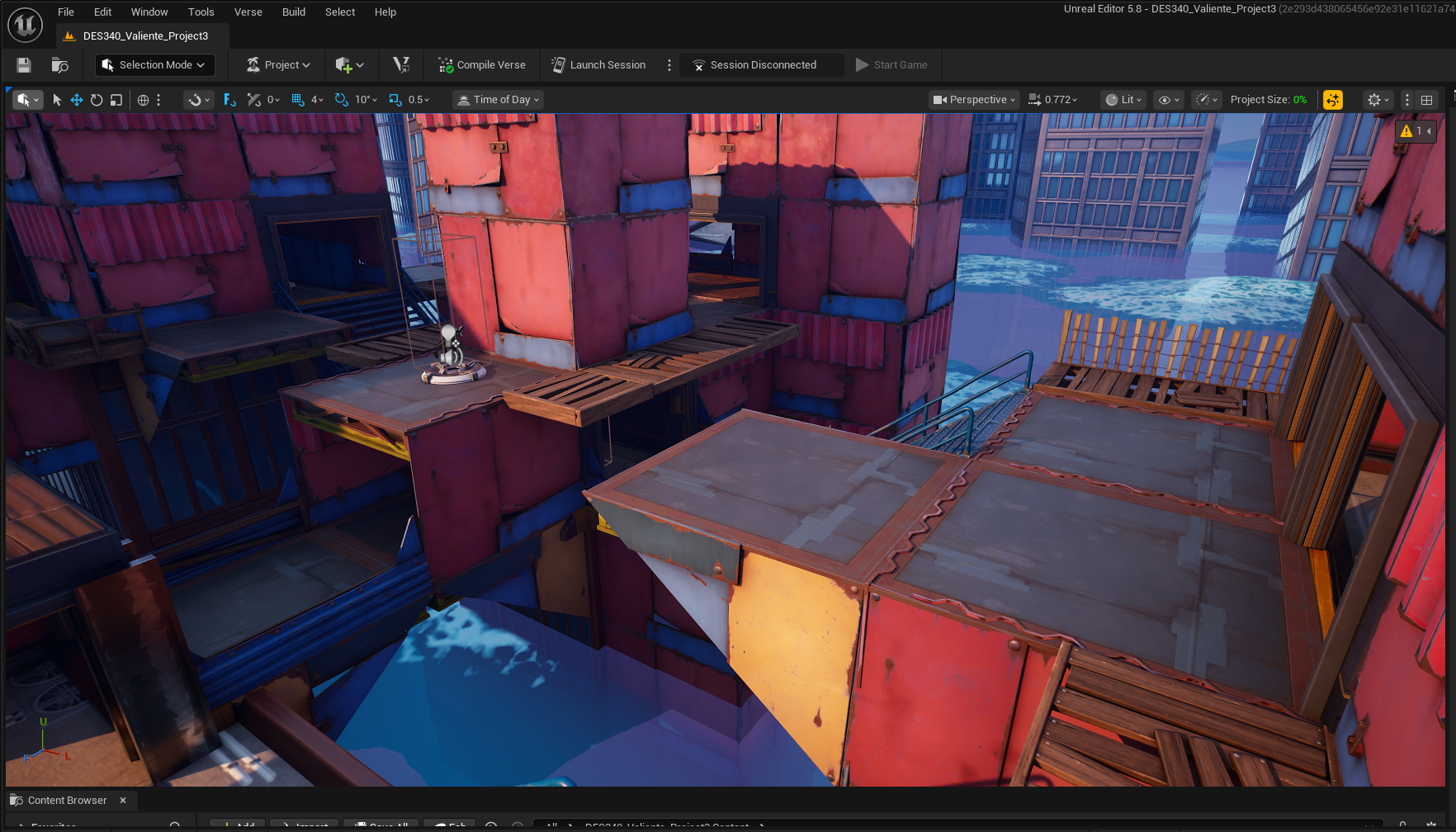
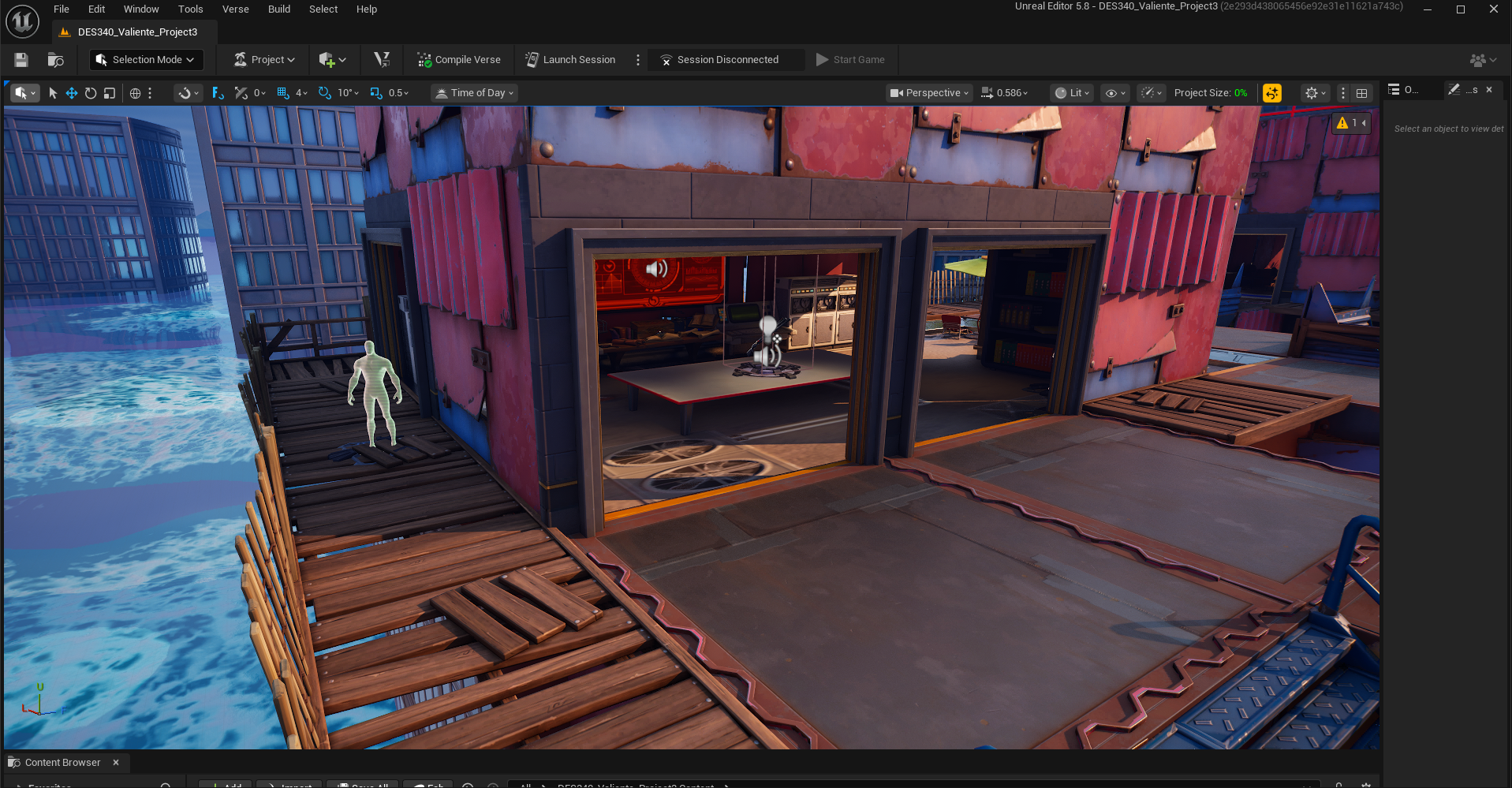
Shown in this shot is one of the “bridges” that connects the top half of the level. The idea is that these are the fastest ways to navigate the level, at the cost of no cover. Players can use these bridges to quickly reposition from one place to another if they are hurt.
The low cover and open gaps also allow players to strategically fall through them to reach the bottom floor for quick cover. Allowing for an immense depth of expression in player strategy.
In most shooter games, players’ first action is either to look around their surroundings or to move forward along their path. Moving forward increases interaction between players by increasing the chances of encounters. Because of this, I intentionally placed spawn points in such a way that the player won’t immediately see players in their line of sight. Forcing them to move forward.
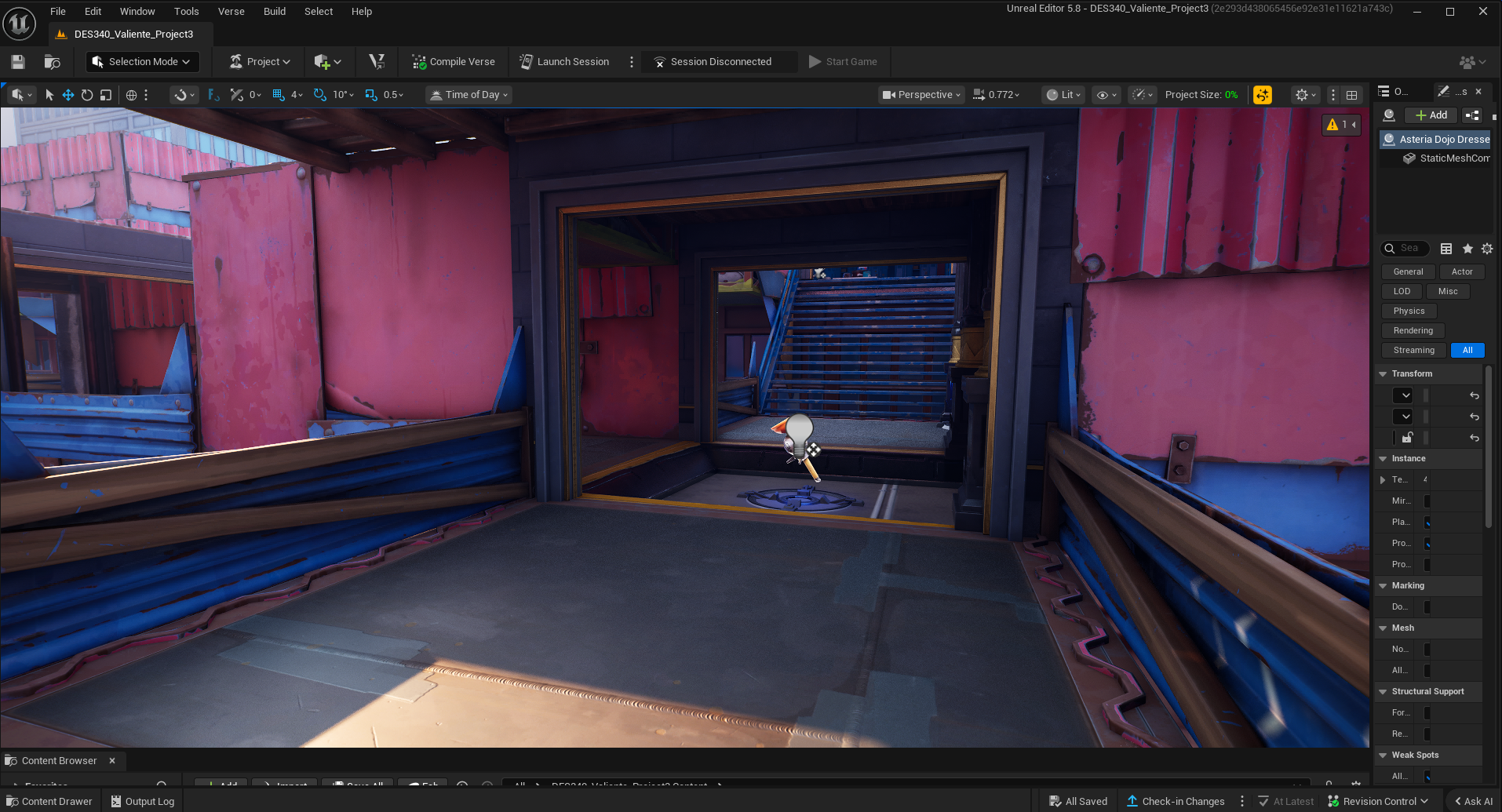
This is the bottom floor exit from the war room that connects to the bathroom.
An intentional design choice at the level was to place weapons (such as the one seen here) in encounter areas, encouraging players to interact with each other and even providing a reward for skilled gameplay in acquiring the weapon they saw.
The Bathroom
The bathroom was designed to fix a critical flaw in this section of the level. At this level, there was a starting point that essentially boxed the player in. They would be stuck in a 1x1 room with only one way forward, which players could expose.
As such, the corner was moved further inside and angled so that there is now only one exposed angle
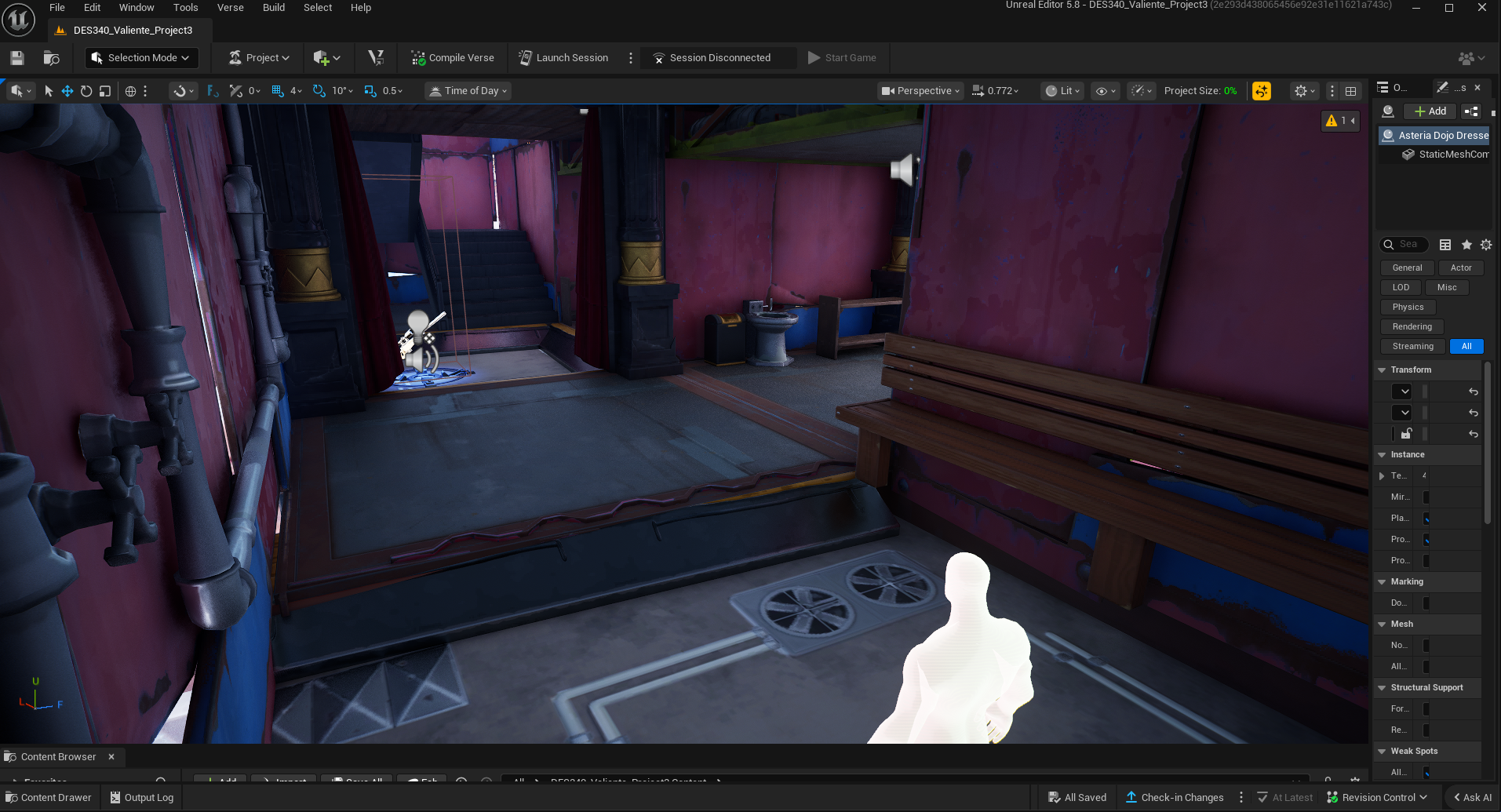
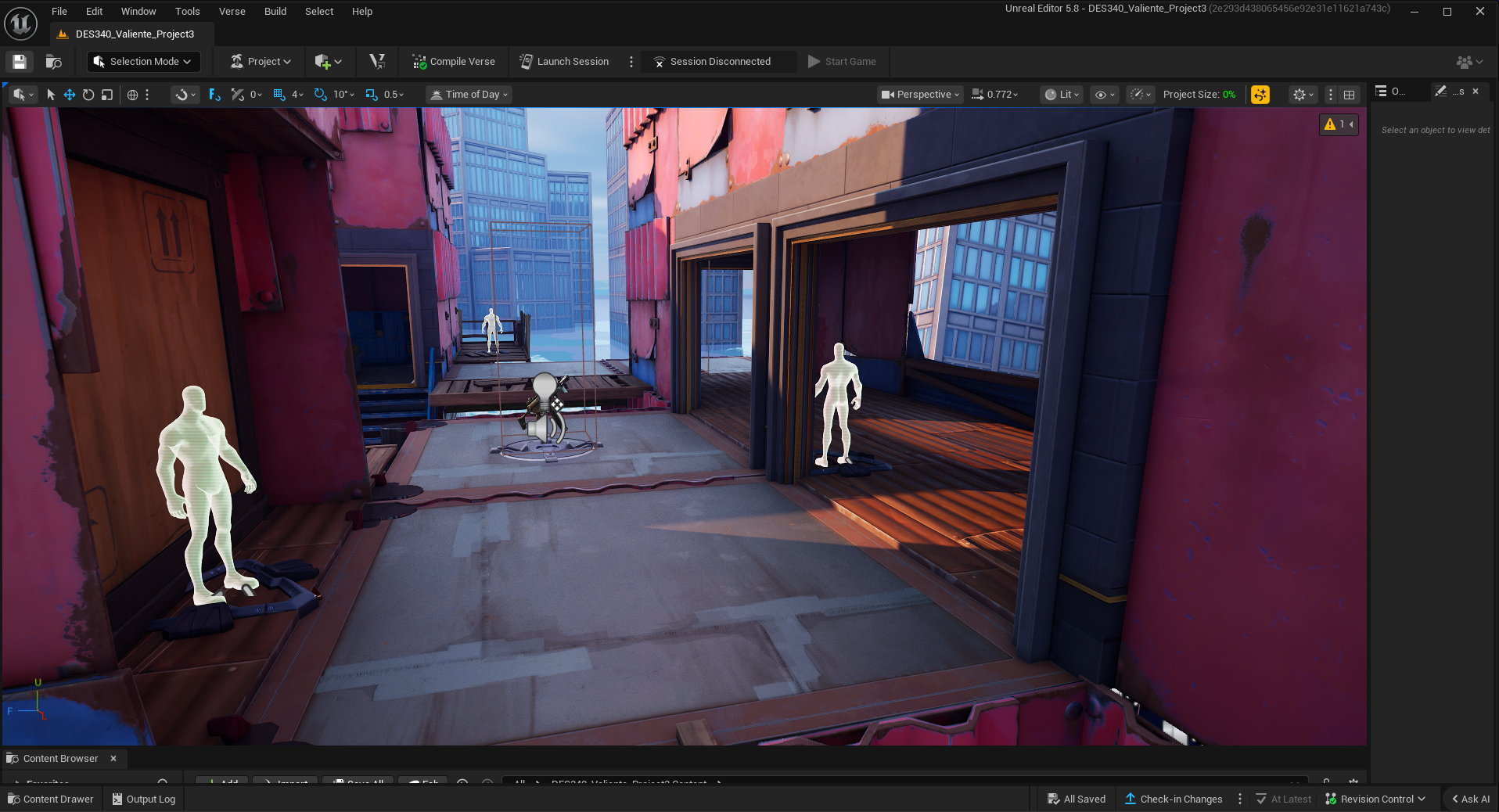
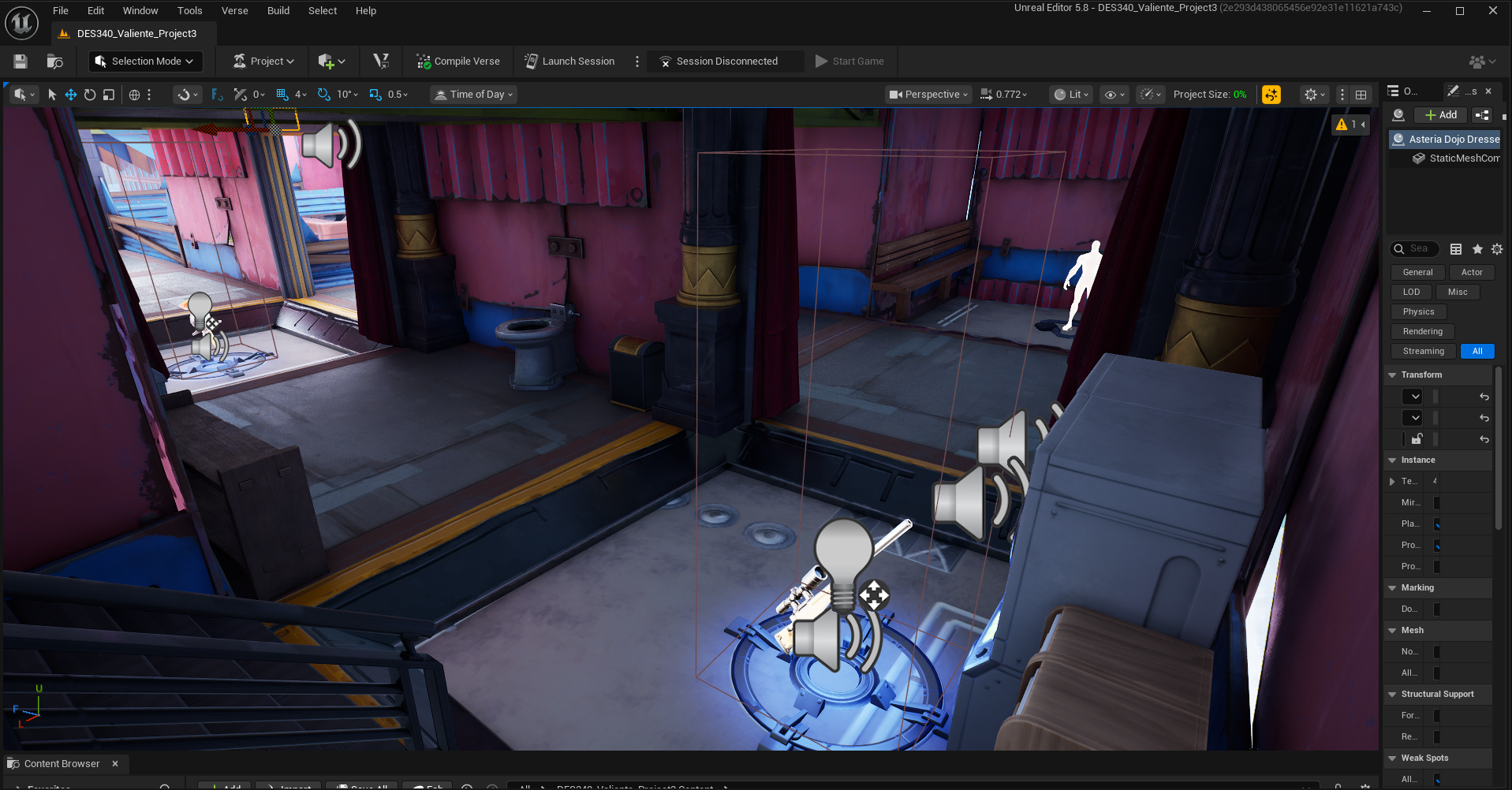
This hallway connects to the bathroom on the bottom floor. It was introduced as a way for the bathroom to have an easily accessible entry to the second floor without having to risk going into an encounter-heavy zone from spawn
While this did bend the rules of my 8x8 layout, the inclusion was small enough that it fit into a 1x3 block that did not affect the level in size; in fact, it added to the strategies the player could use.
This area also had a second flaw: it had no real way to connect to the top floor; as such, a set of stairs was introduced, and a hallway was constructed above.
The Docks
This is the workshop, a small room that links to the bedroom.
As you can see, there are sets of relatively covered stairs leading up to this room. This was intentionally done to prevent camping strategies from snipers and rifles. Since those positions are inherently advantageous when inside rooms, the stairs are designed to allow for easy flanking
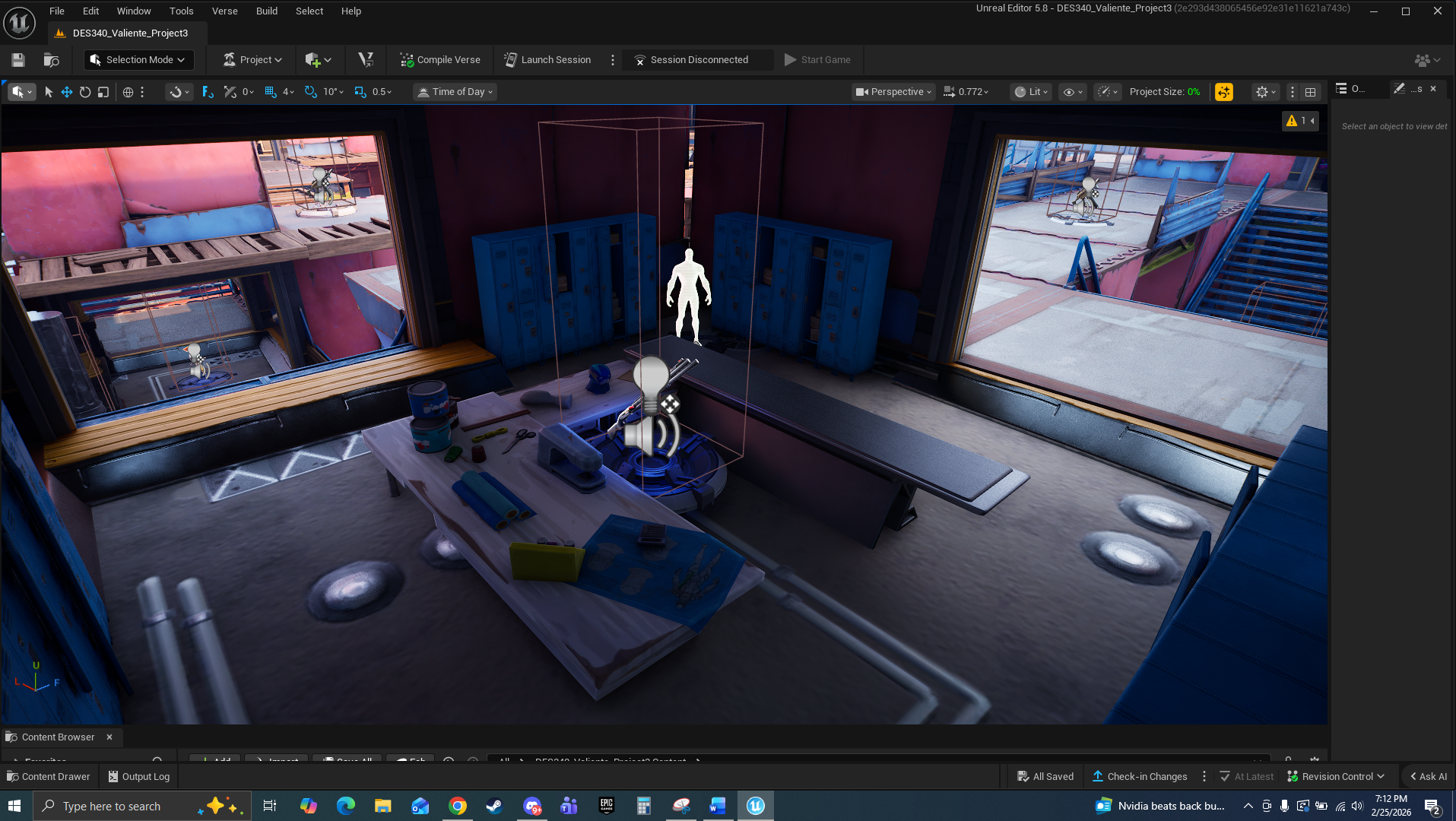
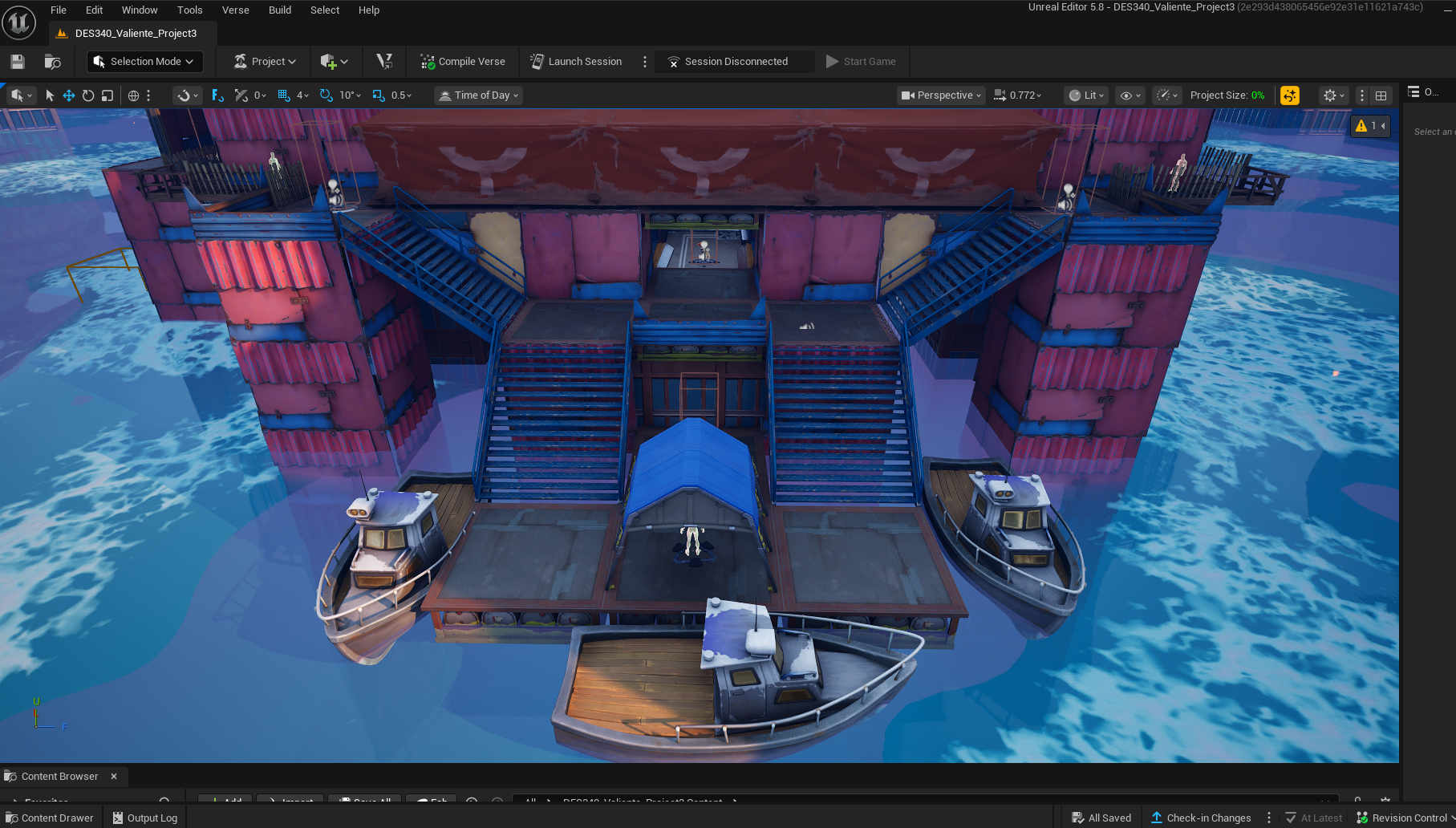
These docks were added to provide visual flair to the level and to create another safe spawn point for players on the other side of the level
It also allowed for greater flanking opportunities with the introduction of an additional set of stairs.
This section of the docks was designed to run perpendicular to the patio section on the other side of the level. intended to be a sniping area of the map
The stairs in the center are placed there for players who spawn behind the docks to have additional options in how to reach the top floor. They also double as an easy way for snipers to duck and cover when they’re hurt, encouraging pursuit.
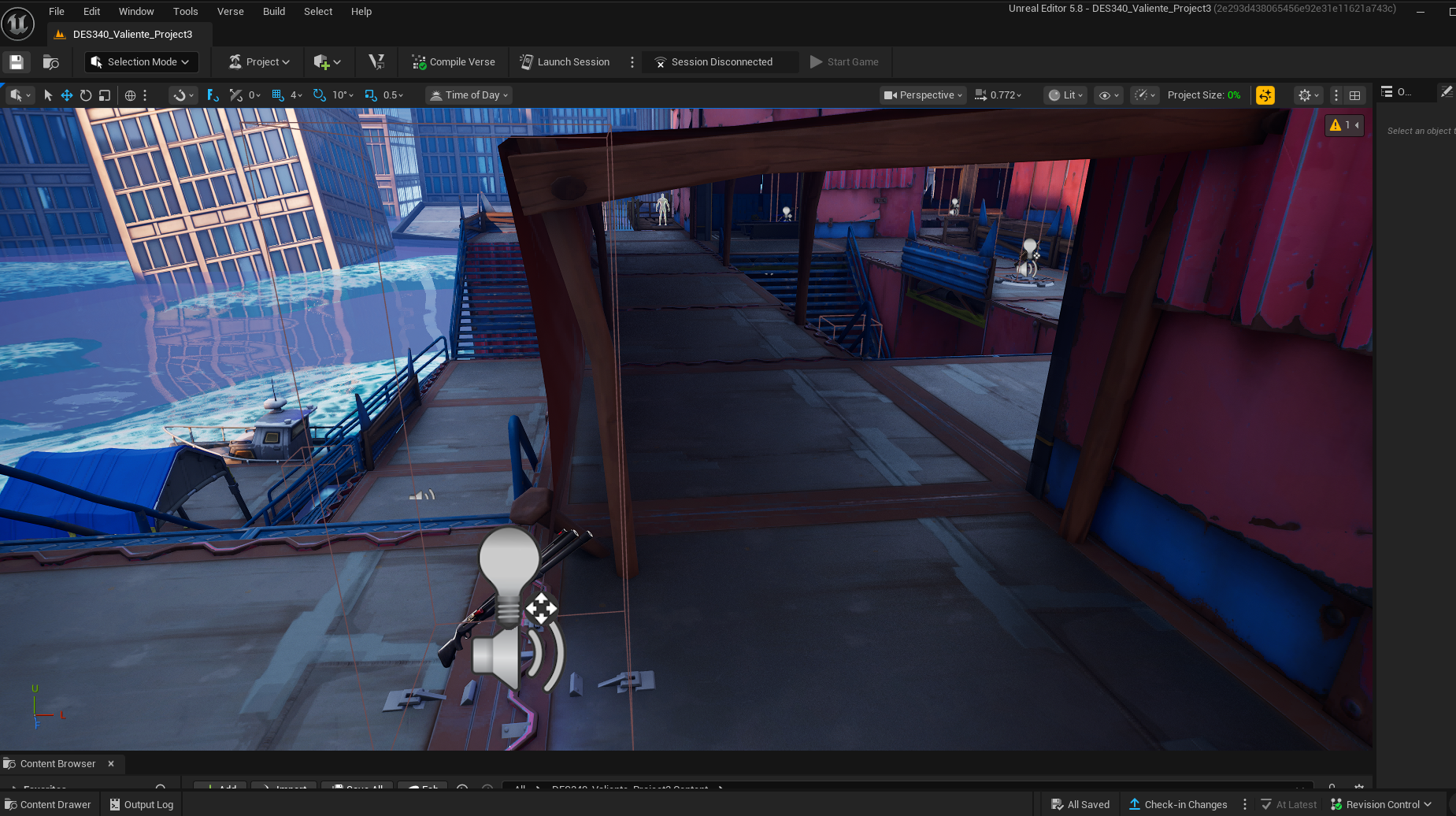
A shotgun is seen here in one of the hallways in the docks area. All shotguns are placed at the top of the level with intention.
Since shotguns do poorly at long range, the player is forced to move down to the bottom floor, where they can engage other players who spawn there or are in a similar situation.
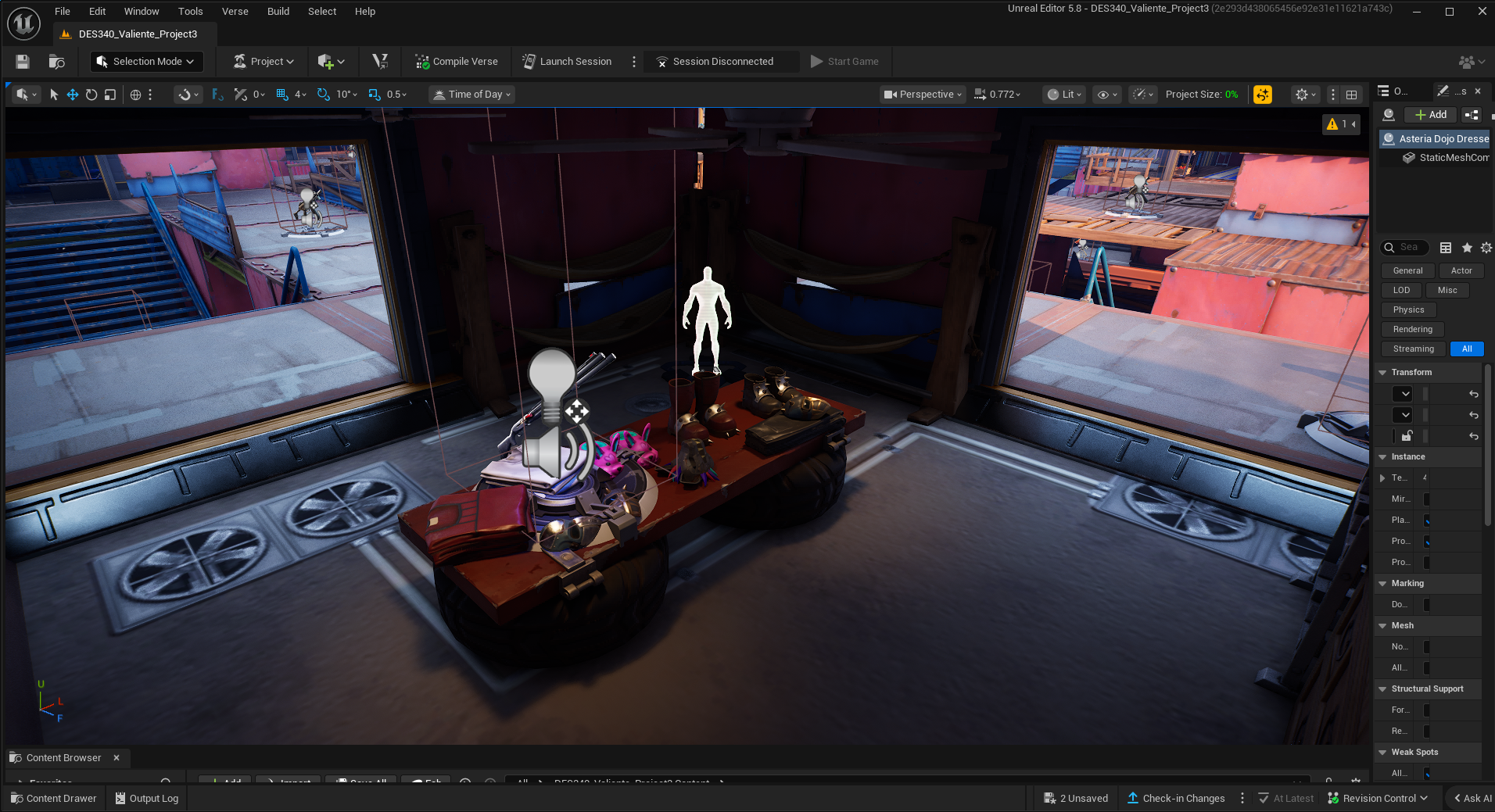
This is the bedroom. It is intended to run parallel to the workshop.
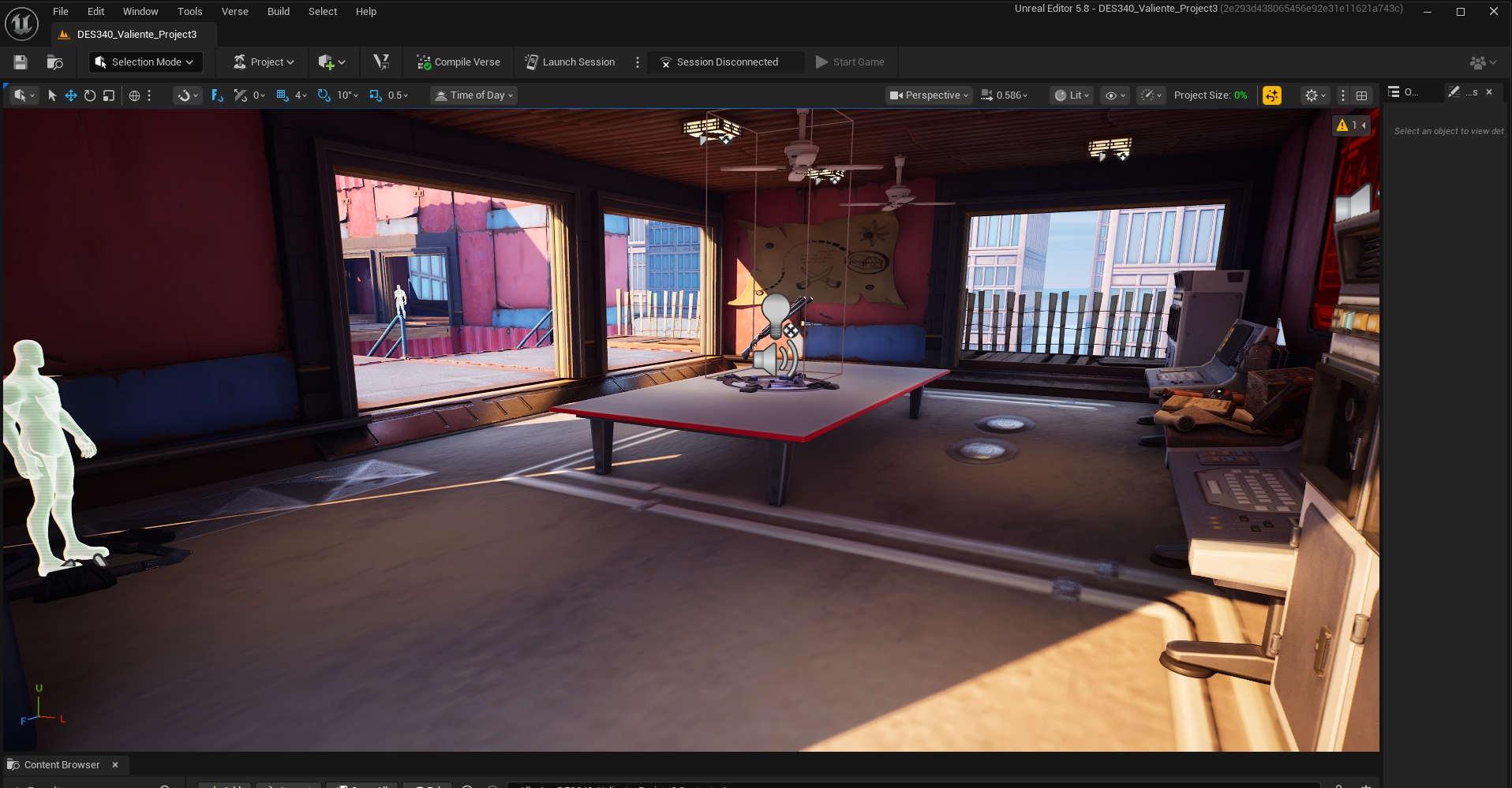
The tables in the rooms are intentionally added to provide cover and spacing in the interiors, creating their own circles of combat that complement those outside the rooms—allowing players to flow naturally from one path to another.
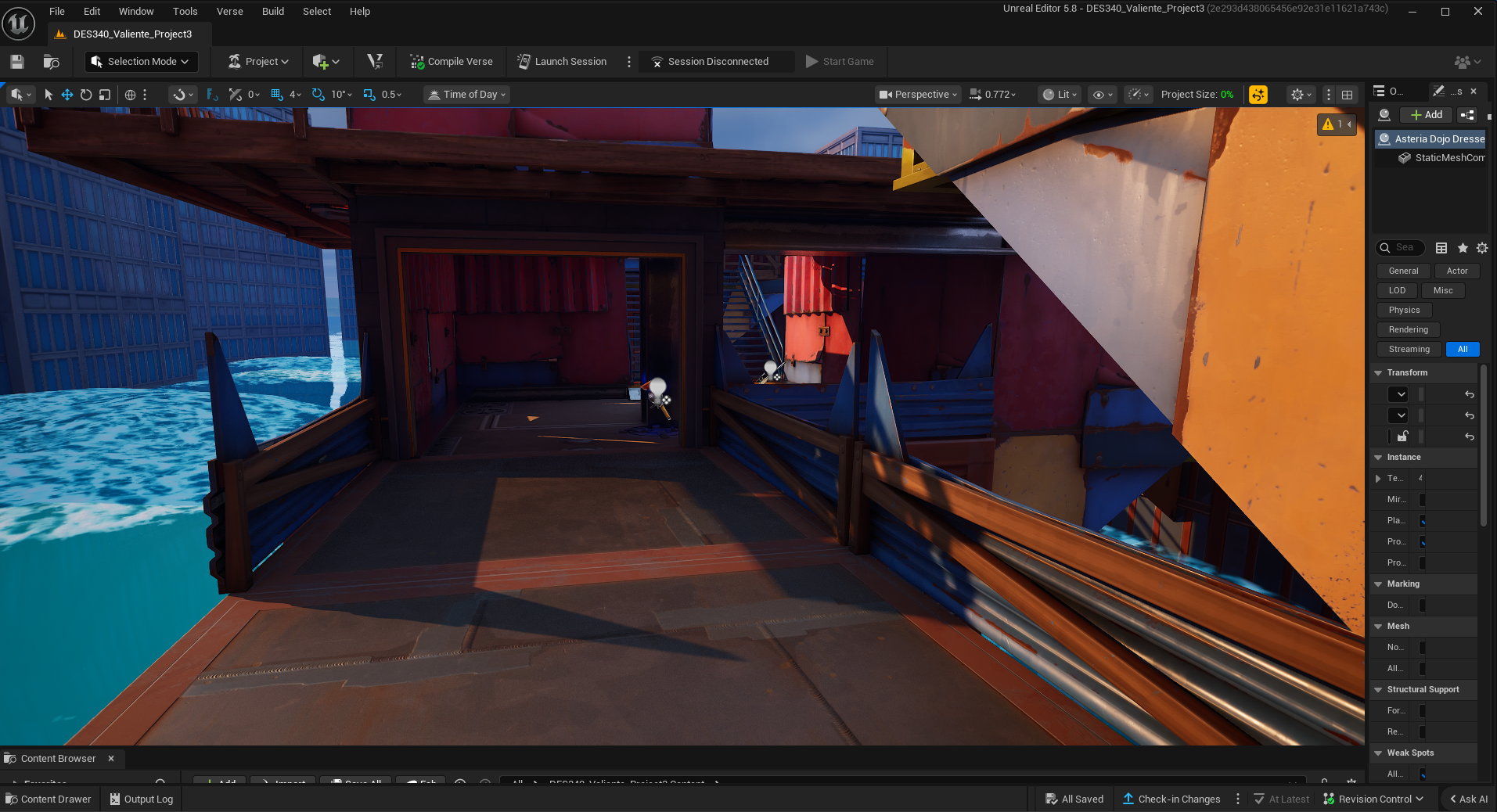
This is one of the main connector rooms that connects the storage room to the bedroom. Its open design is intentionally crafted to force players into a close-quarters encounter.
The exposed window next to the doorway was intentionally placed to prevent players entering from that side from having an advantage over players exiting the storage room, since they would normally have easier access to the weapon and then use it on the opposing player. exposing that wall grants the defending player an additional crucial sightline.
The Docks
The kitchen was designed to have several cover spots in mind and to run counter to the main sniping spot on the other side of the map, providing a good counter position.
The sides of the kitchen itself were meant to provide several avenues to strike and weave, with 3 main hallways (between the kitchen isle and the kitchen, between the table and the kitchen isle, and between the table and the wall). The player can switch to one when moving around.
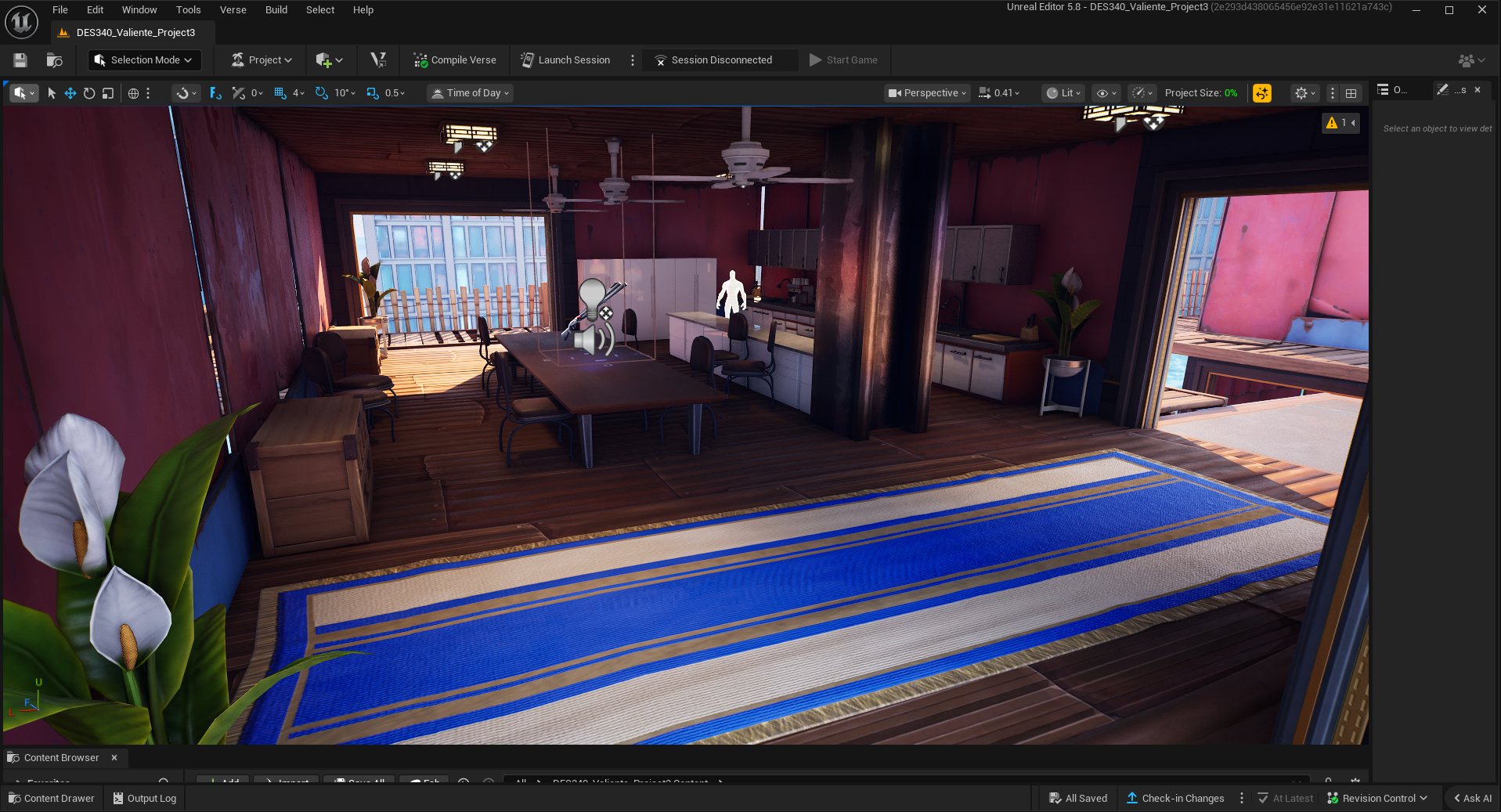
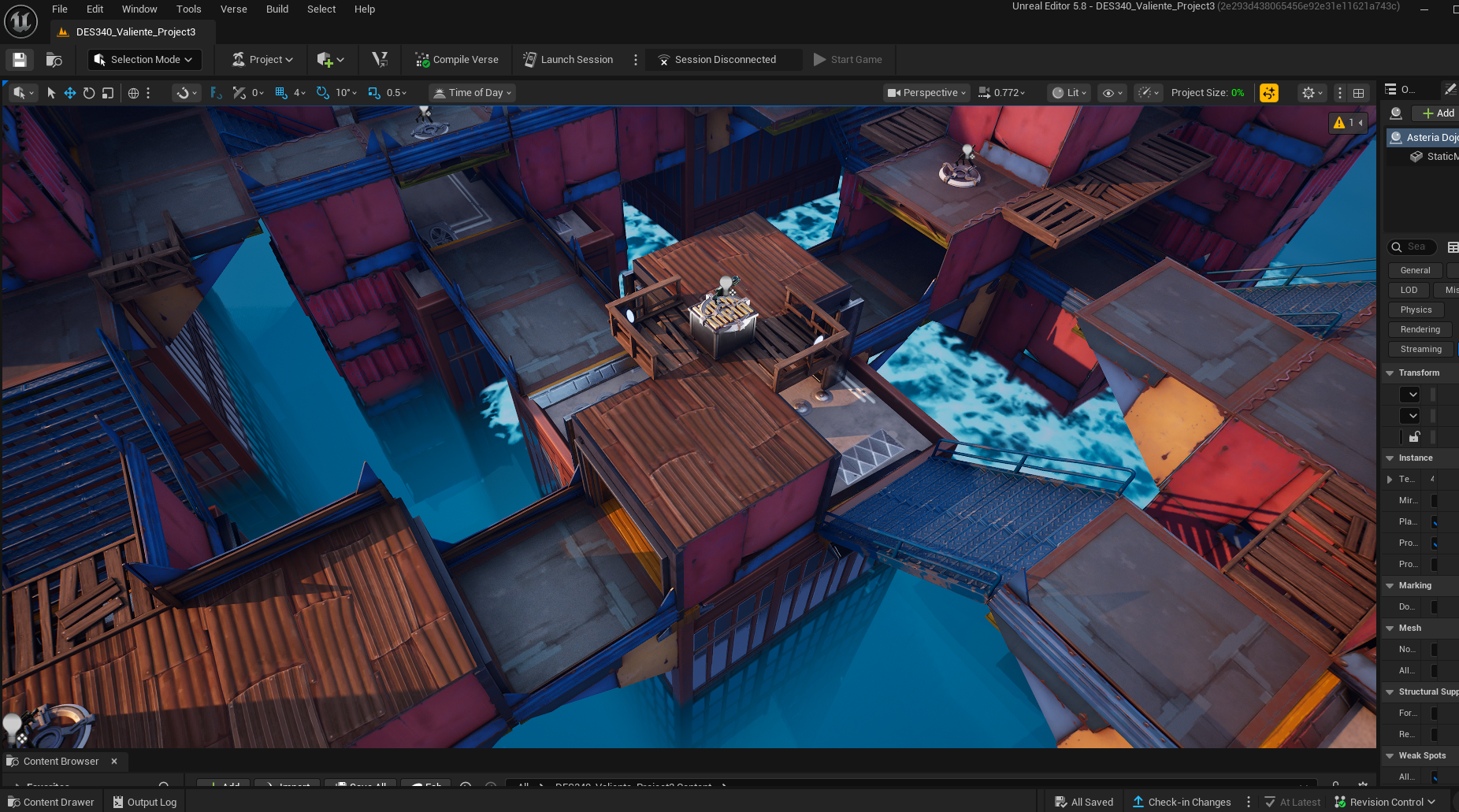
This center area is meant to connect all the different rooms, invoking a hub-and-spoke design. At the top of the level also resides the strongest weapon in the level. the ray gun
Its placement in the center is meant to invoke the same design philosophy as a Halo power weapon: a shiny, powerful weapon in a highly exposed area that, if successfully acquired, can give the player a strong advantage against others. Classic high-risk, high-reward.
Unfortunately, a fatal flaw was that it was difficult to notice during a firefight, even with lights placed on it. I would have added a UI piece saying whether or not the power weapon had spawned if I were to go back to this level